

Autos & Travel

Finding a Trustworthy Mechanic: What to Look for Before You Hand Over the Keys

Share
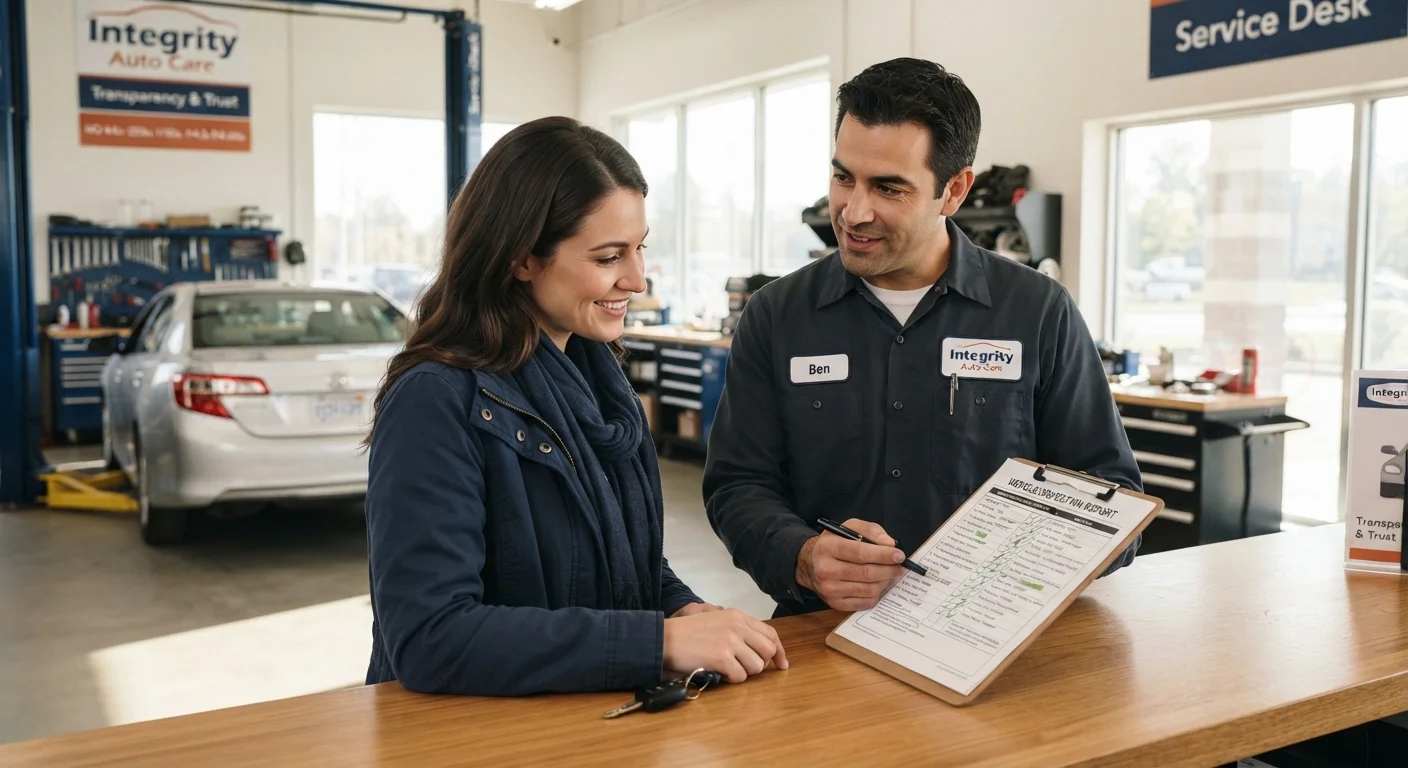
A mechanic and car owner reviewing an inspection report together inside a repair shop

Key Takeaways

ASE certification is a recognized industry credential worth verifying before choosing a shop.
Always request a written estimate before authorizing any repair work.
Online reviews and word-of-mouth referrals together paint a more complete picture than either alone.
A shop's willingness to show you old parts is a strong signal of honest practice.
Clear communication from the first call is a reliable early indicator of how a shop operates.
Trust your instincts — feeling pressured or confused is a legitimate reason to walk away.
20–40 min

Summary

18 items · 20–40 minutes

Why Choosing the Right Mechanic Matters

For most Americans, a vehicle is one of the most valuable things they own — and one of the most expensive to repair. Handing your car over to the wrong shop can mean unnecessary work, inflated bills, or repairs that don't actually fix the problem. Yet many drivers pick a mechanic primarily based on convenience or a quick web search, without a clear framework for evaluating quality.

This checklist gives you a practical way to assess any repair shop before you commit. Whether you're establishing a relationship with a new mechanic or vetting a shop for a specific repair, these criteria will help you make a more confident decision. Pair this with a consistent maintenance routine — our guide on scheduled vs. reactive repairs explains why staying ahead of problems also limits how often you need emergency shop visits.

Credentials and Reputation

Look for ASE (Automotive Service Excellence) certification displayed in the shop — this indicates technicians have passed standardized competency exams. Must
Verify the shop has a valid business license for your state or municipality; your local consumer protection office can often confirm this. Must
Check the shop's rating and complaint history with the Better Business Bureau (BBB) or your state's attorney general office. Should
Ask friends, family, or coworkers for personal referrals — firsthand experience is among the most reliable signals of quality. Should
Read a cross-section of online reviews, paying attention to how the shop responds to negative feedback. Should

Transparency and Communication

Request a written estimate before any work begins and confirm it itemizes both parts and labor separately. Must
Ask the shop to contact you for approval before performing any work beyond the original estimate. Must
Confirm the shop will return old or replaced parts to you upon request — legitimate shops generally have no reason to refuse. Should
Evaluate how clearly the service advisor explains the issue in plain language, without excessive jargon or pressure. Should
Ask whether the shop specializes in your vehicle's make or has experience with your vehicle type (domestic, import, hybrid, electric). Nice to have

Warranty and Pricing Practices

Ask what warranty the shop offers on parts and labor — reputable shops typically provide at least a 12-month or 12,000-mile guarantee. Must
Compare the estimate against published labor guides (available through services like ALLDATA or Mitchell1) to gauge whether the hours charged are reasonable. Should
Clarify whether parts used are OEM (original equipment manufacturer), aftermarket, or remanufactured, and understand the trade-offs involved. Should
Ask about the shop's diagnostic fee policy — some shops apply the fee toward the repair cost if you proceed, while others do not. Nice to have

On-Site Evaluation

Visit the shop in person before your first service appointment to observe cleanliness, organization, and how staff interact with other customers. Should
Note whether vehicles are secured and managed carefully — a chaotic or disorganized lot can be an early warning sign. Should
Ask to see or confirm relevant equipment for your specific repair type, particularly for specialized work like alignment, diagnostics, or transmission service. Nice to have
Trust your instincts: if you feel dismissed, pressured, or confused after a basic conversation, consider that a meaningful data point. Must

Tools That Can Help Your Research

Before you even visit a shop in person, a few basic resources can help you narrow the field and arrive better informed.

Required

ASE Technician Locator

Helps you confirm whether a shop employs ASE-certified technicians, which is a baseline credential for quality repair work.

Required

Better Business Bureau (BBB) Website

Lets you check a shop's accreditation status, customer complaint history, and overall rating.

Optional

Your State Attorney General's Consumer Protection Office

Allows you to verify business licenses and check whether complaints have been filed against a shop in your state.

Optional

Online Review Platforms (Google Maps, Yelp)

Provides a broad sample of customer experiences, most useful when read in volume rather than relying on individual ratings.

Keep in mind that no single source tells the whole story. A shop with strong reviews might still be a poor fit for your specific vehicle type, and a newer shop with fewer reviews might be excellent. Use these tools to build a baseline, then verify with direct conversation.

Beware of Unusually Low Estimates

A significantly lower estimate than comparable shops can sometimes signal the use of low-quality parts, undisclosed fees added later, or upselling once your vehicle is already disassembled. Get at least two estimates for major repairs and ask each shop to explain what's included in their quote. Price is one factor, but transparency and track record matter more for significant work.

Verbal Agreements Aren't Enough

In many states, auto repair shops are legally required to provide written estimates above a certain dollar threshold — but even where the law doesn't require it, you should always insist on one. A verbal agreement leaves you with little recourse if the final bill comes in higher than discussed or includes work you didn't authorize.

Once you've identified a few candidates, your own interactions with shop staff will tell you a great deal. Pay attention to whether explanations are clear, whether questions are welcomed, and whether the estimate process feels transparent. For broader context on what informed car ownership looks like, see our overview of smart habits that help your car last longer.

This article is for general informational purposes only. It does not constitute professional automotive, legal, or financial advice. Always verify credentials and consult licensed professionals for specific repair guidance.

Autos & Travel Editorial Team is the collective byline for our editorial team and contributor network. Articles published under this byline or an editorial pen name are researched, written, and reviewed according to our editorial standards for clarity, consistency, and independence before publication.

View all articles by Autos & Travel Editorial Team →
Disclaimer: The content on this site is for informational purposes only and is not a substitute for professional advice. Always consult a qualified professional for guidance specific to your situation.