
Key Takeaways
The Gap Between Knowing and Doing
Most homeowners know they should maintain their property. Fewer follow a consistent schedule. The result is a familiar pattern: small problems quietly worsen until they demand expensive intervention. A slow roof leak saturates insulation for months before anyone notices the ceiling stain. A neglected HVAC filter strains the system through two full seasons before efficiency drops enough to trigger a service call.
The tasks below aren't obscure. But they're overlooked often enough - and missed at precisely the seasons when they'd do the most good - that they're worth laying out clearly and specifically. Think of this as a complement to your monthly home inspection routine: the monthly walk-through catches what's already wrong; seasonal maintenance prevents the problem from starting.
Link Maintenance to Your Calendar, Not Your Memory
Assign each seasonal task to a reliable anchor event - daylight saving time changes, the first frost advisory, spring school break - rather than relying on remembering a general month. This simple habit dramatically increases follow-through. A shared household calendar entry with a brief task description is often all it takes.
8 Seasonal Tasks Worth Putting on Your Calendar
Clean and inspect gutters - twice a year
When: Late fall (after leaves drop) and late spring (after tree pollen and seed season).
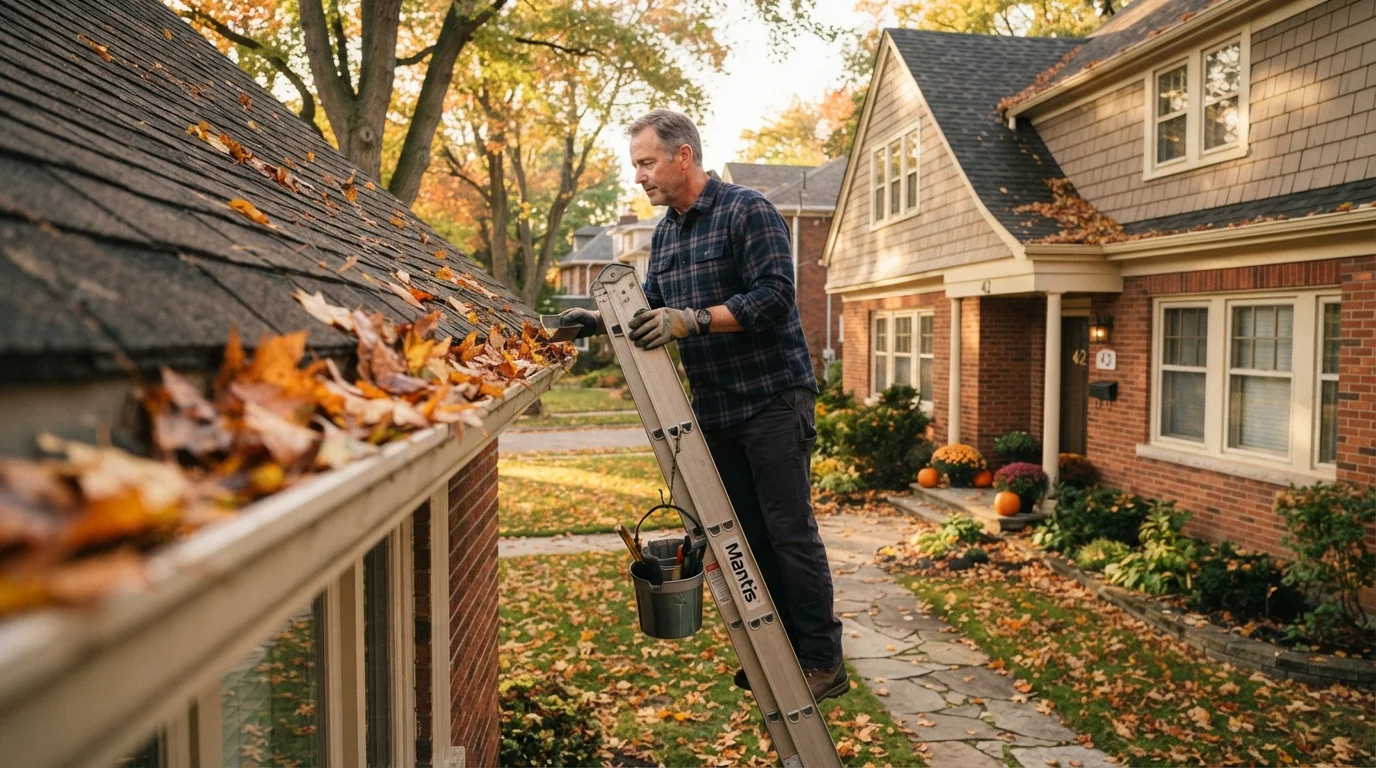
Clogged gutters force water to pool along the roofline, increasing the risk of fascia rot, foundation seepage, and ice dams in cold climates. Cleaning gutters is a straightforward DIY task for most single-story homes - a stable ladder, gloves, and a garden hose are the main tools. For multi-story homes or steeply pitched roofs, a professional gutter service is a reasonable and safer choice. While you're at it, check that downspouts direct water at least four to six feet away from the foundation.
Clogged gutters are one of the most preventable causes of foundation water damage.
Replace HVAC filters on a set schedule
When: Every 60-90 days; check monthly if you have pets or allergies.
A dirty filter makes your heating and cooling system work harder, shortening its lifespan and raising energy use. Filter changes take under five minutes, yet surveys consistently show a large share of homeowners go six months or more between changes. The filter packaging will note the recommended replacement interval - higher-MERV filters (which capture finer particles) may need more frequent swaps because they capture more material and clog faster. Note the filter size on your phone so you always buy the right one.
A clean filter is one of the simplest ways to protect a system that costs thousands to replace.
Re-caulk windows, doors, and tub surrounds
When: Spring (exterior) and early fall (interior wet areas).
Caulk shrinks, cracks, and separates over time. Around exterior windows and doors, failed caulk allows water infiltration and conditioned air to escape - a double hit to your home and your energy bills. Around tubs and showers, degraded caulk lets moisture reach the subfloor and wall framing, where it can fuel mold growth undetected. Removing old caulk, cleaning the surface thoroughly, and applying a fresh bead is a manageable DIY project, though the preparation work is as important as the application itself.
Failed caulk is a small defect with outsized water damage potential over time.
Flush the water heater
When: Once a year, typically in fall before heavy use season begins.
Sediment - primarily mineral deposits from hard water - settles at the bottom of a conventional water heater tank over time. A heavy sediment layer insulates the water from the heating element, forcing the unit to work harder and reducing its lifespan. Flushing the tank annually (attach a hose to the drain valve and drain until the water runs clear) removes that buildup. If your home has especially hard water, twice-yearly flushing may be worth considering. Consult your water heater's documentation or a licensed plumber if you're unfamiliar with this process.
Annual flushing can meaningfully extend the life of a water heater that otherwise costs over a thousand dollars to replace.
Test smoke and carbon monoxide detectors
When: Every six months; replace batteries annually at minimum.
Most detector manufacturers recommend testing units monthly, but twice-yearly deep checks - including vacuuming dust from the vents and verifying the manufacture date on the back - catch units that are past their effective lifespan. Smoke detectors generally have a useful life of about ten years; CO detectors typically five to seven years. Units beyond those ranges should be replaced regardless of whether they appear to be functioning. This is one of the few maintenance tasks where there is genuinely no reasonable alternative to staying current.
An expired detector may still beep when tested but no longer reliably detect danger.
Inspect roof flashing and visible shingles
When: Spring and fall, ideally from the ground with binoculars.
You don't need to climb your roof to catch early warning signs. Missing or curled shingles, lifted or corroded flashing around chimneys and vents, and granules collecting in the gutters are all visible indicators of wear. Catching these early - before a storm stress-tests your roof - gives you time to schedule a professional repair rather than an emergency replacement. For any actual roof repair work, a licensed roofing contractor is strongly advisable; roof work carries significant fall risk and most jurisdictions require permits for substantial repairs.
Most roof leaks start at the flashing, not the shingles - and early detection is far cheaper than water damage remediation.
Service the dryer vent
When: At least once a year, more often if you do many loads per week.
Lint accumulation in the dryer exhaust duct is a leading cause of residential fires - and most of that lint lives beyond the lint trap, inside the duct itself. A dryer vent brush kit (available at most hardware stores) allows you to clean the full length of the duct from the appliance to the exterior vent cap. Also check that the exterior vent cap opens and closes freely and isn't obstructed by debris or nesting material. If your duct run is long or has multiple bends, professional cleaning may be more thorough.
Lint-choked dryer ducts are among the most common - and most preventable - causes of house fires.
Check and seal the basement and crawl space
When: Spring, after snow melt and heavy rain season.
Spring is when groundwater pressure is highest and foundation cracks are most likely to admit moisture. A visual inspection of basement walls for efflorescence (white mineral deposits, a sign of water movement), new cracks, or damp patches can catch developing problems before they worsen. Crawl spaces deserve the same attention - check that vapor barriers are intact and that vents aren't obstructed. Minor interior sealant application is a DIY-manageable task; for significant water intrusion, consult our detailed guide on basement waterproofing strategies and consider a licensed waterproofing contractor.
A dry basement starts with a spring inspection - not an emergency call after the damage appears.
When to Call a Licensed Professional
Several tasks on this list - including roof repairs, significant plumbing work, and any electrical or gas-adjacent maintenance - carry real safety risk and are often subject to local permit requirements. This article describes general educational guidance, not a substitute for professional assessment. When in doubt about the scope or safety of a repair, consult a licensed contractor before proceeding. Local building codes vary, so verify requirements with your municipality.
For a fuller picture of how each season reshapes your home's needs, see our guide on seasonal household transitions. And if you're managing contractor work for any of the tasks below, our contractor evaluation checklist can help you hire with confidence.
Build the Habit, Not Just the List
A list of tasks is only useful when it connects to a real schedule. One practical approach: assign each task to a calendar trigger - the first warm weekend of spring, the week before the heating season starts, the day you change your clocks. Habit stacking like this removes the mental friction of remembering.
Equally valuable is documentation. A simple home repair log - even a notes app or a shared document - records what you did, when you did it, and what you noticed. That history becomes useful when something goes wrong, when you're filing an insurance claim, or when a future buyer wants evidence that the home was well cared for. Small, consistent effort across every season is almost always less expensive than the deferred costs that accumulate quietly when maintenance slips.