

Key Takeaways
Household Disorganization Cost
The hidden cost of household disorganization refers to the real but often invisible losses - in money, time, and mental energy - that result from poor home systems, clutter, and inefficient routines. Unlike a broken appliance or a missed bill, these costs accumulate slowly and rarely show up as a single line item. They include duplicate purchases, late fees, wasted food, and the daily friction of not being able to find or manage what you own.
Researchers sometimes refer to this as 'disorganization tax' - the aggregate burden imposed on a household's resources by systemic inefficiency rather than any single failure.
What Disorganization Actually Costs a Household
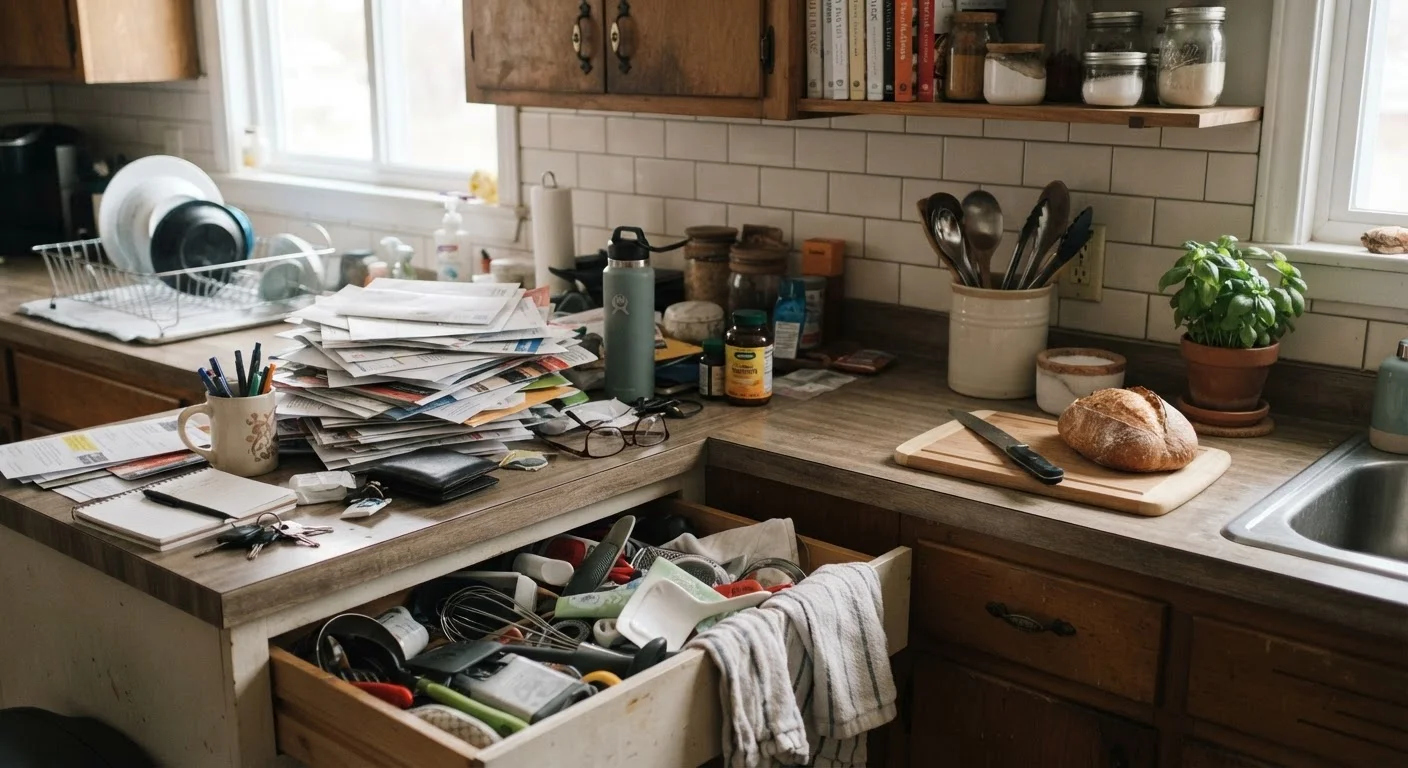
Most people think of a disorganized home as an aesthetic problem - cluttered surfaces, overflowing closets, a junk drawer that defies all logic. But disorganization carries financial and practical consequences that are measurable, even if they're rarely itemized.
The costs fall into three broad categories:
- Direct financial losses: Buying a replacement item you already own but can't locate. Paying a late fee because a bill got buried. Throwing away expired food purchased but forgotten.
- Time losses: Studies on household behavior consistently find that people spend significant time each week searching for misplaced items - from keys and glasses to important documents. That time has real opportunity cost.
- Cognitive load: Keeping track of what needs doing, where things are, and what's running low drains mental energy even when you're not actively thinking about it. Psychologists call this the mental load, and it's a genuine form of fatigue.
These aren't abstract concerns. They connect directly to how households manage money - and ignoring them is one of the quiet habits that cost more than expected over time.
~$1,500
Estimated annual household food waste cost
The USDA and EPA have estimated that the average American family of four throws away between $1,500 and $2,000 in food annually, much of it driven by poor pantry visibility and inconsistent meal planning.
2.5 days
Time spent searching for misplaced items per year
Various time-use and consumer research studies have estimated that adults spend roughly 2-2.5 days per year looking for items they've misplaced in their homes.
23%
Adults who pay bills late due to disorganization
Surveys conducted by financial and consumer research organizations have found that roughly one in four Americans has paid a bill late not because of financial hardship, but because of poor document or reminder management.
The Specific Places Disorganization Drains Resources
Not all household disorganization is equal. Some areas are consistently higher-cost than others.
The Kitchen and Pantry
Food waste is one of the most significant and underappreciated household expenses. When pantry items are stacked randomly or pushed to the back, they get forgotten and expire. Meal planning becomes harder without a clear picture of what you have, leading to redundant grocery purchases.
Bill and Document Management
A paper pile that includes both junk mail and actual invoices is a late-fee waiting to happen. Even with online billing, households that lack a consistent review routine miss due dates, overlook subscription renewals, and lose track of warranties or insurance documents when they're needed most. See also: where most households lose track of time and money.
Storage and Inventory
Garages, basements, and closets that have become overflow zones often contain duplicates of items that were repurchased simply because they couldn't be found. Batteries, tape, extension cords, cleaning supplies - these are common repeat purchases in disorganized homes.
Start With One High-Friction Spot
Rather than attempting a whole-home overhaul, identify the single place in your home that causes the most daily friction - the counter where everything piles up, the drawer that never closes, the shelf where things go to disappear. Fixing just that one area with a simple, logical system delivers immediate relief and makes the next improvement easier to tackle.
Building Systems That Solve the Root Problem
The key insight in addressing disorganization is that willpower and motivation aren't reliable tools - systems are. A home that runs on consistent routines and logical structures doesn't depend on anyone being particularly energized or disciplined on a given day.
Effective home systems share a few traits:
- They reduce friction for the most frequent tasks. Items used daily should be easiest to access. Mail should have one designated landing spot - not wherever it gets dropped.
- They create predictable rhythms. A weekly reset routine (15-20 minutes to return things to their places) prevents accumulation. Monthly reviews of the pantry, calendar, and finances catch problems before they compound.
- They account for real household behavior, not ideal behavior. Systems that require perfect discipline fail. The best organizational structures work even when people are tired or rushed.
For households managing tight budgets, disorganization is a compounding problem - small inefficiencies that might seem trivial individually add up in ways that matter. This is explored thoughtfully in the context of the real trade-offs of living on a strict budget.
The most sustainable path is usually to start with one high-friction area, build a simple system that works without much maintenance, and expand from there. A complete home overhaul is rarely necessary or maintainable - incremental improvement, applied consistently, is what delivers lasting results. For a practical starting point, see running a home on autopilot with systems that reduce daily decision fatigue.