

Key Takeaways
Zero-Based Budgeting
Zero-based budgeting is a method where you allocate every dollar of your income to a specific category - expenses, savings, or debt payments - so that your income minus your total allocations equals zero. It doesn't mean you spend everything; it means every dollar has a deliberate assignment before the month starts. Unlike passive budgeting, this approach requires you to actively plan where each dollar goes rather than tracking what you already spent.
The term originates from zero-based budgeting in corporate finance, where every budget line must be re-justified from zero each period rather than carried over from the prior year. In personal finance, the principle is adapted so that income - planned outflows = $0.
The Core Idea: Income Minus Allocations Equals Zero
Zero-based budgeting (ZBB) operates on one simple rule: take your monthly income, assign every dollar to a category, and end up with a balance of zero. If you earn $4,200 this month, your budget must account for all $4,200 - rent, groceries, utilities, debt payments, savings, and everything else - until nothing is unassigned.
This is a fundamentally different mindset from simply monitoring your bank balance. Instead of reacting to what you spent, you decide in advance what each dollar will do. Savings contributions, retirement account deposits, and emergency fund contributions are treated as non-negotiable line items - not what's left over after everything else.
For a broader grounding in budgeting from the ground up, see our guide to building your first monthly budget, which walks through the foundational steps before applying any specific method.
74%
Americans living paycheck to paycheck at some point
According to a 2023 survey by LendingClub and PYMNTS, nearly three in four U.S. consumers reported living paycheck to paycheck at some point during the year.
$1,000
Common emergency fund shortfall for households
Bankrate's annual emergency savings survey found that a large share of U.S. adults could not cover an unexpected $1,000 expense from savings alone, highlighting the stakes of unplanned spending.
How Zero-Based Budgeting Actually Works Month to Month
At the start of each month, you list your expected income - all sources, net of taxes. Then you build your allocation list from scratch. Common categories include:
- Fixed expenses: Rent or mortgage, car payment, insurance premiums, loan minimums
- Variable necessities: Groceries, utilities, fuel, healthcare costs
- Financial goals: Emergency fund contributions, retirement savings, debt payoff above minimums
- Discretionary spending: Dining out, entertainment, hobbies, subscriptions
You keep adjusting allocations until income minus all categories equals exactly zero. When the month begins, you execute the plan - and when life throws a curveball, you consciously reallocate rather than silently overspend.
At month's end, a reset is essential. Our monthly budget reset checklist gives you a practical framework for reviewing what happened and rebuilding the plan for the next month.
Budget for Irregular Expenses in Advance
Annual costs like car registration, holiday gifts, or quarterly insurance premiums can wreck a zero-based budget if ignored. Divide each annual expense by 12 and build a monthly sinking fund category for it. When the bill arrives, the money is already there.
Zero-Based vs. Other Budgeting Methods
The most common alternative to ZBB is the 50/30/20 rule, which divides income into broad buckets: 50% for needs, 30% for wants, and 20% for savings and debt. That method is simpler to set up but less granular - it won't tell you where within the 30% your money actually went.
Zero-based budgeting demands more specificity. Every dollar inside each category is accounted for. That granularity is its strength and its challenge. For a direct comparison of both frameworks and how they suit different financial situations, see our article on zero-based budgeting vs. the 50/30/20 rule.
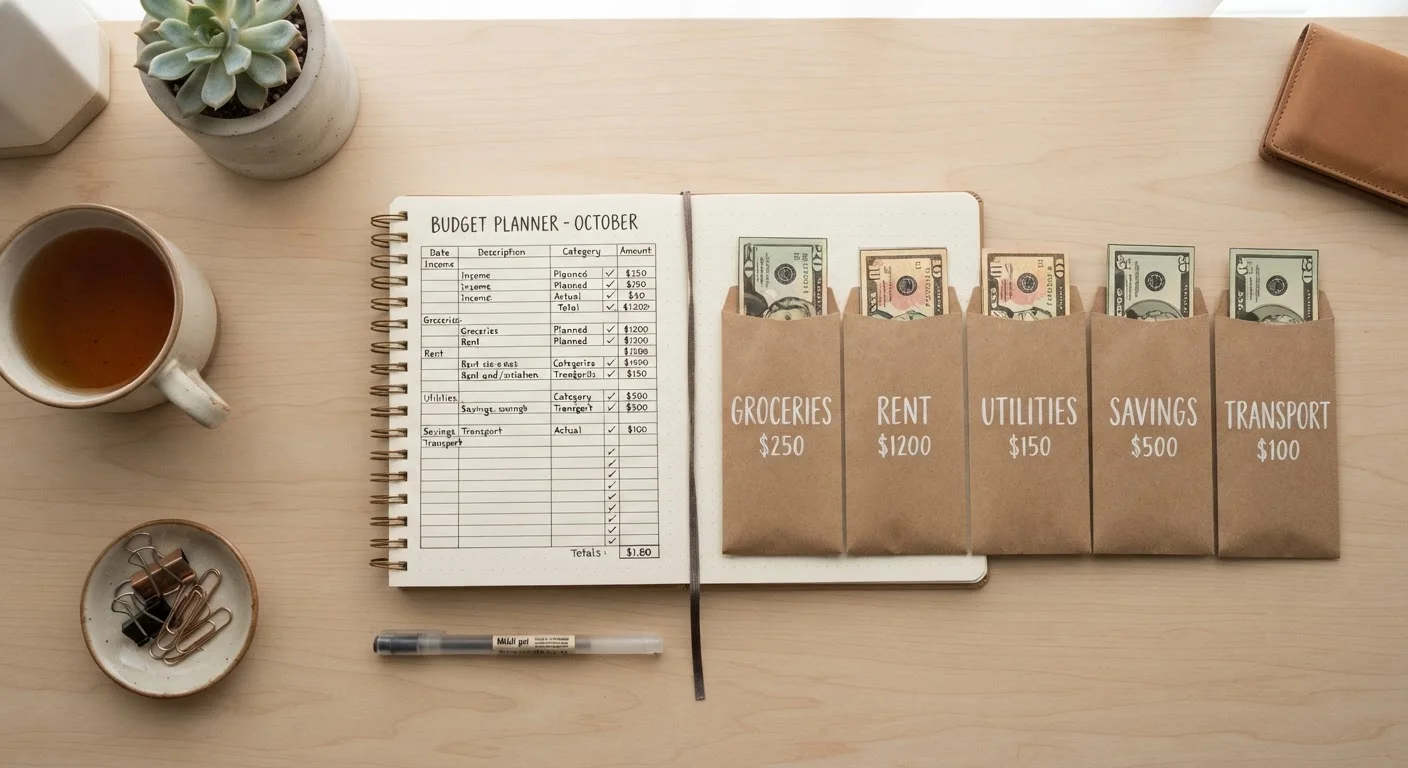
ZBB is also distinct from envelope budgeting in structure, though the philosophy overlaps - both emphasize assigning money before spending it. The key advantage of ZBB over looser methods is accountability: every overage in one area must be consciously funded by a reduction elsewhere.
“A budget is telling your money where to go instead of wondering where it went. The zero-based approach makes that directive explicit and monthly.”
— Dave Ramsey, Personal finance author and radio host, widely associated with zero-based budgeting in consumer personal finance
Who Benefits Most - and Who Might Struggle
Zero-based budgeting tends to work especially well for people who:
- Are actively paying down debt and need to maximize every dollar
- Have a history of unexplained spending gaps at month's end
- Want to aggressively build savings toward a specific goal
- Prefer structure and detailed financial visibility
It can be more challenging for people with highly variable income - freelancers, gig workers, or commission-based earners - though many adapt the method by budgeting to their lowest expected income and allocating windfalls when they arrive.
People who find rigid monthly planning stressful may prefer a simpler framework. The right budgeting method is one you'll actually maintain. Our guide on habits that keep a budget working month after month explores the routines that make any method stick long-term.
Getting Started Without Overcomplicating It
You don't need special software to start. A spreadsheet or even a legal pad works. The steps are straightforward:
- Write down your total expected take-home income for the month.
- List every category you plan to spend on, starting with fixed obligations.
- Assign a dollar amount to each category.
- Subtract all allocations from income until you reach zero.
- Track actual spending against the plan and adjust in real time.
The first month is usually the hardest - categories you forgot will surface mid-month, and your estimates will be off. That's expected. Most people find the process becomes significantly faster and more accurate by the second or third month.
If you're looking for the broader context of where zero-based budgeting fits within personal finance, our complete personal budgeting guide covers the full arc from building your first plan to maintaining it as a long-term habit.
This article is for general informational and educational purposes only and does not constitute personalized financial advice. Consult a qualified financial professional for guidance tailored to your individual circumstances.