

Key Takeaways
Why Motivation Alone Is a Shaky Foundation
Most people launch a savings goal with genuine enthusiasm. Then, a few weeks in, that energy quietly disappears. This isn't a character flaw - it's how motivation works. Behavioral researchers consistently find that initial excitement is a weak predictor of long-term follow-through. What actually sustains saving behavior is structure, not feeling.
Understanding this distinction matters because it shifts the question from "How do I stay motivated?" to "What systems can I build so I don't need to rely on motivation every day?" The practices below are grounded in that reframe. They're not about pumping yourself up - they're about designing a saving habit that holds even on low-energy days.
For a broader look at how saving myths can quietly undermine your efforts before you even start, see common saving myths worth rethinking.
Practices That Keep Savings Goals on Track
The following approaches are practical, research-informed, and applicable regardless of income level or goal size. Implement the ones most relevant to where you are right now.
Attach every savings goal to a specific, named life outcome.
Abstract goals like "save more money" give the brain nothing to hold onto. Naming the exact purpose - a home down payment, six months of emergency expenses, a child's first year of college - creates a mental anchor that re-engages you when enthusiasm wanes. Research in behavioral economics suggests that concrete, vivid goals are more resilient to short-term temptation.
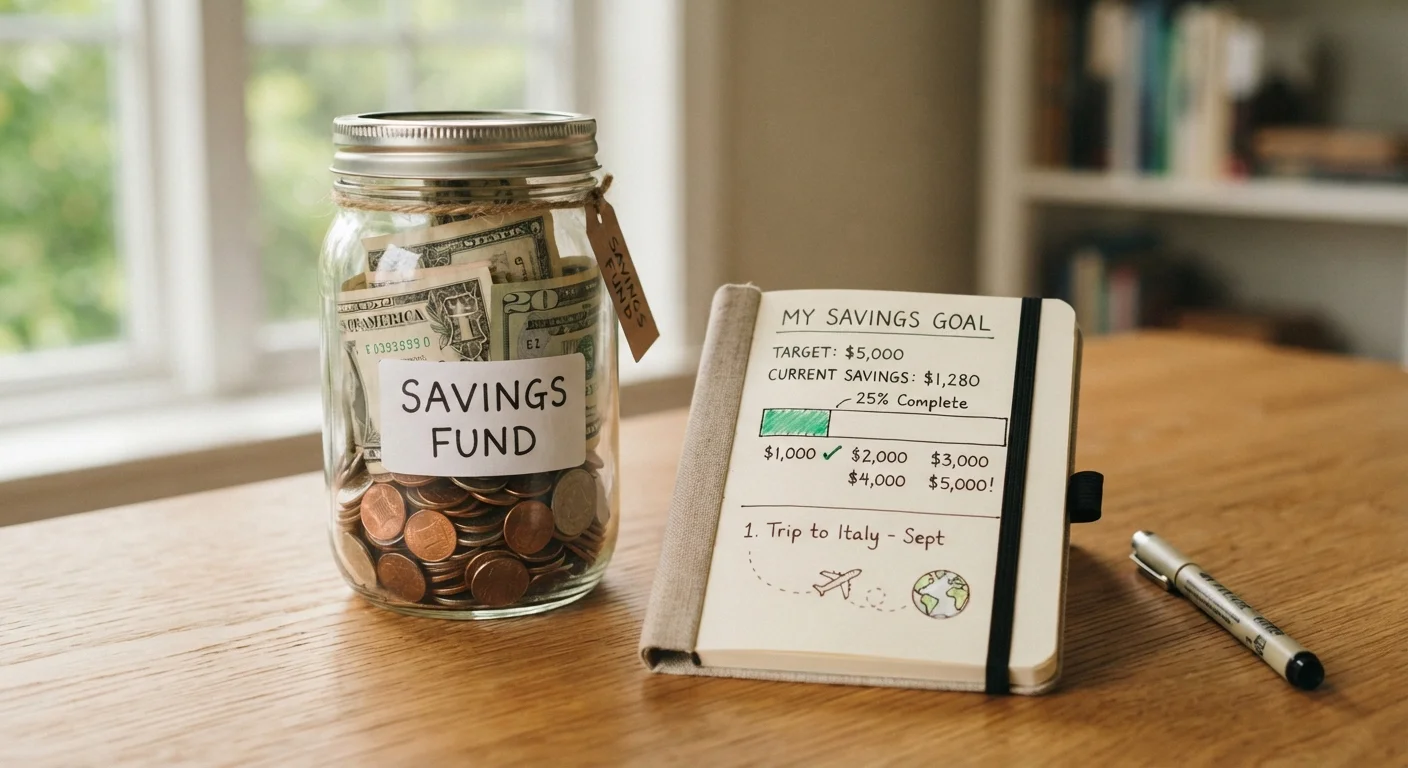
Break the goal into milestone markers you can celebrate at intervals.
A large, distant target produces what psychologists call "goal fatigue" - the growing feeling that progress is invisible. Intermediate milestones restore a sense of forward momentum and trigger small dopamine rewards that reinforce the behavior. Each milestone reached is evidence that the system is working.
Automate contributions so saving happens before you decide.
Every manual transfer requires a fresh decision, and decisions are vulnerable to fatigue, competing priorities, and bad weeks. Automation converts saving from a recurring choice into a background process. The money moves before you can redirect it elsewhere.
Schedule a monthly five-minute goal check-in.
Life changes - income shifts, unexpected expenses, reprioritized goals. A goal set nine months ago may no longer reflect your current reality, which creates a quiet disconnect that erodes motivation. Regular brief reviews keep the goal calibrated and give you agency to adjust rather than abandon.
Use a visible, low-tech progress tracker alongside any app.
Digital dashboards are useful but easy to ignore. A handwritten chart on a fridge or desk brings the goal into your physical environment, making it harder to mentally set aside. Visibility is a well-documented cue in habit formation - what you can see regularly, you act on more consistently.
Reconnect with your "why" when the goal feels arbitrary.
When saving feels like deprivation, the goal's original meaning has often been forgotten. Deliberately revisiting the life change or security the goal represents shifts the frame from sacrifice to investment. This is particularly useful after a stressful financial month that forced a missed contribution.
If your income is unpredictable, some of these practices need adapting - saving on an irregular income covers that situation directly.
Quick Actions You Can Take Today
If you've been putting off revisiting a savings goal, the following actions require no special tools and take under 30 minutes. Small structural changes made now compound into reliable habits over time.
57%
Americans without enough savings to cover a $1,000 emergency
According to a Bankrate survey, a majority of U.S. adults would struggle to cover an unexpected $1,000 expense from savings alone - underscoring how common it is to fall short of savings goals.
~66 days
Average time to form a new habit
Research published in the European Journal of Social Psychology found that, on average, it takes around 66 days for a new behavior to become automatic - reinforcing why structural support matters more than willpower.
For habits that apply equally to budgeting - which underpins every savings goal - the Budgeting Basics hub is a practical starting point. And if you want to think clearly about which goals belong in which time frame, structuring savings around time horizons will help you organize your priorities.
This article is for general informational and educational purposes only and does not constitute personalized financial advice. For guidance specific to your financial situation, consult a qualified financial professional.