

Key Takeaways
Counter-Conditioning & Desensitization
Counter-conditioning and desensitization are two complementary behavior modification techniques used to reduce fear, anxiety, and stress in pets. Desensitization involves gradually exposing an animal to a frightening stimulus at a low enough intensity that it doesn't trigger a fear response. Counter-conditioning pairs that stimulus with something the pet genuinely enjoys — typically high-value food — so the animal begins to form a positive emotional association instead of a fearful one.
In behavioral science, these methods work by targeting the autonomic fear response through classical conditioning, effectively replacing a conditioned emotional response (CER) of fear or avoidance with one of relaxation or positive anticipation.
Why Fear Doesn't Disappear on Its Own
When a pet cowers at the sound of thunder, lunges at strangers, or panics at the veterinary clinic, owners often hope the animal will simply grow out of it. In most cases, that doesn't happen. Fear responses in animals are driven by the limbic system — the emotional brain — and without deliberate intervention, those patterns tend to become more ingrained over time, not less.
This is why humane behavior modification approaches like counter-conditioning and desensitization exist. Rather than trying to suppress fearful behavior through force or punishment — which the ASPCA and the American Veterinary Society of Animal Behavior (AVSAB) explicitly caution against — these techniques work with the animal's neurology to build a genuinely different emotional response. If you're new to structured training approaches, the foundational principles covered in our beginner's guide to pet training provide helpful context before diving into fear-specific work.
These Techniques Work Together — Not Separately
Counter-conditioning and desensitization are most effective when applied simultaneously, not as separate protocols. Desensitizing a pet to a trigger without building a positive association leaves an emotional void — the animal may no longer react fearfully but won't develop genuine comfort either. Pairing both approaches produces durable, meaningful change.
How Desensitization Works in Practice
Desensitization is built on a simple premise: a pet cannot learn to feel safe around something that is already overwhelming it. The technique starts by identifying the animal's fear threshold — the point at which the triggering stimulus becomes distressing — and then deliberately staying well below it.
For example, a dog afraid of strangers might be positioned far enough away that it notices a person but doesn't react. Over multiple sessions, the distance is gradually reduced, always monitoring for early stress signals such as yawning, lip-licking, whale eye, or a tucked tail. Progress only moves forward when the animal is visibly relaxed at the current level. Rushing this process is the most common mistake owners make, and it can reset weeks of progress in a single session.
72.5%
Dogs showing at least one anxiety-related behavior
A large-scale study published in Scientific Reports (2020) analyzing over 13,000 Finnish pet dogs found that nearly three-quarters exhibited anxiety-related behaviors such as noise sensitivity, fear of strangers, or separation distress.
~1 in 3
Pet cats affected by stress-related illness
Veterinary behavioral research suggests that stress and anxiety are significant contributors to a range of feline health conditions, including idiopathic cystitis, with environmental stressors playing a documented role.
Consistency across sessions matters enormously. The principles of timing and repetition discussed in our article on consistency, timing, and clarity in pet training apply directly here — every interaction either reinforces or undermines the gradual trust being built.
The Role of Counter-Conditioning
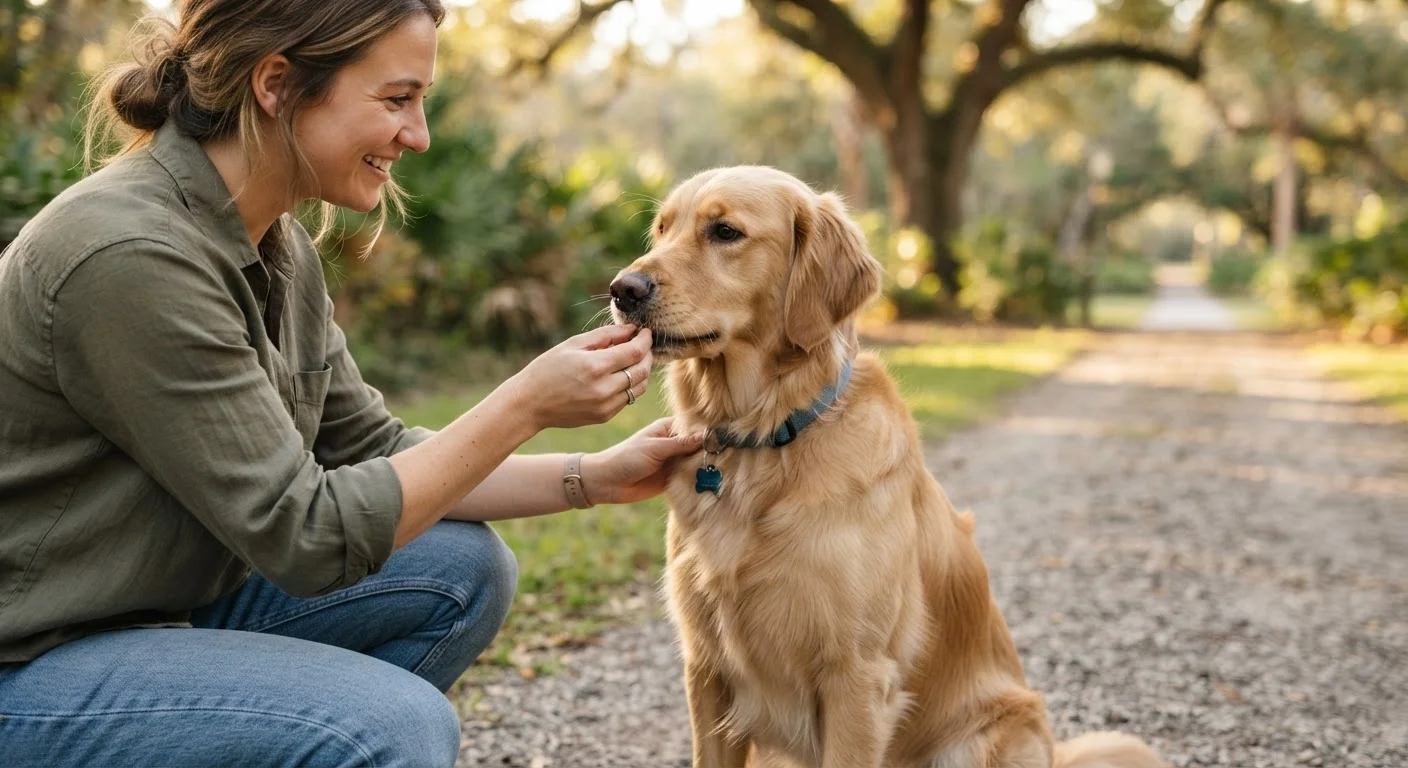
While desensitization controls the intensity of exposure, counter-conditioning targets the animal's emotional response to that exposure. The two techniques are typically used simultaneously. Each time the pet encounters the feared stimulus at a sub-threshold level, something the animal genuinely values — usually a high-value food treat — is introduced immediately.
The sequence matters: the trigger appears first, then the reward follows. Over many repetitions, the animal's brain begins to predict that the previously frightening thing reliably predicts something good. This shifts the conditioned emotional response from fear or avoidance toward anticipation and calm. The animal isn't being bribed into tolerating fear — its actual emotional state is changing.
Choose Rewards That Truly Motivate Your Pet
The effectiveness of counter-conditioning depends heavily on using a reward that the animal genuinely values — not just what is convenient. For many dogs, small pieces of chicken, cheese, or commercial training treats work well. For cats, tuna or a brief play session may be more compelling than food. Observe your pet's actual responses rather than assuming what they prefer.
This same principle, applied in a human context, mirrors some of the approaches described in therapeutic grounding work. Our editorial team notes, however, that animal and human emotional processing differ significantly, and techniques should never be directly transposed between species without professional guidance.
Building a Session: Practical Guidance for Owners
Effective sessions are short — typically five to fifteen minutes — and always end on a calm, positive note. Long sessions fatigue the animal and increase the risk of crossing the fear threshold. Here is a structured approach:
- Identify the trigger clearly. Vague triggers are hard to control. Is the fear directed at strangers in general, or specifically at men in hats? The more precisely defined, the better the plan.
- Find the sub-threshold distance or intensity. This requires observation. Watch for relaxed body language — loose posture, normal breathing, voluntary engagement — as your baseline.
- Pair each controlled exposure with a high-value reward. The reward should be something reserved exclusively for these sessions, increasing its predictive value.
- Progress gradually and only when the pet is consistently calm. Moving too fast is the most common error. When in doubt, slow down.
- Track your sessions. Simple notes on distance, stimulus intensity, and the pet's response help you see patterns and avoid repeating missteps.
Older animals can absolutely benefit from these techniques, though the process may require additional patience. Our overview on training older pets covers what to reasonably expect when working with adult or senior animals.
This article is for general educational purposes only and is not a substitute for personalized advice from a licensed veterinarian or certified animal behaviorist. If your pet's fear or anxiety is severe or involves aggression, please consult a qualified professional.