

Key Takeaways
Why Dogs Pull — The Root of the Problem
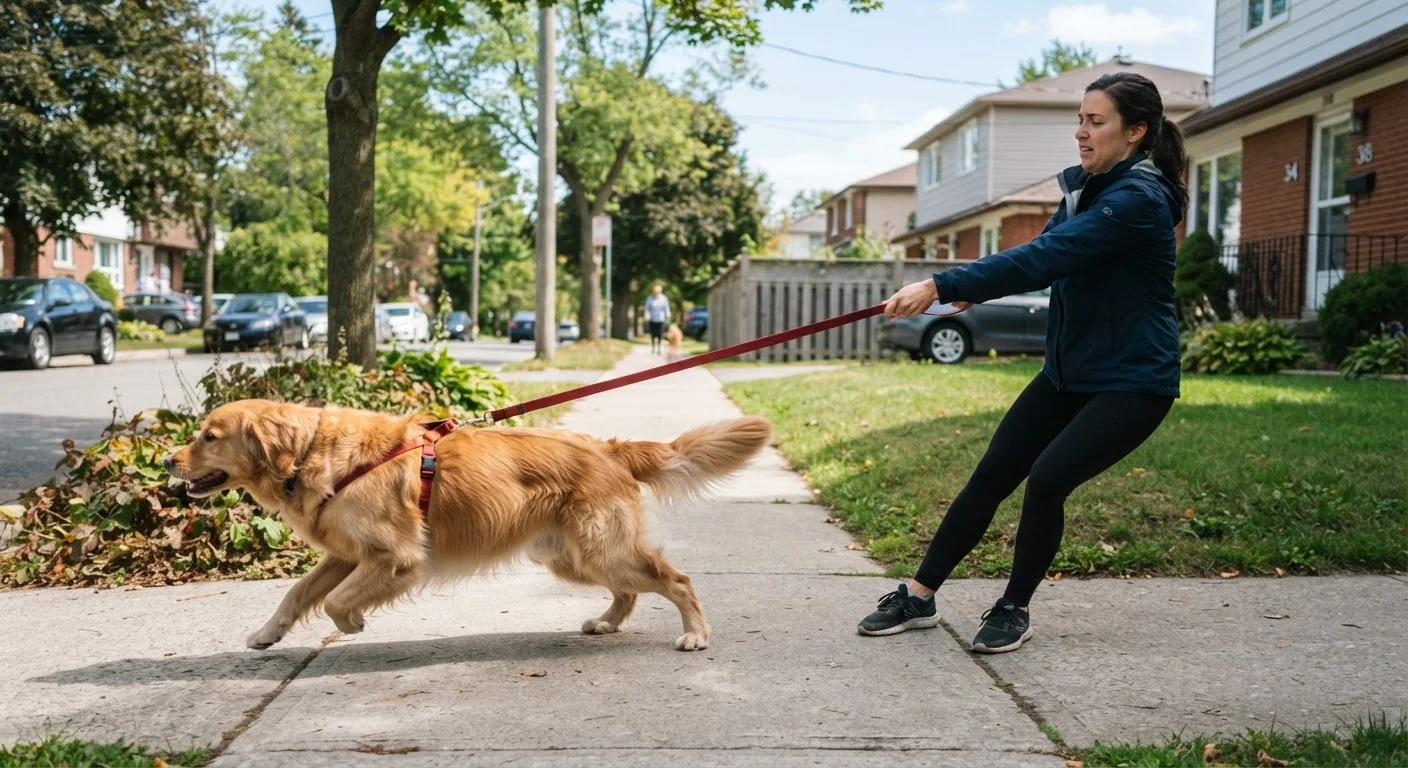
Leash pulling is one of the most reported frustrations among dog owners, yet it's also one of the most misunderstood. Dogs do not pull out of dominance, spite, or a desire to control you. They pull because moving forward is immediately and powerfully rewarding — every interesting smell, passing dog, or patch of grass reached after pulling confirms that pulling works.
This is a straightforward conditioning problem. Each time a dog lunges forward and you follow, the behavior is reinforced. Over dozens of walks, the dog learns a reliable rule: tension on the leash leads to forward progress. Understanding this mechanism is essential before any correction strategy makes sense. If you'd like a broader foundation in how dogs learn, our beginner's introduction to pet training covers the core concepts clearly.
Continuing to walk forward while the leash is taut.
Why it happens: Owners want to complete the walk, and stopping feels disruptive or slow. The path of least resistance is to keep moving.
Applying inconsistent rules across family members or walk contexts.
Why it happens: Different household members have different tolerances, and owners may relax standards when tired, in a hurry, or in a familiar environment.
Starting training in high-distraction environments like busy streets or dog parks.
Why it happens: Owners often practice where they walk, not where the dog can actually focus. They expect the dog to generalize skills it hasn't yet mastered.
Using aversive tools — such as prong collars or choke chains — without professional guidance.
Why it happens: Aversive tools can produce immediate suppression of pulling, which looks like success. Owners assume the problem is solved.
Rewarding the dog only after it has already sat or stopped, missing the key moment of loose-leash walking.
Why it happens: Owners focus on end-point behaviors and miss reinforcing the actual criterion: walking calmly beside them with a slack leash.
The Patterns That Make Pulling Worse
Most owners genuinely want to fix leash pulling but unknowingly repeat patterns that entrench it. Recognizing these errors is the first step toward real progress.
#1
Most commonly reported dog training problem
Leash pulling consistently ranks as the top behavioral complaint among dog owners surveyed by veterinary and training organizations.
~70%
Dogs that pull due to inadvertent owner reinforcement
Certified applied animal behaviorists estimate the majority of persistent pulling cases are maintained by owners unintentionally rewarding forward movement.
Consistency is the single most influential variable in leash training. Dogs learn from patterns, not isolated moments. If a dog is corrected for pulling on Tuesday but allowed to charge ahead on Wednesday, the pulling behavior is placed on a variable reinforcement schedule — which behavioral science shows actually strengthens habits rather than weakening them. For a deeper look at why consistency matters across all training, see the principles of effective pet training.
Retractable Leashes Reinforce Pulling
Retractable leashes extend when a dog pulls forward, directly rewarding the behavior you are trying to eliminate. Using one during any phase of leash training will undermine your progress. A standard four- to six-foot flat leash gives you consistent feedback and control, and removes tension-as-reward from the equation.
Equipment choices also matter. Retractable leashes, for example, teach dogs that constant pulling is normal — the leash rewards tension with length. Switching to a standard four- to six-foot leash removes this problem immediately. If your dog's pulling is sudden, severe, or accompanied by other behavioral changes, it's worth ruling out a physical cause first; some behavior problems signal a veterinary issue rather than a training gap.
Finally, under-stimulated dogs pull with far greater urgency. A dog that hasn't had adequate mental and physical engagement treats every walk as its one chance to experience the world. Recognizing signs of boredom and addressing them through enrichment can meaningfully reduce the arousal level your dog brings to every walk before you've changed a single training step.
Aversive Tools Are Not a Shortcut
Choke chains, prong collars, and shock collars may suppress pulling in the short term, but research in veterinary behavioral science links their use with increased anxiety, fear-based aggression, and breakdown of trust between dogs and owners. The American Veterinary Society of Animal Behavior recommends positive reinforcement as the primary training approach. If you feel you need equipment beyond a standard leash, consult a certified professional trainer before making changes.