

| Number of common dress code tiers | Approximately 6 (Casual → Black Tie) |
| Most misunderstood dress code | Smart Casual (Widely cited in style and etiquette guides) |
| Safe default when code is unclear | Dress one level above your guess |
| Jeans in business casual? | Only if dark, un-distressed, and explicitly allowed |
| Black tie optional means | Formal dress or suit; tuxedo not mandatory |
Why Dress Codes Still Matter
Whether you're heading to a job interview, a wedding, or a company happy hour, dress codes set shared expectations — and misreading one can leave you feeling out of place. The frustrating reality is that terms like "smart casual" or "cocktail attire" mean slightly different things depending on who wrote the invitation. This guide gives you a clear, practical reference so you can decode common American dress codes with confidence.
If you're building out a closet that can handle multiple dress code levels without breaking the bank, our guide to building a functional wardrobe on a tight budget is a great companion read.
| Number of common dress code tiers | Approximately 6 (Casual → Black Tie) |
| Most misunderstood dress code | Smart Casual (Widely cited in style and etiquette guides) |
| Safe default when code is unclear | Dress one level above your guess |
| Jeans in business casual? | Only if dark, un-distressed, and explicitly allowed |
| Black tie optional means | Formal dress or suit; tuxedo not mandatory |
The Dress Code Spectrum, Explained
Dress codes generally run from most casual to most formal. Here's what each level actually calls for:
Casual
Casual does not mean sloppy. It typically means clean, neat everyday clothing — well-fitting jeans, a plain t-shirt or casual button-down, and clean sneakers or flats. Think relaxed but intentional.
Smart Casual
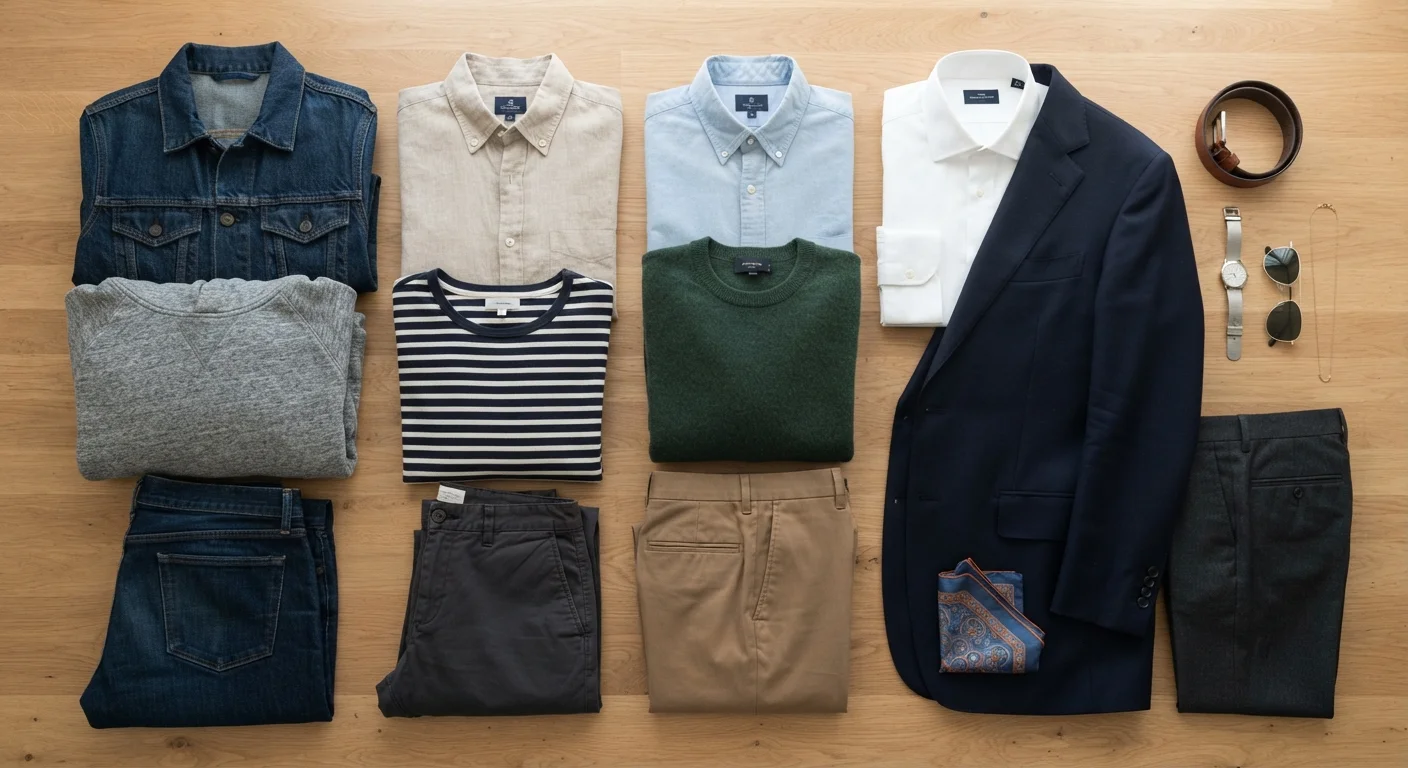
This is one of the most misunderstood labels. Smart casual sits a step above everyday casual — it asks for polished basics without requiring a suit or formal dress. Good examples include chinos or dark-wash jeans paired with a blouse, collared shirt, or structured knit, plus loafers, ankle boots, or clean leather sneakers. Avoid athletic wear, graphic tees, and distressed denim.
Business Casual
Common in American offices and professional events, business casual usually means dress trousers, khakis, or a neat skirt paired with a collared shirt, blouse, or sweater. A blazer is optional but often welcomed. Clean, closed-toe shoes are the norm. Jeans are only acceptable if they are dark, un-distressed, and the workplace has explicitly said so.
Business Professional / Business Formal
This level calls for a tailored suit or matching blazer-and-trouser set in a neutral or dark color, a dress shirt or blouse, and polished dress shoes. For events or interviews with this code, err on the side of conservative cuts and minimal accessories.
Cocktail Attire
Cocktail attire is semi-formal — think knee-length or midi dresses, dressy separates, or a well-tailored suit. Dark or jewel-toned colors work well for evening events. Avoid floor-length gowns at this level unless the invite says otherwise.
Black Tie
Black tie is formal. This traditionally means a floor-length evening gown or formal pantsuit, or a tuxedo with a bow tie. "Black tie optional" gives guests more flexibility, but a floor-length or midi formal dress and a dark suit are safe choices.
Casual
The most relaxed end of the dress code spectrum. Implies neat, clean everyday clothing with no expectation of formality — but not athletic or unkempt.
Smart Casual
A polished step above everyday casual. Combines neat basics — chinos, structured tops, loafers — while avoiding athletic wear, graphic tees, and overly casual pieces.
Business Casual
Common in American professional settings. Typically includes dress trousers or khakis, collared shirts or blouses, and closed-toe shoes. Suits are not required but blazers are welcome.
Cocktail Attire
A semi-formal dress code calling for knee-length or midi dresses, dressy separates, or tailored suits. More formal than business casual but less formal than black tie.
Black Tie
A formal dress code traditionally requiring a tuxedo or floor-length evening gown. "Black tie optional" allows slightly more flexibility, such as a dark formal suit or midi dress.
Business Professional
A step above business casual — typically a full tailored suit or formal blazer set with polished dress shoes, conservative colors, and minimal accessories.
When the Dress Code Is Vague or Missing
Invitations sometimes say things like "festive attire," "garden party," or simply nothing at all. A few quick strategies help:
- Check the venue: A rooftop bar suggests smart casual; a ballroom suggests cocktail or above.
- Look at the event time: Evening events skew more formal than afternoon ones.
- When in doubt, go one step up: It's generally better to be slightly overdressed than underdressed at a professional or celebratory event.
- Ask the host: If you know the person, a quick message is always appropriate.
"Festive Attire" and Seasonal Codes
Terms like "festive attire," "garden party," or "resort casual" are semi-informal shorthand and can vary widely by host and region. Festive typically implies cocktail-level dressing with seasonal color or flair. Garden party usually calls for a midi dress, light suit, or flowy separates in softer colors. When you see these labels, treat them as smart casual–to–cocktail range and lean into the setting's mood.
For versatile pieces that move across multiple dress code levels, see our overview of wardrobe staples every American closet benefits from. And if you're ever unsure whether an outfit flatters you, this honest breakdown of the body shape dressing concept may help you think it through.