

Key Takeaways
Option A
Collision Coverage
The coverage that kicks in when your car hits something.
Best for: Drivers who want protection against damage from accidents involving other vehicles or objects, regardless of who is at fault.
Option B
Comprehensive Coverage
The coverage that handles nearly everything else.
Best for: Drivers who want protection from non-collision events like theft, weather damage, or animal strikes.
If you're financing or leasing your vehicle
Both Collision and Comprehensive Coverage
Most lenders and leasing companies require both coverage types for the duration of the loan or lease. Carrying only one may violate your agreement.
If your car's market value is low and you're driving an older paid-off vehicle
Neither may be cost-effective
When a vehicle's actual cash value is close to or below your combined annual premium plus deductible, the financial case for both coverages weakens. Consult a licensed insurance professional to weigh your specific situation.
If you live in an area with severe weather, high theft rates, or frequent deer collisions
Comprehensive Coverage
Comprehensive is designed precisely for environmental and non-collision risks that are statistically more common in certain regions.
If you frequently drive in heavy traffic or have a long daily commute
Collision Coverage
Higher time on the road and in congested conditions increases exposure to at-fault and not-at-fault accident scenarios that collision coverage addresses.
What Each Coverage Type Actually Covers
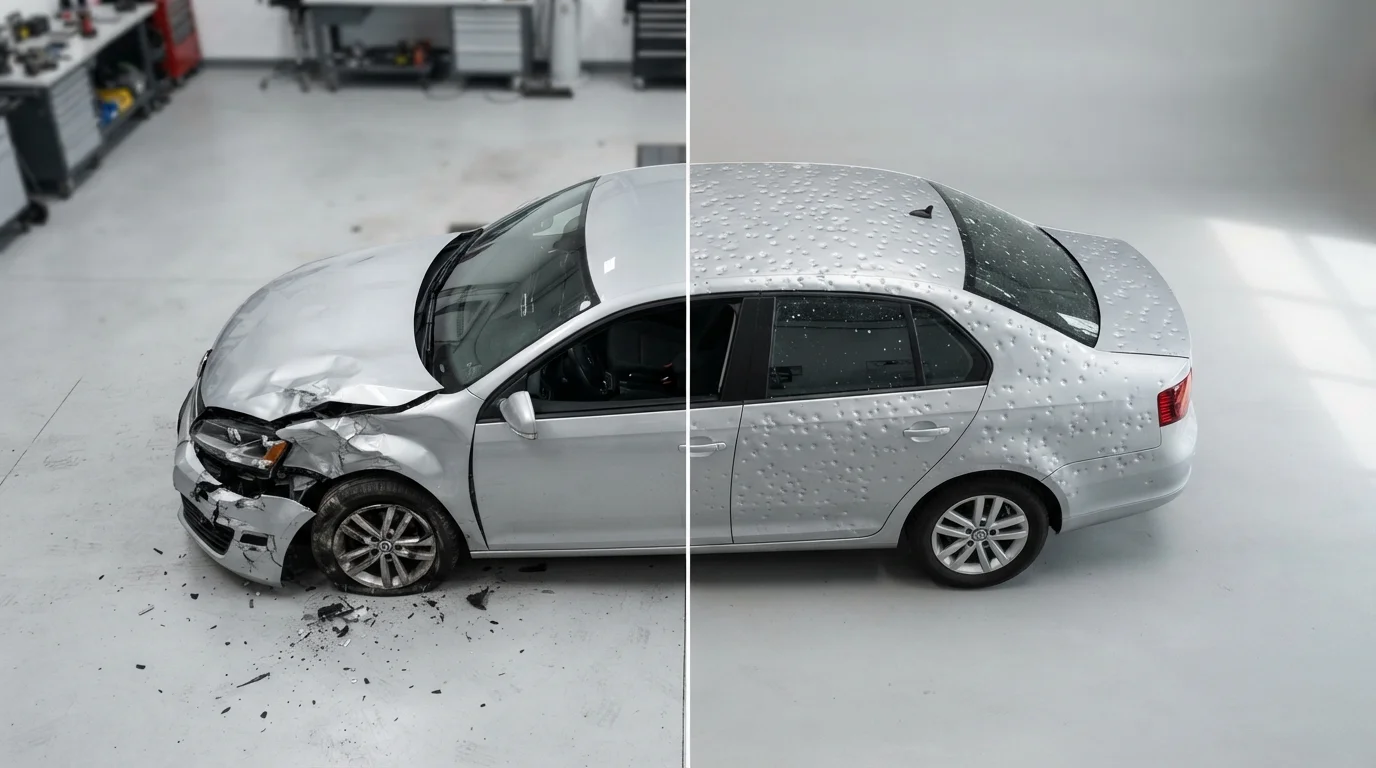
Collision coverage pays to repair or replace your vehicle when it sustains damage from a collision - with another car, a guardrail, a telephone pole, or any fixed object. It applies whether you caused the accident or another driver did, as long as the claim is filed under your own policy. One important note: collision does not cover damage to the other driver's vehicle; that falls under liability coverage.
Comprehensive coverage (sometimes called "other than collision" in policy language) covers a wide range of events that are generally outside the driver's control. Common examples include:
- Theft or attempted theft
- Hail, flooding, or wind damage
- Fire
- Falling objects such as tree limbs
- Animal strikes, including deer collisions
- Vandalism
For a fuller picture of how both fit within a broader policy, see Auto Insurance Coverage Types, Explained.
| Criterion | Collision Coverage | Comprehensive Coverage |
|---|---|---|
| What triggers a claim | Impact with vehicle or object | Non-collision event (theft, weather, animal) |
| At-fault accidents | Covered | Not covered |
| Weather damage | Not covered | Covered (hail, flood, wind) |
| Vehicle theft | Not covered | Covered |
| Animal strike | Not covered | Covered |
| Vandalism | Not covered | Covered |
| State-mandated requirement | No | No |
| Lender/lease typically required | Yes | Yes |
| Separate deductible applies | Yes | Yes |
Deductibles, Premiums, and How Claims Work
Each coverage type carries its own deductible - the amount you pay out of pocket before your insurer covers the remainder. Deductibles for both collision and comprehensive are typically set between $250 and $2,000, depending on what you choose at enrollment. A higher deductible generally lowers your monthly premium; a lower deductible means the insurer absorbs more cost per claim but charges more upfront.
~$522/yr
Average annual collision coverage cost
According to the National Association of Insurance Commissioners (NAIC), the average U.S. collision premium has been in this range in recent reporting periods, though rates vary significantly by state and driver profile.
~$192/yr
Average annual comprehensive coverage cost
NAIC data consistently shows comprehensive premiums running notably lower than collision premiums for most U.S. drivers.
~$500-$1,000
Most common deductible range chosen
Industry surveys indicate the majority of insured drivers select deductibles in this range when enrolling in collision or comprehensive coverage.
When you file a claim, your insurer will assess the damage and determine whether to pay for repairs or declare the vehicle a total loss. Payout is generally based on the vehicle's actual cash value (ACV) at the time of the loss - meaning depreciation is factored in. To understand how insurers calculate what a totaled vehicle is worth, see our breakdown of agreed value vs. actual cash value.
It's also worth knowing that filing multiple claims in a short period can affect your premium at renewal. Checking with your insurer about how claims are treated under your specific policy is always a reasonable step before filing for minor damage.
When You Need One, the Other, or Both
Neither collision nor comprehensive is legally required by any state - but that doesn't mean they're optional for everyone. If you're financing or leasing a vehicle, your lender or leasing company will almost certainly require both. Dropping either coverage while still under a loan agreement could put you in breach of contract.
For drivers who own their vehicles outright, the decision becomes a financial calculation. Consider the vehicle's current market value, your available savings to cover an unexpected repair, and your local risk environment. Someone parking in a hail-prone region or an area with elevated vehicle theft rates may find comprehensive coverage especially valuable, even on an older car.
Together, collision and comprehensive - combined with liability - make up what's commonly called full coverage. Learn what full coverage actually includes and what it leaves out before deciding on a policy structure.
Comprehensive Doesn't Mean 'Everything'
Despite its name, comprehensive coverage doesn't cover every possible scenario. Mechanical breakdowns, normal wear and tear, and damage from your own intentional acts are typically excluded. Always read your policy's exclusions section carefully, as covered events can vary by insurer and state.
To think through how much coverage fits your specific situation, walk through the key questions that shape a well-matched policy.
This article is for general informational purposes only and does not constitute personalized insurance advice. Coverage terms, exclusions, and premiums vary by provider and state. Always review your policy documents carefully and consult a licensed insurance professional for guidance specific to your situation.