

Key Takeaways
True Cost of Car Ownership
The true cost of owning a car includes every dollar you spend to buy, operate, and maintain a vehicle over time - not just the purchase price. This encompasses fuel, insurance, routine maintenance, registration, financing interest, and depreciation. Taken together, these expenses often far exceed what most buyers anticipate when they negotiate a sticker price.
Economists and consumer researchers typically calculate total cost of ownership (TCO) on a per-mile or per-year basis, factoring in both fixed costs (insurance, registration, loan payments) and variable costs (fuel, repairs, tires).
Why the Sticker Price Is Just the Starting Point
When most people budget for a car, they think about the monthly payment. But the purchase price - whether paid upfront or financed - is only one slice of what you'll actually spend. Ownership costs accumulate from the moment you drive off the lot, and they don't stop until you sell or trade in the vehicle.
Breaking these costs into clear categories helps you make a more realistic budget and compare vehicles on a level footing. Whether you're weighing a new purchase or already own a vehicle, understanding the full picture gives you meaningful financial control. For a deeper look at how buying outright compares to leasing, see how ownership and leasing differ after you drive off the lot.
$10,000+
Average annual new-vehicle ownership cost
AAA's annual 'Your Driving Costs' study consistently finds total annual ownership costs for a new vehicle exceed $10,000 when all expenses are included.
~20%
Typical first-year depreciation for new vehicles
Most new cars lose roughly 15-25% of their market value within the first 12 months of ownership, making depreciation the dominant cost category.
~50%
Value lost by year five on most new vehicles
Industry data generally shows new vehicles retain around half their original value after five years, though this varies by make, model, and market conditions.
The Big Five Ongoing Cost Categories
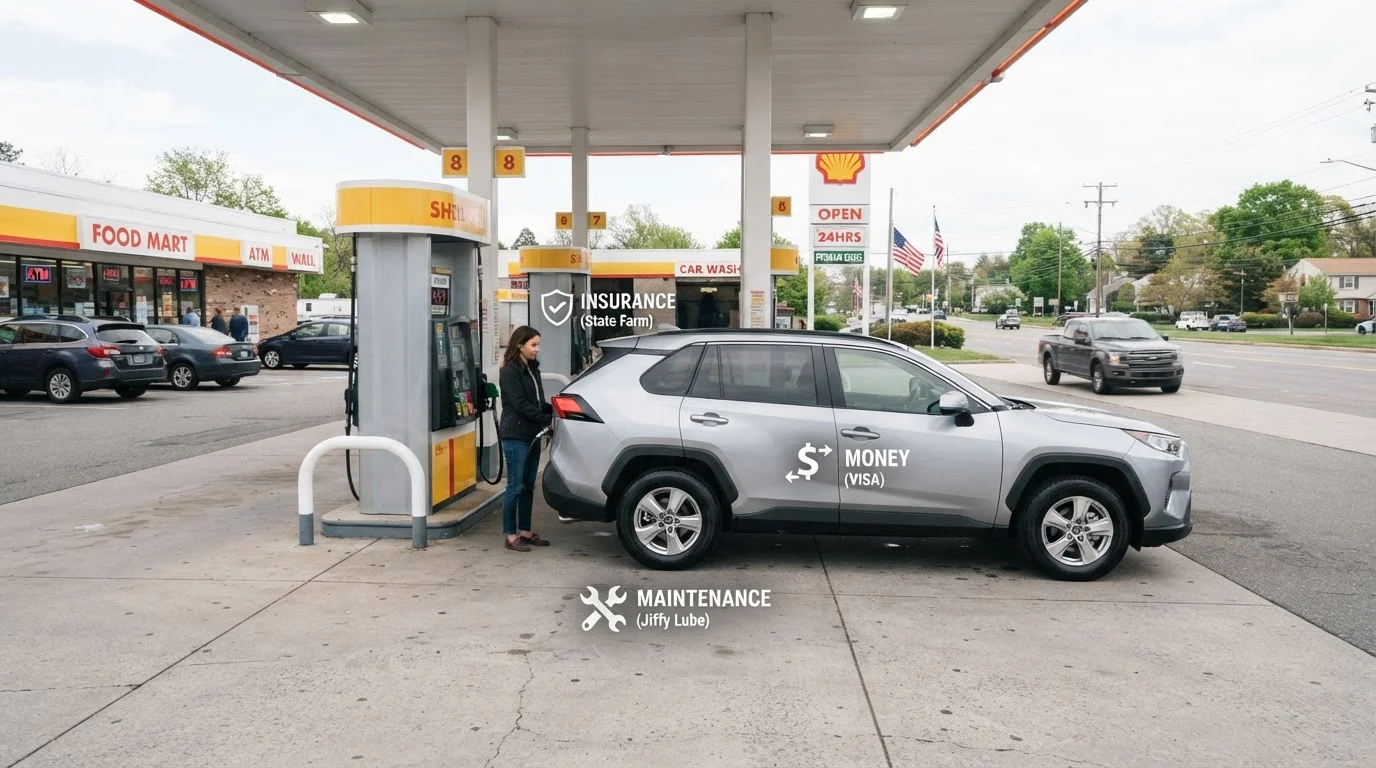
Most auto ownership expenses fall into five main categories:
- Depreciation: The loss in a vehicle's market value over time. New vehicles typically lose 15-25% of their value in year one, and roughly 50% over five years. This is usually the largest single ownership cost. Our article on depreciation and the vehicle lifecycle explains how this curve works in detail.
- Fuel: Highly variable, tied to how much you drive, your vehicle's fuel economy, and local gas prices. Fuel costs are easy to underestimate, especially for drivers who commute long distances or own larger vehicles.
- Insurance: A mandatory fixed cost in nearly every U.S. state. Premiums depend on your driving record, location, vehicle value, and coverage choices. Reviewing your policy regularly can reveal opportunities to adjust coverage as your vehicle ages.
- Maintenance and repairs: Routine items - oil changes, tire rotations, brake pads, filters - add up steadily. Unexpected repairs can be significantly more expensive. Following your manufacturer's recommended service schedule is one of the most effective ways to avoid larger repair bills later.
- Fees, taxes, and financing interest: Registration fees, state and local taxes, and loan interest are often overlooked in initial budgeting. Over a five-year loan, interest payments can add thousands of dollars to the effective purchase price.
How Your Driving Habits and Location Change the Numbers
Two drivers with identical vehicles can face meaningfully different ownership costs. Urban drivers often spend more on parking, face higher insurance premiums, and drive fewer miles - reducing fuel costs but increasing wear from stop-and-go traffic. Suburban or rural drivers may log more miles and spend more on fuel, but benefit from lower parking costs and sometimes cheaper insurance rates.
The type of vehicle matters enormously as well. Trucks and SUVs generally cost more to insure and fuel than sedans or smaller vehicles. Electric vehicles can reduce fuel costs but may carry higher purchase prices and different maintenance considerations.
Time Your Purchase to Reduce Depreciation Impact
Buying a vehicle that is two to three years old means the previous owner absorbed the steepest portion of the depreciation curve. You get a vehicle with significant remaining useful life at a price that better reflects actual market value. Just be sure to account for any additional maintenance costs associated with age and mileage.
If you're a newer car owner, this roadmap for first-time owners covers the ongoing responsibilities that keep a vehicle running reliably - and affordably.
Building a More Accurate Ownership Budget
A practical approach is to estimate all five cost categories on an annual basis before purchasing, not after. Many financial planning tools and consumer organizations publish average per-mile cost estimates broken down by vehicle class, which can serve as a useful baseline.
Key steps for a more accurate picture:
- Get insurance quotes before finalizing a vehicle choice - premiums vary significantly by model.
- Research typical maintenance schedules and costs for any vehicle you're seriously considering.
- Use the vehicle's official fuel economy rating alongside your expected annual mileage to estimate annual fuel spend.
- Factor in depreciation when comparing new versus used vehicles, recognizing that used vehicles absorb their steepest value drops before you buy them.
- Don't overlook local costs - tolls, city parking, and state registration fees can add hundreds of dollars per year in some areas.
Total Cost of Ownership Tools
Several consumer and automotive research organizations publish free online calculators that estimate total cost of ownership by vehicle make, model, and zip code. These tools can help you compare two vehicles that look similar on sticker price but differ significantly in insurance rates, fuel economy, or typical maintenance costs. Results are estimates and will vary based on individual circumstances.
If you're planning a long road trip and wondering how car travel compares financially to flying, this cost comparison breaks down what driving versus flying actually looks like.