

Key Takeaways
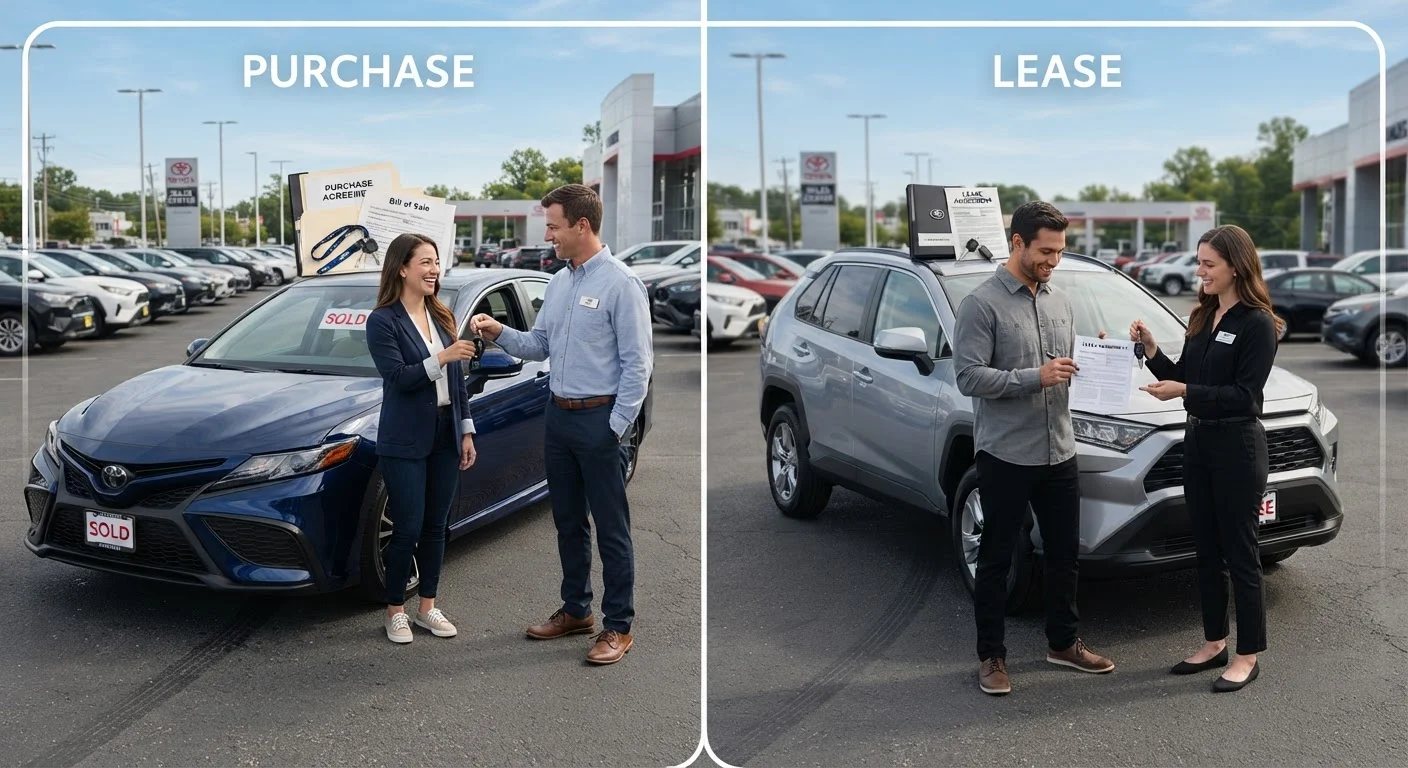
Option A
Buying a Car
The path to full ownership and long-term equity.
Best for: Drivers who put on high mileage, want to modify their vehicle, or plan to keep it for many years.
Option B
Leasing a Car
Predictable payments for a vehicle you return at term's end.
Best for: Drivers who prefer lower monthly costs, like driving newer models regularly, and keep mileage within set limits.
If you drive more than 15,000 miles per year
Buying a Car
Mileage overages on a lease can add up to hundreds or thousands of dollars at turn-in. Ownership places no mileage restrictions on you whatsoever.
If you want to drive a newer model every two to three years
Leasing a Car
Leases are structured around term lengths of two to four years, making it straightforward to transition into a new vehicle when the contract ends.
If building long-term asset value matters to you
Buying a Car
Once the loan is paid off, you own an asset outright - one you can sell, trade, or keep without further monthly obligations.
If you want predictable, lower monthly payments on a new vehicle
Leasing a Car
Because you're only financing the vehicle's depreciation during the lease term, monthly payments are generally lower than a comparable purchase loan.
If you plan to customize or heavily modify your vehicle
Buying a Car
Owners can modify their vehicle as they choose. Lease agreements typically require the car to be returned in its original configuration, making modifications impractical.
Who Actually Owns the Car?
The most fundamental difference between buying and leasing isn't the monthly payment - it's who holds the title. When you buy a car, whether outright or through an auto loan, you are the owner (or become the owner once the loan is paid). The vehicle is yours to keep, sell, trade in, or pass along as you see fit.
When you lease, the leasing company (typically a financial arm of the automaker or a third-party lender) retains ownership throughout the contract. You're essentially paying for the right to use the vehicle for a defined period - usually two to four years - after which you return it, unless your contract includes a purchase option you choose to exercise.
This distinction ripples through nearly every other aspect of the experience. Understanding how a vehicle loses value over time is especially important here: when you buy, depreciation affects the resale value of your asset; when you lease, the leasing company absorbs that depreciation risk, which is partly why they set mileage and condition limits so carefully.
Mileage, Modifications, and Day-to-Day Restrictions
Lease agreements almost always include an annual mileage allowance - commonly 10,000, 12,000, or 15,000 miles per year. Driving beyond that cap results in per-mile overage charges, typically ranging from $0.10 to $0.30 per mile depending on the contract. For a high-mileage driver, those fees can be significant by turn-in time.
Owners face no such restriction. Whether you drive 8,000 miles a year or 30,000, the vehicle is yours and no contractual penalty applies.
Modifications tell a similar story. Owners can add aftermarket wheels, tint windows, install a roof rack, or make mechanical upgrades without seeking anyone's approval. Lessees, by contrast, are generally required to return the vehicle in its original factory configuration. Even seemingly minor changes - window tinting or aftermarket audio - may need to be reversed before turn-in to avoid charges.
Wear and tear standards also differ. Normal wear is expected in any vehicle, but lease contracts define "excessive" wear, which can include larger dents, interior stains, or tire wear below a certain tread depth. Buyers simply absorb these as normal ownership realities.
| Criterion | Buying | Leasing |
|---|---|---|
| Ownership | You own the vehicle (or upon payoff) | Leasing company retains title |
| Monthly payments | Typically higher | Typically lower |
| Mileage limits | None | Usually 10,000-15,000 miles/year |
| Equity built | Yes - grows with each payment | No equity accumulated |
| Modifications allowed | Yes, freely | Generally not permitted |
| End-of-term options | Keep, sell, or trade in | Return, buy out, or re-lease |
| Wear-and-tear responsibility | Affects resale value only | Subject to excess-wear charges |
| Early exit | Sell or trade anytime | Early termination fees apply |
The Financial Picture: Payments, Equity, and Long-Term Cost
Lease payments are generally lower than loan payments for the same vehicle. That's because you're only financing the car's expected depreciation over the lease term, plus interest and fees - not the full purchase price. This makes leasing attractive for drivers who want more vehicle for a given monthly budget.
The trade-off is equity. Every loan payment you make builds ownership stake in an asset. When the loan is retired, you own something with real resale value. Lease payments build no equity; when the term ends, you walk away with nothing to sell or trade unless you exercise a buyout option.
The full cost of owning a vehicle extends beyond loan or lease payments to include insurance, maintenance, registration, and fuel - expenses that apply in both scenarios. However, insurance requirements may be more stringent under a lease; lessors typically require higher liability limits and may mandate gap coverage (which covers the difference between what you owe and what the car is worth if it's totaled). It's worth reviewing what full coverage actually means before signing either type of contract.
~30%
Typical new-car value loss in year one
Industry estimates generally place first-year depreciation for new vehicles between 20% and 30%, which is a key factor in how lease payments are structured.
72-84 months
Common auto loan term lengths today
According to Experian's State of the Automotive Finance Market reports, longer loan terms have become increasingly common, reducing monthly payments but increasing total interest paid.
This article provides general educational information about vehicle financing options and is not personalized financial or legal advice. Consult a qualified financial professional before making decisions based on your individual circumstances.
Flexibility at the End of the Term
When a car loan is paid off, your options are wide open: keep driving, sell privately, trade in at a dealership, or hand it down. You're in full control.
When a lease ends, your standard options are to return the vehicle, sign a new lease (often on a different model), or purchase the car at a predetermined residual value set in the original contract. If market conditions have shifted - say, used car values have risen significantly - that buyout price may or may not represent good value depending on the situation.
Early exit from a lease is also more complicated than selling a car you own. Breaking a lease typically involves early termination fees that can be substantial, though some lessors offer lease-transfer programs that allow another qualified driver to take over your contract.
For drivers who are ready to take on the ongoing responsibilities that come with ownership, a structured maintenance roadmap can help make the transition manageable. Owners also have access to tools like extended vehicle protection plans that may not apply under a lease where the factory warranty often covers the full term anyway.
Neither buying nor leasing is objectively superior. The better fit depends on how many miles you drive, how long you intend to keep a vehicle, how important flexibility is, and whether building equity in an asset aligns with your financial goals.