

Autos & Travel

Before You Back Out of the Driveway: A Road Trip Readiness Checklist

Share
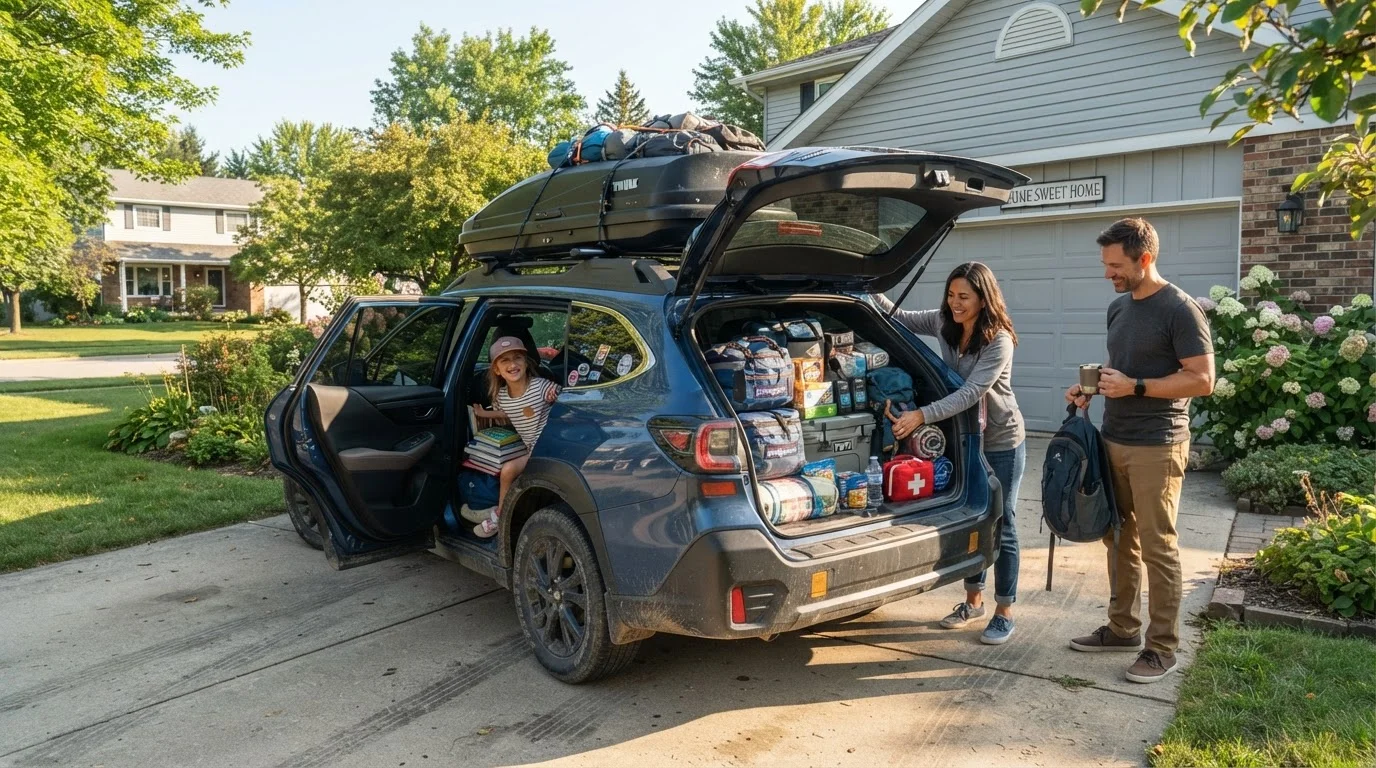
A packed car sitting in a driveway on a sunny morning ready for a road trip

Key Takeaways

Vehicle checks — fluids, tires, lights — should happen at least 48 hours before departure, not the morning you leave.
Carrying physical copies of your insurance card, registration, and roadside assistance info can be critical if your phone dies.
A basic emergency kit can make the difference between a minor inconvenience and a dangerous roadside situation.
Route planning should include offline maps and at least one backup route in case of closures or detours.
Fatigue is one of the leading causes of highway accidents — plan rest stops before you feel tired, not after.
30–60 min

Summary

28 items · 30–60 minutes

Why a Pre-Trip Checklist Pays Off

Most road trip problems are preventable — and the window to prevent them is in the days before you pull out of the driveway. A low tire, an expired registration, a dead phone charger: individually minor, but on the road, any of them can derail your plans or your safety.

This checklist organizes everything into four categories: your vehicle, your documents, your supplies, and your route. Work through it methodically. Some items take seconds; others — like a shop inspection or a tire rotation — need to be scheduled a few days out. For a full planning framework that goes beyond the checklist, see our complete road trip planning guide.

Schedule Vehicle Checks Early — Not the Night Before

If your pre-trip inspection reveals a problem — low brake pad thickness, a slow tire leak, a weak battery — you need time to address it. Aim to complete the vehicle portion of this checklist at least 48 hours before departure. That window gives you time to get into a shop if needed without scrambling or delaying your trip.

What You'll Need to Work Through This Checklist

A few tools make the process faster and more reliable. You don't need all of them, but having the right ones on hand means you won't have to guess.

Required

Tire pressure gauge

Accurately measures PSI in each tire so you can inflate or deflate to the correct level before departure.

Required

Owner's manual

Contains correct fluid specs, tire PSI, and service intervals specific to your vehicle — not just general averages.

Optional

Portable jump starter pack

Allows you to jump-start a dead battery without needing another vehicle, especially useful in remote areas.

Required

Offline map app (downloaded)

Provides navigation without cell service — essential for rural stretches where data coverage is unreliable.

Optional

Portable phone charger

Keeps your navigation, emergency contacts, and communication tools powered throughout the trip.

Required

Basic first aid kit

Handles minor injuries on the road and reduces reliance on finding a pharmacy or clinic for small incidents.

The Full Road Trip Readiness Checklist

Work through each group in order. Items marked must are non-negotiable for safe, legal travel. Items marked should are strongly recommended. Nice-to-have items improve comfort and contingency but won't ground your trip if skipped.

Vehicle Condition

Check tire pressure on all four tires — and the spare — using a gauge; inflate to the PSI listed in your owner's manual or door jamb sticker, not the number on the tire sidewall. Must
Inspect tires visually for uneven tread wear, bulges, cracks, or embedded objects; replace any tire with less than 2/32" of tread remaining. Must
Verify engine oil level with the dipstick; schedule an oil change before the trip if you're within 1,000–1,500 miles of your next service interval. Must
Check coolant, brake fluid, windshield washer fluid, and power steering fluid levels and top off any that are low. Must
Test all exterior lights — headlights (low and high beam), taillights, brake lights, turn signals, and hazard flashers. Must
Have a trusted mechanic inspect the brakes if you notice any squealing, grinding, or soft pedal feel before departure. Must
Check wiper blades for streaking or skipping and replace them if they're older than one year or show wear. Should
Confirm the battery terminals are corrosion-free and the battery is holding a charge, especially if it's more than three years old. Should

Documents and Insurance

Locate your current vehicle registration and confirm it has not expired; place a physical copy in the glove box. Must
Confirm your auto insurance is active and that you have a current proof-of-insurance card — physical or digital — accessible in the vehicle. Must
Carry your driver's license and verify it is not expired or suspended before departure. Must
Write down or print your roadside assistance provider's phone number and membership ID so it's accessible without cell service. Should
If crossing into Canada or Mexico, verify current entry documentation requirements with official government sources well in advance. Must

Emergency and Safety Supplies

Pack a basic emergency kit containing jumper cables (or a jump starter pack), a reflective warning triangle or flares, and a flashlight with working batteries. Must
Confirm the spare tire is properly inflated and that you have a functioning jack and lug wrench in the vehicle. Must
Include a basic first aid kit with bandages, antiseptic wipes, pain relievers, and any prescription medications needed for the trip. Should
Pack enough water for all passengers to last several hours in case of an unexpected breakdown in a remote or hot area. Should
Carry a portable phone charger or car charger so you can maintain navigation and emergency communication if your battery drains. Should
Add a blanket and a basic tool kit (screwdrivers, pliers, zip ties) for unexpected situations, particularly in cooler climates or remote areas. Nice to have

Route and Navigation Planning

Download offline maps for your route before departure so navigation works in areas with no cell signal. Must
Check current road conditions, construction alerts, and any closures along your route using a reliable traffic or road conditions service. Should
Identify at least one alternate route in case of unexpected closures or severe delays on your primary path. Should
Locate gas stations, rest stops, and food options along the route, especially for stretches with significant gaps in services. Should
Share your itinerary — including planned stops and expected arrival times — with someone not traveling with you. Should
Plan your driving schedule to avoid exceeding 8–9 hours of driving per day, and build in regular breaks every 2 hours. Must
Research parking, entry fees, and reservation requirements for any national parks, campgrounds, or popular attractions on your route. Nice to have

Don't Rely Solely on Common Road Trip Assumptions

Some widely held beliefs about road trips — like 'any fuel grade is fine' or 'you'll know when you're too tired to drive' — don't hold up under scrutiny. Fatigue in particular is deceptive: impairment often sets in before drivers notice it. Review our article on road trip myths that lead drivers into trouble before your next trip.

If you're heading out solo, the stakes of being unprepared are higher — there's no co-pilot to help navigate or stay awake. Our article on driving alone across the country walks through additional considerations worth reviewing before a solo departure.

Once you're on the road, don't underestimate rest stops. They're more useful than most drivers realize — see what to actually do at rest stops for practical tips. And if you're planning your first multi-day trip, what no one tells you before your first extended road trip covers the logistics and realities that catch most first-timers off guard.

Autos & Travel Editorial Team is the collective byline for our editorial team and contributor network. Articles published under this byline or an editorial pen name are researched, written, and reviewed according to our editorial standards for clarity, consistency, and independence before publication.

View all articles by Autos & Travel Editorial Team →
Disclaimer: The content on this site is for informational purposes only and is not a substitute for professional advice. Always consult a qualified professional for guidance specific to your situation.