

Key Takeaways
Why Rest Stops Deserve More of Your Attention
For most drivers, rest stops serve one purpose: a quick bathroom run before getting back on the highway as fast as possible. That instinct is understandable - nobody wants to lose time on a long haul. But treating rest stops as nothing more than roadside inconveniences leaves a lot of value on the table.
Traffic safety research consistently identifies driver fatigue as a major contributor to highway accidents. The common belief that pushing through tiredness is fine with coffee or a cracked window doesn't hold up to scrutiny. Structured, intentional stops are one of the most practical tools available to keep a driver sharp. Before you even get on the road, a solid plan helps - see our road trip readiness checklist for guidance on what to prepare in advance.
The stops you're already making can do a lot more work. Here's how.
Do a quick walk-around of your vehicle
Most drivers never look at their car while it's stopped - they just get back in and drive. A 60-second walk-around lets you spot a low tire, an open trunk, or a fluid leak before it becomes a breakdown. Check that all doors are fully closed, glance at tire sidewalls for visible bulging or unusual flatness, and look underneath for anything dripping. This habit takes almost no time but can catch problems early.
A 60-second walk-around can catch a slow tire or fluid leak before it becomes a breakdown.
Move your body for at least five minutes
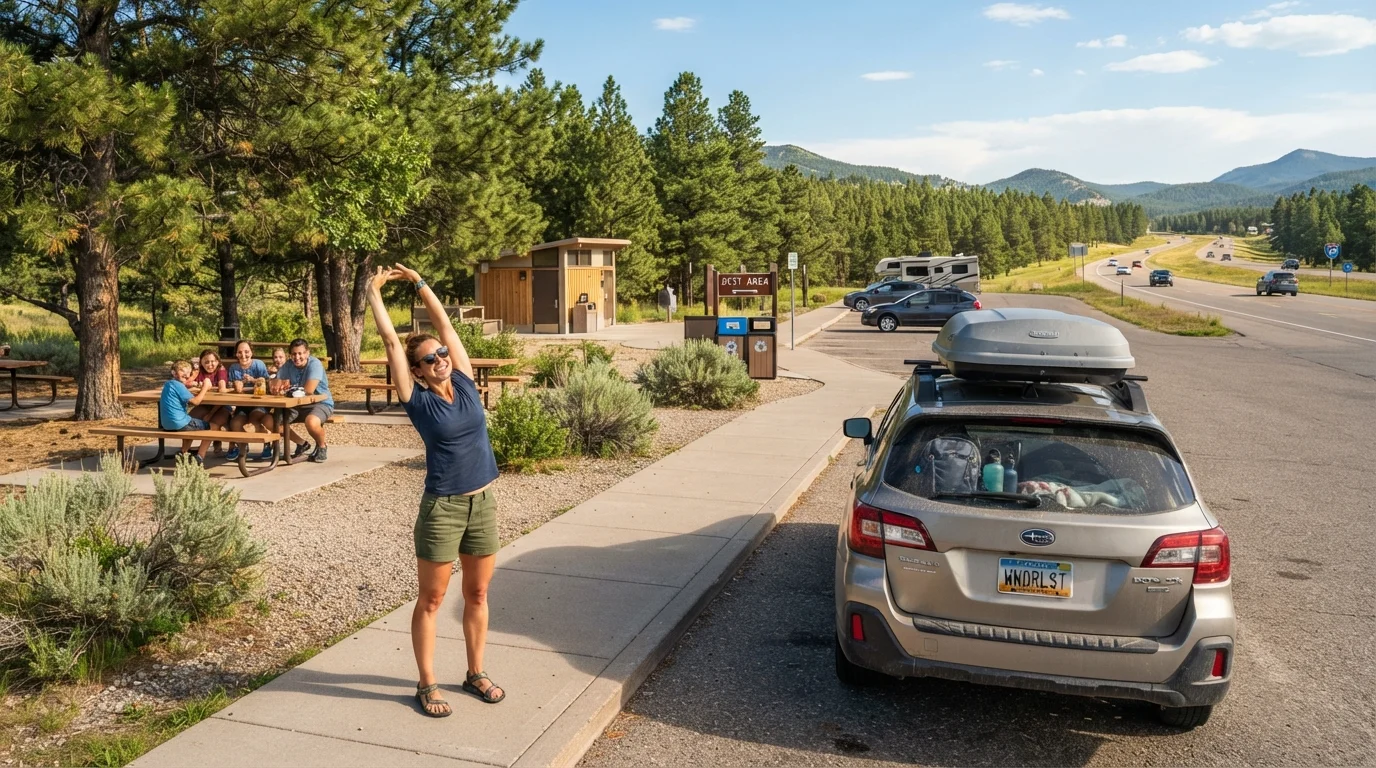
Sitting in a fixed position for hours tightens the hip flexors, lower back, and hamstrings, and can reduce circulation in the legs. Walking briskly around the rest area, doing a few light stretches, or even standing and rotating your ankles makes a measurable difference. This isn't about exercise - it's about resetting your body's physical baseline so you return to the driver's seat more comfortable and alert. The science of recovery applies here: the body functions better with deliberate breaks built in.
Even five minutes of movement resets circulation and reduces the physical toll of long highway stretches.
Drink water - not just caffeine
Many drivers deliberately limit water intake to reduce bathroom stops, then reach for more coffee to stay awake. This creates a dehydration cycle that actually worsens fatigue and concentration. Mild dehydration - often unnoticed - is associated with reduced reaction time and increased feelings of tiredness. Keep water accessible and drink at every stop, even if you don't feel thirsty. Caffeine has its place, but it works better as a complement to hydration than a substitute for it.
Mild dehydration worsens fatigue and reaction time - water at every stop is a simple countermeasure.
Review your navigation and adjust your plan
GPS apps reroute constantly, and the route you were on an hour ago may no longer be the smartest path. Rest stops are a natural moment to look at your full route with fresh eyes - check for construction delays, weather ahead, or whether the fuel stop you planned is still reasonable given your current mileage. If you're heading through a city later in the trip, a quick look at urban traffic patterns while stationary beats reacting to surprises at speed. For tips on navigating city segments mid-trip, see our guide on driving in unfamiliar cities.
A stationary navigation check beats reacting to unexpected delays or route changes while driving.
Check in with your passengers
Rest stops are a practical moment to address needs before they become friction. Are kids getting restless? Does a passenger need medication, a snack, or a layer change? Is the backseat cargo shifting? Addressing these small things proactively - rather than managing them while driving - keeps your attention where it belongs on the next leg. If packing smart was part of your pre-trip prep, this is where that organized cabin pays off: accessible snacks, a clear path to essentials, and nothing that requires the driver to reach awkwardly while moving.
Handling small passenger needs while stopped keeps your focus on the road during the next leg.
Take a short nap if you're genuinely drowsy
If you feel your eyelids getting heavy or you've caught yourself drifting mentally, a 10-to-20-minute nap in a parked vehicle is one of the most effective fatigue countermeasures available. Research consistently shows that short naps restore alertness more reliably than caffeine alone for sleep-deprived drivers. Lock your doors, recline your seat slightly, and set a phone alarm. There's no shame in this - it's the responsible choice. Attempting to push through significant drowsiness dramatically increases risk to everyone on the road.
A 10-to-20-minute nap restores alertness more reliably than caffeine for a genuinely drowsy driver.
Make the Most of Every Stop
Building these habits into your rest stop routine won't cost you significant time - most take under five minutes. The cumulative effect on alertness, comfort, and vehicle reliability across a multi-hour drive is real. If you're traveling with children, structured stops become even more valuable; our guide on keeping long drives manageable with kids covers how to build stop routines into a family trip without derailing your schedule.
Plan Stops Before You Need Them
Rather than stopping only when you're already tired or desperate for a restroom, build rest stops into your schedule proactively - roughly every 1.5 to 2 hours of driving. This approach keeps fatigue from accumulating unnoticed. If you're sharing driving duties, hand-off points at rest stops also give both drivers a natural transition without pulling over on the shoulder.
Rest isn't a detour from your trip - it's part of the journey itself. The connection between rest and mental wellbeing is well-documented, and it applies just as much behind the wheel as it does at the gym or the office.