

Key Takeaways
Why Visual Portioning Works
Calorie counting can be a useful tool in certain clinical contexts, but for most people in everyday life, it introduces more friction than it resolves. Research in behavioral nutrition suggests that rigid tracking often leads to cycles of over-restriction followed by abandonment, rather than the flexible, lasting habits that support long-term health.
Visual frameworks - such as dividing your plate by food group - anchor your choices in observable, consistent behavior without requiring apps, scales, or mental math. They work because they translate general nutritional principles (adequate protein, fiber-rich carbohydrates, vegetables, moderate fat) into a physical template you can apply at any meal.
This Is General Nutrition Information
The guidance in this article is intended for general educational purposes only and is not a substitute for personalized medical or dietary advice. Individual nutritional needs vary based on age, health status, activity level, and medical history. Please consult a registered dietitian or qualified healthcare provider before making significant changes to your diet, especially if you have a chronic health condition.
For those who also want to understand what's inside packaged foods, learning to read a nutrition label is a valuable complement to plate-based thinking. Our guide to reading nutrition labels offers a clear walkthrough of every section of the U.S. Nutrition Facts panel.
What you will need
What You'll Need Before You Start
A Standard Dinner Plate (9-10 inches)
Serves as a visual guide for proportioning food groups without any measuring equipment.
Registered Dietitian (RD)
Provides personalized nutrition guidance tailored to your health goals, preferences, and medical history.
Nutrition Facts Label
Offers factual ingredient and nutrient information to inform food choices at the grocery store.
No specialized equipment is required to apply these principles. The steps below use your plate, your hand, and your general awareness as the primary tools. Building balanced meals consistently is more about developing a reliable mental model than acquiring resources.
Pair this approach with regular physical activity for broader health benefits - the Fitness & Exercise hub covers practical guidance across a range of activity levels.
Step-by-Step: Building Your Plate
Divide Your Plate Into Three Zones
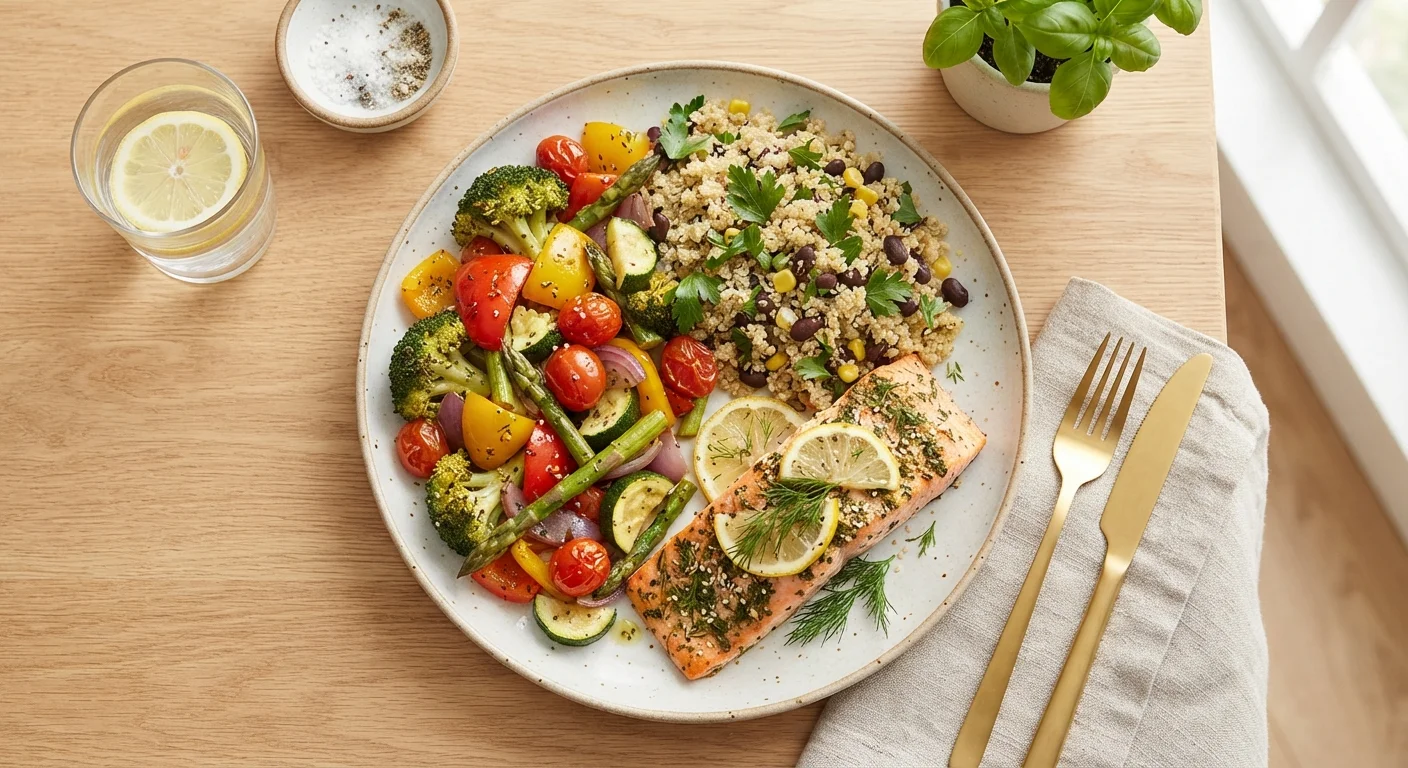
Start with a standard 9-10 inch dinner plate and mentally divide it into three sections. Fill half the plate with non-starchy vegetables - think leafy greens, broccoli, bell peppers, cucumbers, or tomatoes. Reserve one quarter for a lean or plant-based protein source, and the remaining quarter for a whole grain or starchy vegetable such as brown rice, quinoa, whole wheat pasta, or sweet potato.
This approach, sometimes called the plate method, is widely used in nutrition education because it creates a visual framework that's easy to apply consistently. You don't need to weigh anything or calculate percentages.
Choose a Quality Protein Source
Protein supports muscle maintenance, helps regulate appetite, and contributes to satiety after meals. For the protein quarter of your plate, aim for sources that are minimally processed: eggs, fish, poultry, legumes (beans, lentils, chickpeas), tofu, tempeh, or lower-fat dairy like Greek yogurt or cottage cheese.
If you're curious about reducing animal products in your diet, the plant-based eating guide offers a practical introduction to building nutritionally adequate meals from plant sources.
Select Whole Grains or Starchy Vegetables
The grain or starch quarter of your plate provides complex carbohydrates, which serve as a primary energy source and, in whole grain form, contribute dietary fiber. Fiber supports digestive health and helps moderate blood sugar response after eating. Opt for whole grain versions of bread, pasta, and rice where possible, as these retain more fiber and micronutrients than refined versions.
If you're navigating a grocery store and unsure what counts as a whole grain, our nutrition label walkthrough can help you decode ingredient lists and daily values.
Add a Small Serving of Healthy Fat
Dietary fat is not the enemy of a balanced plate - it plays important roles in hormone function, absorption of fat-soluble vitamins (A, D, E, and K), and long-term satiety. Include a small serving of unsaturated fat alongside your meal: a drizzle of olive oil, a few slices of avocado, a small handful of nuts or seeds, or a dressing made with a plant-based oil.
Portion awareness matters here because fat is calorie-dense. The goal isn't elimination - it's moderation and choosing sources that provide nutritional value alongside the calories.
Consider What You Drink
Beverages can contribute significant amounts of added sugar and calories that are easy to overlook. Water, sparkling water, unsweetened coffee, and tea are generally solid defaults. Milk and fortified non-dairy alternatives can contribute protein and calcium but also add calories worth factoring in. Fruit juice, even 100% varieties, delivers natural sugar with less fiber than whole fruit.
Staying well hydrated also supports healthy digestion and can help distinguish genuine hunger from thirst - the two are sometimes confused.
Apply the Framework Consistently, Not Perfectly
The plate method and the principles behind it are most useful as a general pattern rather than a rule to follow flawlessly at every meal. Eating out, social occasions, travel, and busy schedules mean that some meals will look different - and that's fine. The aim is a consistent overall pattern across the week, not perfection at each sitting.
Reducing food waste can also support healthier eating habits at home. Thoughtful pantry management - as explored in our pantry organization guide - helps you keep nutritious staples accessible and reduces the temptation to rely on highly processed alternatives.
Use Your Hand as a Portable Portion Guide
Your palm is roughly the size of a single protein serving; a cupped hand approximates a serving of grains or starchy vegetables; and a thumb-sized portion works well for fats like nut butter or oil. These estimates aren't perfect, but they're consistent, always available, and surprisingly useful for everyday meals.
Avoid Overly Restrictive Approaches
Eliminating entire food groups or drastically reducing intake without professional guidance can lead to nutrient deficiencies and other health consequences. The goal here is balance and variety, not restriction. If you find that food-related anxiety or rigid rules are affecting your daily life, speaking with a healthcare professional is a meaningful step.
Making the Pattern Stick Over Time
Sustainable eating isn't about a single perfect meal - it's about patterns that hold up across varied circumstances. A few practical habits support consistency without requiring constant effort:
- Stock your environment strategically. Keeping vegetables, whole grains, and protein sources accessible reduces decision fatigue at mealtimes.
- Plan loosely, not rigidly. Having a general idea of what you'll eat most nights of the week creates structure without eliminating flexibility.
- Crowding in rather than cutting out. Focusing on adding nutritious foods - more vegetables, more legumes, more whole grains - tends to naturally reduce space for less nutritious options without a restrictive mindset.
Budget considerations are also real. Building balanced meals on a tight food budget involves trade-offs in time and flexibility, which is worth understanding honestly - much like the trade-offs explored in living on a strict budget.
This article provides general nutrition information for educational purposes only. It is not a substitute for personalized advice from a registered dietitian or qualified healthcare professional. Individual nutritional needs vary - consult a licensed provider before making significant dietary changes.