

Key Takeaways
Why the Nutrition Facts Label Matters
The U.S. Nutrition Facts label is regulated by the FDA and represents one of the most reliable pieces of consumer health information on any packaged food. Yet research consistently shows that many shoppers glance at it without fully understanding what they're reading - or skip it in favor of front-of-package health claims that carry far less regulatory weight.
Terms like natural, wholesome, and even light are largely marketing language. The panel on the back or side of the package is where the standardized, verified data lives. Learning to read it confidently is a practical skill that pays off across thousands of food decisions over a lifetime.
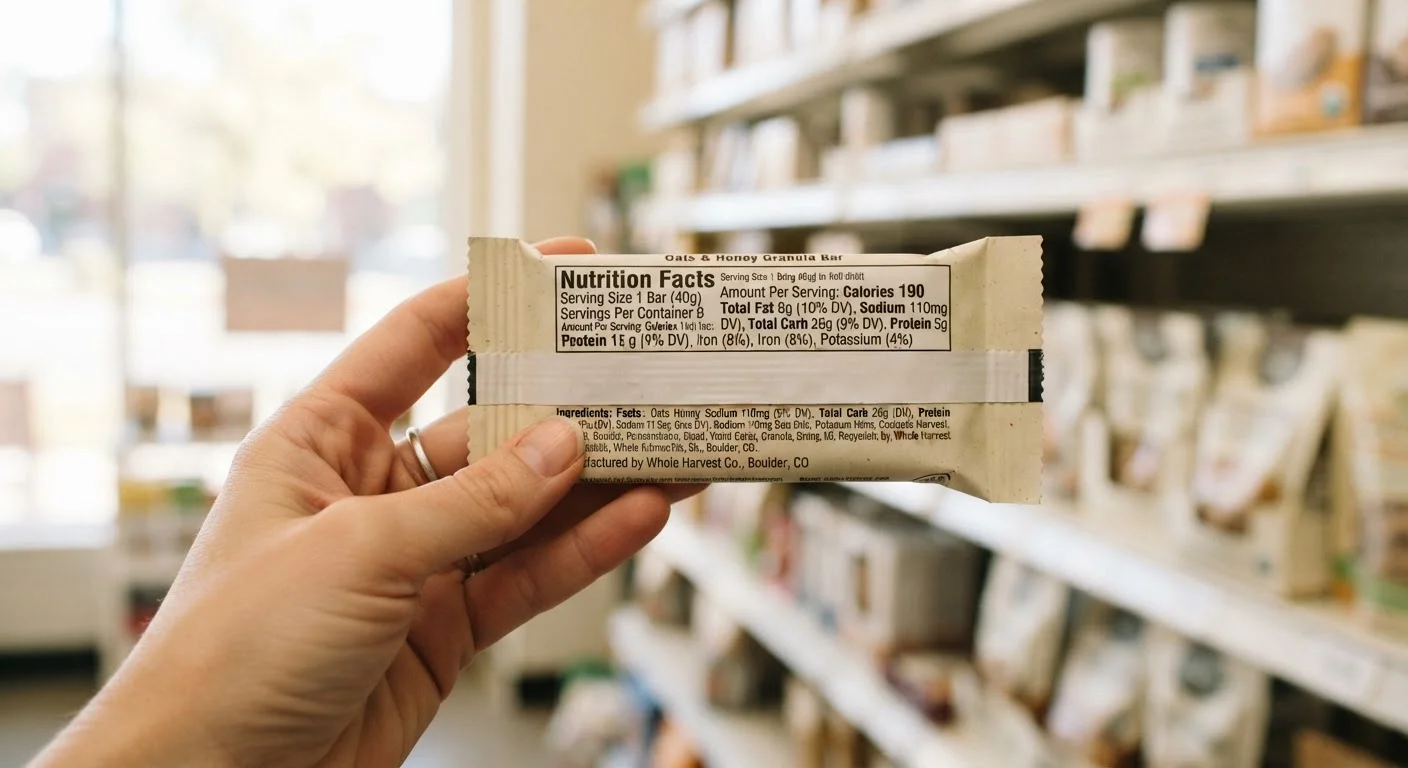
This guide walks you through each section of a standard U.S. Nutrition Facts label in the order you'll encounter it - so next time you're in the aisle, you know exactly what you're looking at. If you want to apply these skills immediately, the Grocery Run Nutrition Checklist is a helpful companion for your next shopping trip.
The tools below are all you need to get started.
Packaged food item
Provides the Nutrition Facts label you will practice reading during this walkthrough.
USDA FoodData Central (online database)
Allows you to look up nutrient information for foods that don't carry a Nutrition Facts panel, such as fresh produce.
This article provides general nutrition education and is not a substitute for personalized dietary advice. Consult a registered dietitian or qualified healthcare provider for guidance specific to your health needs.
How to Read Each Section of the Label
Follow these steps in order the next time you pick up a packaged food. Even moving through just the first two or three steps will sharpen your awareness considerably.
Start with serving size and servings per container
At the very top of every Nutrition Facts panel, you'll find two lines: serving size and servings per container. All the numbers that follow - calories, fat, sodium, everything - apply to one serving, not the whole package.
A bag of crackers might list a serving size of 16 crackers, but contain three servings. Eat the whole bag and you triple every value on the label. The FDA updated label formats in 2020 to use more realistic serving sizes and larger calorie type, making this easier to spot.
Read the calorie count in context
Calories measure the energy one serving provides. As a general reference, the FDA bases % Daily Values on a 2,000-calorie daily diet - though individual needs vary considerably based on age, sex, activity level, and health status.
Rather than fixating on calories alone, use the number as a starting point. A 400-calorie snack that's high in fiber and protein contributes differently to overall nutrition than a 400-calorie item made almost entirely of refined starch and added sugar.
Identify nutrients to limit
The middle section of the label lists nutrients most Americans consume in excess. Pay particular attention to:
- Saturated fat: Linked to cardiovascular risk at high intake levels; the American Heart Association recommends keeping it to no more than 5-6% of total daily calories for those managing heart health.
- Sodium: Major dietary contributor to high blood pressure; the Dietary Guidelines for Americans recommends less than 2,300 mg per day for most adults.
- Added sugars: Listed separately since 2020 label updates, distinguishing them from naturally occurring sugars in fruit or dairy. The Dietary Guidelines recommend keeping added sugars below 10% of total daily calories.
Look for nutrients to seek out
Below the nutrients-to-limit section, the label lists nutrients many Americans under-consume. These include dietary fiber, vitamin D, calcium, iron, and potassium. Choosing foods with higher %DV for these nutrients supports overall dietary balance.
Dietary fiber in particular is worth tracking: most U.S. adults fall well short of the recommended daily intake, and adequate fiber supports digestive health and sustained energy. The label now also separates key micronutrients more clearly than older formats did.
Understand the % Daily Value column
The % Daily Value (%DV) column on the right side of the panel shows how much of a nutrient one serving contributes toward the daily reference amount for an average adult eating 2,000 calories. It's a quick comparative tool - not a prescription.
Use %DV to compare similar products side by side, or to gauge whether a single food item is contributing disproportionately to your intake of any one nutrient. This is especially useful when evaluating sodium or saturated fat in processed foods.
Scan the ingredients list
The ingredients list, found below or beside the Nutrition Facts panel, is ordered by weight from most to least. The first three or four ingredients make up the bulk of the product. If added sugar appears multiple times under different names (cane syrup, dextrose, maltose, corn syrup), its total contribution may be higher than its individual placement suggests.
The ingredients list also reveals what the numbers don't show - whole grain status, artificial additives, allergens, and food dyes. Pairing this read with the Nutrition Facts panel gives you the most complete picture of what's in the package. For more context on whole grains vs. refined grains, the distinction shows up clearly in this list.
Practice Makes Label-Reading Effortless
The first few times you work through a Nutrition Facts panel deliberately, it may feel slow. Within a handful of shopping trips, the key checkpoints - serving size, %DV for sodium and saturated fat, fiber content, and the first few ingredients - become second nature. Start with one category of food you buy regularly and build from there.
Once you're comfortable reading individual labels, you may find it eye-opening to apply what you've learned to products often marketed as healthy. Many items carrying a health halo - granola bars, flavored yogurts, veggie chips - reveal a different story at the panel. The foods often labeled 'healthy' article explores this in more detail.
For a broader approach to everyday eating that doesn't require calorie-by-calorie tracking, see our guide on building a balanced plate.