

Key Takeaways
Start here
What 'Plant-Based' Actually Means
Next
Key Nutrients to Pay Attention To
Then
How to Ease In Without Overhauling Everything
When you're ready
Common Beginner Questions
What 'Plant-Based' Actually Means
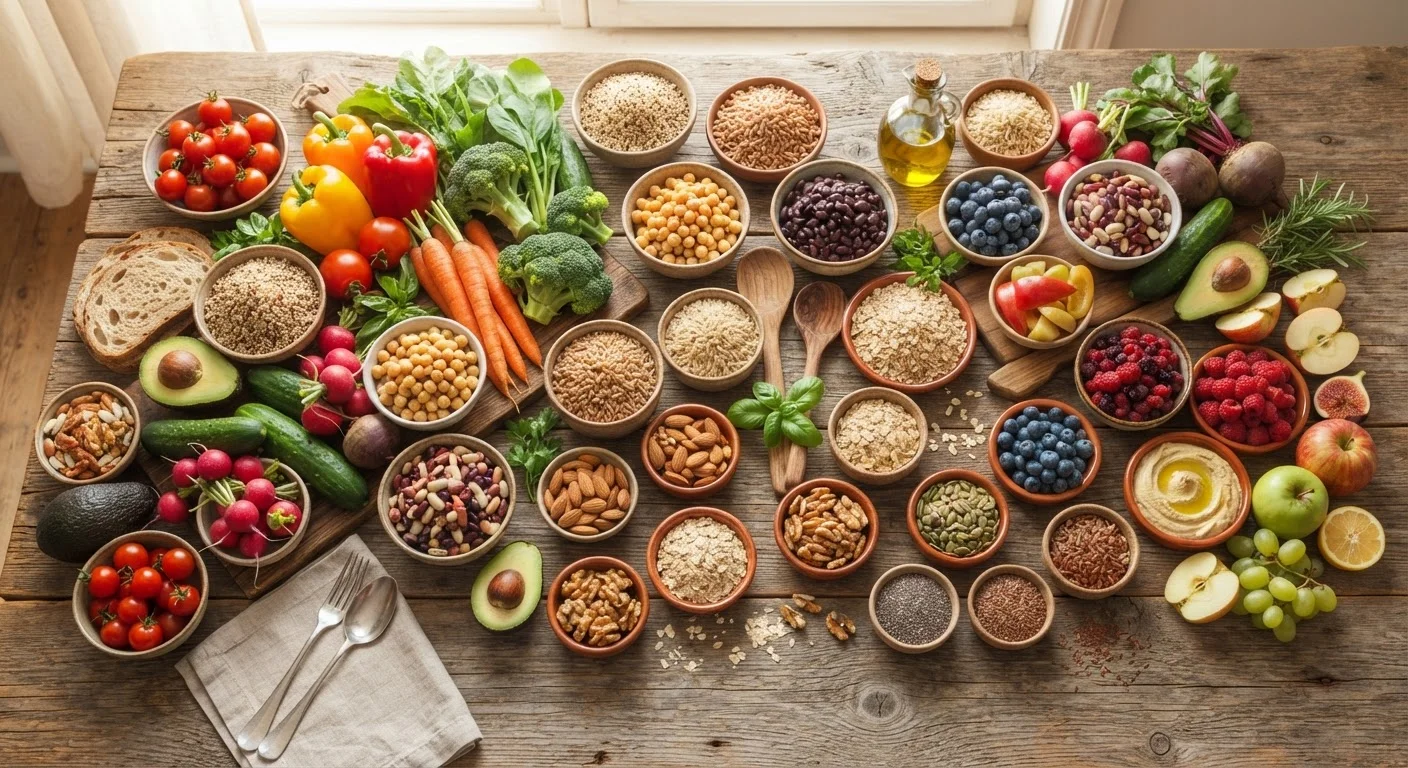
The term plant-based diet gets used loosely, which can make it confusing for beginners. At its core, it describes an eating pattern built primarily around whole plant foods - vegetables, fruits, legumes, whole grains, nuts, and seeds - rather than a strict set of rules about what you can never eat.
Plant-based sits on a spectrum. On one end is a fully vegan diet, which excludes all animal-derived foods. Further along you'll find vegetarian patterns that include dairy or eggs, and then more flexible approaches sometimes called flexitarian, where meat and fish appear occasionally rather than daily. Research on eating patterns consistently shows that moving toward more whole plant foods - regardless of where you land on this spectrum - is associated with a range of health benefits, though individual outcomes always vary.
What plant-based eating is not is a synonym for automatically healthy. Heavily processed snack foods, refined grains, and added sugars can all be technically plant-based. The emphasis in most evidence-informed guidance is on whole plant foods rather than processed alternatives.
Plant-based diet
An eating pattern built primarily around whole plant foods such as vegetables, fruits, grains, legumes, nuts, and seeds. It does not necessarily exclude all animal products.
Flexitarian
A mostly plant-based approach that still includes meat, poultry, or fish occasionally rather than regularly.
Non-heme iron
The form of iron found in plant foods. It is absorbed less readily by the body than heme iron from meat, but absorption can be improved by eating it alongside vitamin C.
Whole food
A food that is minimally processed and close to its natural state - for example, lentils, oats, or kale - as opposed to a product that has been heavily refined or has many added ingredients.
Omega-3 fatty acids
A type of healthy fat important for heart and brain function. Found in fatty fish and, in a different form, in certain plant foods like flaxseed and walnuts.
Fortified food
A food that has had nutrients added during processing that aren't naturally present or are present in small amounts - for example, plant milks fortified with calcium or B12.
Key Nutrients to Pay Attention To
Shifting toward plant-based eating doesn't require a nutrition degree, but a handful of nutrients deserve deliberate attention - especially when animal foods are significantly reduced or removed.
- Vitamin B12: Found almost exclusively in animal products. Anyone eliminating or greatly limiting animal foods should discuss B12 supplementation with a healthcare provider.
- Iron: Plant foods contain non-heme iron, which is absorbed less efficiently than the heme iron in meat. Pairing iron-rich plants (lentils, spinach, fortified cereals) with vitamin C sources can improve absorption.
- Calcium: Dairy is a common source, but calcium is also found in fortified plant milks, tofu set with calcium sulfate, kale, and broccoli.
- Omega-3 fatty acids: Fatty fish is a rich source of EPA and DHA. Plant foods like flaxseed, chia seeds, and walnuts provide ALA, a precursor the body converts at a limited rate. Algae-based omega-3 supplements offer a direct plant-derived source of EPA and DHA.
- Zinc and iodine: Both can require attention, particularly for those avoiding seafood and dairy. Iodized salt and fortified foods help, but individual needs vary.
This article provides general nutrition education and is not a substitute for personalized medical or dietary advice. A registered dietitian can evaluate your specific eating pattern and flag any gaps.
Variety Is Your Best Nutritional Tool
No single plant food provides every essential nutrient. Eating a wide range of vegetables, legumes, whole grains, nuts, and seeds throughout the week helps cover nutritional bases more effectively than relying on a few favorites. Think of diversity across the week rather than perfection at each meal.
How to Ease In Without Overhauling Everything
Most nutrition researchers and dietitians agree that sustainable dietary change tends to come from gradual, realistic shifts rather than dramatic overnight transformations. A few practical starting points:
- Start with addition, not subtraction. Before thinking about what to remove, focus on adding more vegetables, legumes, and whole grains to meals you already enjoy.
- Try one plant-based dinner per week. A simple lentil soup, bean tacos, or grain bowl requires no special equipment and gives you low-stakes practice.
- Rethink the plate ratio. Rather than centering every meal on a protein portion, experiment with making plants the majority of the plate. Our companion piece on building a balanced plate without calorie counting offers practical portioning ideas.
- Explore whole-food protein sources. Chickpeas, black beans, edamame, tempeh, and lentils are versatile, affordable, and widely available.
- Read ingredient lists on packaged plant-based foods. Many meat alternatives are highly processed and high in sodium. They can be a useful bridge, but they work best as occasional options rather than dietary staples.
Watch Out for 'Health Halo' Processed Foods
Not everything labeled plant-based or vegan is nutritionally strong. Some packaged alternatives are high in sodium, saturated fat, or refined ingredients. Checking ingredient lists and nutrition facts panels helps you make more informed choices. Whole plant foods remain the most evidence-supported foundation.
Common Beginner Questions
A few practical questions come up frequently for people exploring plant-based eating for the first time.
Will I need to track everything I eat?
Tracking is one tool, not a requirement. Many people eat well-rounded plant-based diets by focusing on variety and whole foods rather than obsessive counting. If you have a specific health condition or goal, a dietitian can advise whether more structured monitoring would be useful.
What about eating out or social situations?
Most restaurant menus include vegetable-forward options even if they aren't labeled plant-based. Grain bowls, salads with legumes, stir-fries, and ethnic cuisines like Indian, Ethiopian, and Mexican offer naturally plant-rich choices. Flexibility tends to make plant-based eating more socially sustainable over the long run.
Is this appropriate for children or older adults?
Plant-based diets can be nutritionally adequate across life stages, but children, older adults, and anyone managing a chronic condition have distinct nutritional needs. These groups should work closely with a qualified healthcare professional before making significant dietary changes.
This article is for general informational and educational purposes only and does not constitute medical or dietary advice. Always consult a qualified healthcare professional or registered dietitian before making significant changes to your eating pattern, particularly if you have a health condition or are in a special population such as pregnancy, childhood, or older adulthood.