

Key Takeaways
Where Preparedness Ends and Over-Accumulation Begins
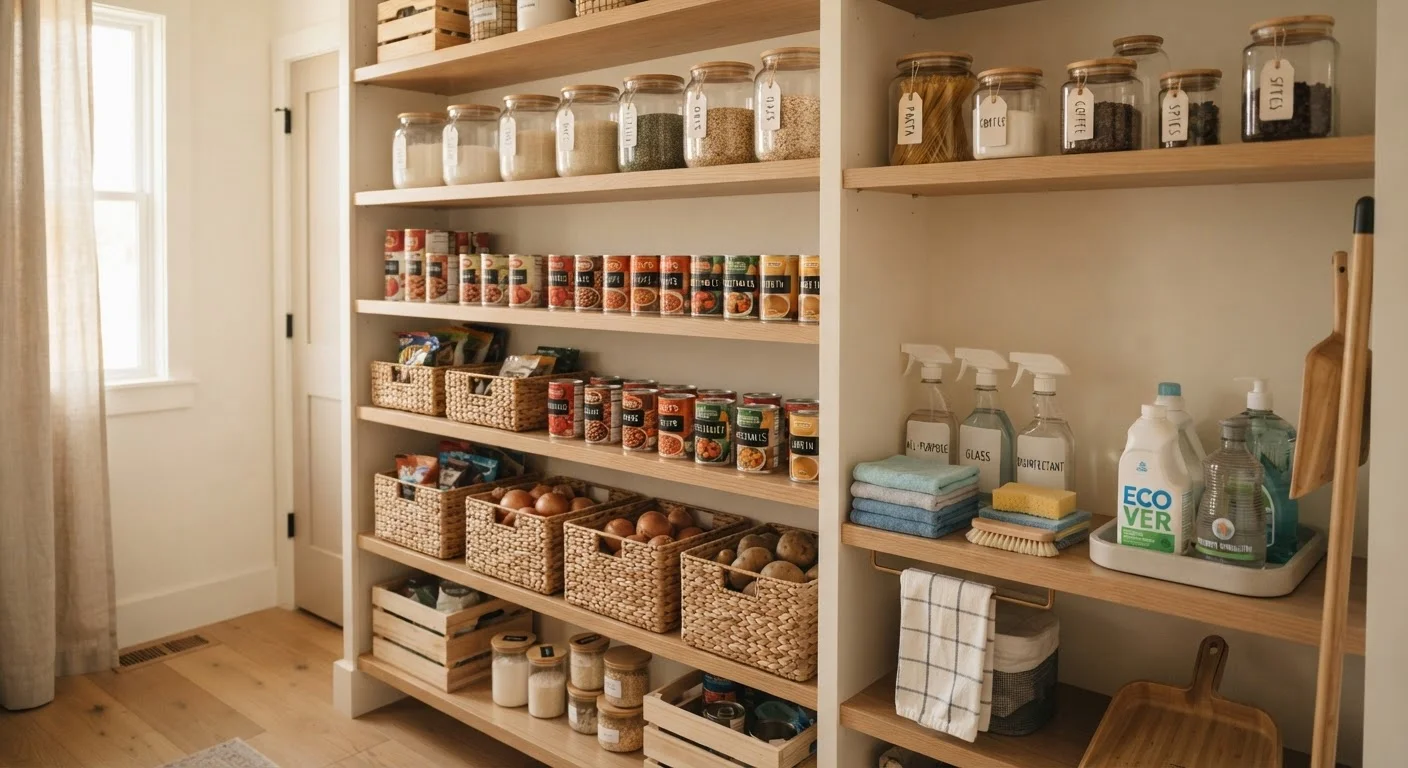
The line between a thoughtfully stocked home and an overcrowded one comes down to two factors: intent and system. Preparedness means maintaining supplies you will actually use, stored in a way that keeps them accessible and in good condition. Over-accumulation happens when purchasing is driven by anxiety, deals, or vague feelings of "just in case" - with no plan for rotation, limits, or use.
A useful mental benchmark: your home is well-stocked when you can confidently name what you have, find it without excavating a cabinet, and use it before it expires. When you lose track of inventory, find duplicates you forgot you owned, or regularly throw away expired goods, your system has drifted past the functional zone.
Myth
The more supplies you have on hand, the more prepared your household is.
Fact
Quantity without organization and rotation creates waste, not preparedness. A smaller, well-managed supply is more functional than an overflowing, disorganized one.
True household readiness is about having the right items accessible and usable - not the maximum number of items possible. When supplies exceed your storage capacity or your ability to track them, they expire unnoticed, get lost behind other goods, or simply create clutter that slows down your daily routine. A practical target for most households is a two-to-four-week supply of everyday essentials, rotated regularly so nothing goes to waste. The pantry organization principles that reduce food waste can help you build a system that keeps stock genuinely usable.
Myth
Buying in bulk always saves money and makes good financial sense.
Fact
Bulk buying only saves money when you reliably use everything before it expires and have adequate storage space. Otherwise, it generates waste that costs more than buying smaller quantities.
The math on bulk buying only works when three conditions are met: you have space to store items properly, you use them before they degrade, and you're not duplicating items you already have. Perishables bought in bulk but left unused represent a direct financial loss. Even non-perishables can degrade over time in poor storage conditions. Before buying in volume, assess your actual consumption rate. If your household uses one bottle of dish soap per month, buying twenty-four isn't savings - it's capital tied up on a shelf.
Myth
A well-stocked home requires a dedicated storage room or large pantry.
Fact
Strategic organization allows smaller homes to maintain practical supplies within standard cabinets, closets, and under-bed storage without a dedicated room.
Spatial constraints don't prevent preparedness - they just require more deliberate systems. Vertical shelving, labeled bins, and tiered shelf organizers can dramatically expand the effective capacity of standard kitchen cabinets and bathroom closets. Choosing the right storage approach for your home is often more impactful than square footage. The key discipline is setting a physical limit: if a new item doesn't fit within your defined storage zone, something else must be used up or removed first.
Myth
Stocking up heavily before a forecasted event (storm, shortage, etc.) is always the responsible move.
Fact
Reactive bulk purchasing often leads to overspending on items you wouldn't otherwise prioritize, and it can create community-level shortages that harm others.
Households that maintain a modest, steady rotating supply rarely need to make panic purchases before a storm or disruption. When large numbers of people rush to buy simultaneously, essential goods become unavailable for those who need them most - including elderly neighbors and people with limited mobility or income. Preparedness built over time, not assembled in a single shopping trip, is both more effective for your household and less disruptive to the broader community.
Myth
If an item is on sale, you should always buy as many as you can afford.
Fact
The value of a sale is limited by your storage space, your consumption rate, and the item's shelf life. Buying beyond those limits turns a deal into waste.
Sales create a psychological pull toward over-purchasing that feels financially virtuous but frequently isn't. Before loading your cart, ask: Do I have a place to store this? Will I use it before it expires or degrades? Do I already have this item at home? If the honest answers suggest you'll exceed your storage limits or consumption rate, buying less - even at full price later - may be the more economical choice. Apply the same logic you'd use for building a wardrobe on a budget: deliberate acquisition beats impulsive accumulation.
Seasonal transitions are a natural checkpoint for reassessing your stock. The seasonal home transition guide outlines how to audit and rotate household supplies as the year changes - a habit that keeps accumulation in check without requiring a major purge.
Building a System That Works - Not Just a Stockpile
Expired Supplies Offer a False Sense of Security
Medications, canned foods, and cleaning products all have expiration or best-by dates for a reason. A pantry full of expired items doesn't make your household more prepared - it creates waste and may pose health risks. Build a rotation habit so that older items get used first and nothing sits forgotten at the back of the shelf.
The most reliable household systems share a few common traits: defined storage zones, a first-in-first-out rotation habit, and a written or mental inventory of what's on hand. Storage zones matter because unlimited space - physical or imagined - enables unlimited accumulation. When cleaning supplies live in one cabinet and that cabinet is full, you know it's time to use what you have before buying more.
First-in-first-out (FIFO) rotation is the same principle grocery stores use: new items go behind older ones so that the oldest stock gets used first. Applied at home, it prevents the common frustration of discovering an expired can at the back of the pantry. If your current shelving makes rotation difficult, reconfiguring it is worth the effort. Open shelving can make rotation more intuitive since everything is visible - though it comes with its own trade-offs worth considering.
30-40%
Food wasted in U.S. households annually
The U.S. Department of Agriculture estimates that between 30 and 40 percent of the U.S. food supply is wasted, with household over-purchasing a significant contributor.
2-4 weeks
Recommended household supply buffer
Many emergency preparedness guidelines suggest households aim for a two-to-four-week supply of essential food, water, and medications as a practical readiness baseline.
The goal isn't a minimalist home or a survival bunker. It's a household where supplies serve daily life smoothly, quietly, and without requiring you to manage a second inventory job. That balance - enough on hand to avoid constant shopping trips, not so much that the storage itself becomes the problem - is what a properly stocked home actually looks like.
Hoarding Is a Recognized Mental Health Condition
Hoarding disorder is a clinically recognized condition involving persistent difficulty discarding items regardless of their value, often causing significant distress and functional impairment. If accumulation at home feels compulsive, uncontrollable, or distressing, speaking with a mental health professional is appropriate. This article addresses everyday over-buying habits only - it is not a substitute for clinical guidance. For general mental wellbeing strategies, see the Mental Wellbeing hub.