

Key Takeaways
Creates an open, airy visual feel
Removing cabinet doors eliminates visual bulk, making even modestly sized kitchens feel less enclosed. The effect is especially noticeable in kitchens with limited natural light.
Everything is visible and easy to grab
Frequently used dishes, glasses, and spices are reachable at a glance without opening and closing doors, which can genuinely speed up meal prep.
Lower upfront cost than full cabinetry
Shelf brackets and boards typically cost less than full upper cabinet units, making open shelving an accessible option for renters or those working within tighter renovation budgets.
Encourages a curated, intentional kitchen
Knowing everything is on display nudges many households toward owning less and keeping what they have more organized - a benefit that extends beyond aesthetics.
Flexible and easy to reconfigure
Adjustable bracket systems allow shelf height and position to change as storage needs evolve, without the commitment of fixed cabinet boxes.
Grease and dust accumulate quickly
Cooking vapors deposit a fine film on exposed surfaces and stored items. Shelves near a range may need wiping down as often as once a week to stay genuinely clean.
Clutter and mismatches are always visible
There is nowhere to hide a mismatched mug, a half-used bag of flour, or a stack of takeout menus. Open shelves amplify visual disorder rather than conceal it.
Less total storage capacity
Open shelves typically offer fewer usable cubic inches than enclosed cabinets of the same footprint, since items must be spaced for visual appeal rather than packed efficiently.
Items at the back get dusty if unused
Plates or glasses that sit untouched for even a few weeks can accumulate enough dust or grease residue to require washing before use - a minor but recurring inconvenience.
Removal of cabinets may be irreversible
Stripping out upper cabinet units can expose unfinished drywall, raw plaster, or wiring that requires repair or finishing work before shelves look presentable.
Our Verdict
Open kitchen shelving delivers genuine aesthetic and functional rewards, but only when the household is genuinely committed to consistent tidiness and routine cleaning. For highly organized cooks with attractive dishware and manageable clutter, the look can be both practical and beautiful. For households with varied storage needs, young children, or limited time for upkeep, the maintenance burden quickly outweighs the visual payoff.
Best suited to organized homeowners or renters who cook regularly, own cohesive dishware, and are prepared to wipe down shelves weekly as part of their kitchen routine.
What Open Shelving Actually Means for Your Kitchen
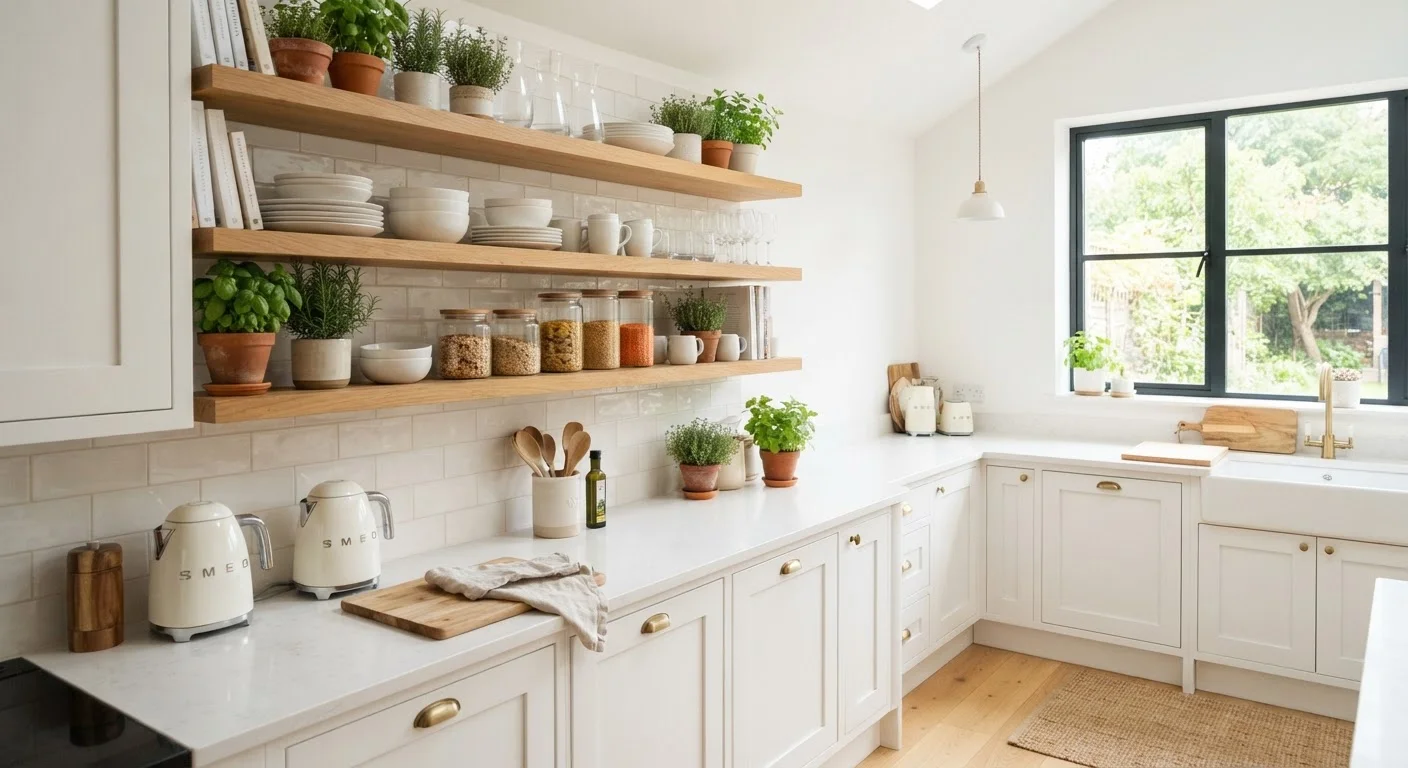
Open shelving replaces some or all upper cabinets with exposed brackets and boards, putting everyday items - dishes, glasses, spices, cookbooks - on full visual display. The look is closely associated with farmhouse, Scandinavian, and minimalist kitchen design, where the absence of cabinet doors creates a lighter, more lived-in atmosphere.
The appeal is understandable. Kitchens with open shelves photograph beautifully, feel less boxed-in, and allow a cook to grab what they need at a glance. But the same qualities that make them appealing in a magazine spread introduce real trade-offs in daily use. Understanding those trade-offs honestly is the first step toward deciding whether open shelving fits your home - or whether a different storage approach would serve you better.
Creates an open, airy visual feel
Removing cabinet doors eliminates visual bulk, making even modestly sized kitchens feel less enclosed. The effect is especially noticeable in kitchens with limited natural light.
Everything is visible and easy to grab
Frequently used dishes, glasses, and spices are reachable at a glance without opening and closing doors, which can genuinely speed up meal prep.
Lower upfront cost than full cabinetry
Shelf brackets and boards typically cost less than full upper cabinet units, making open shelving an accessible option for renters or those working within tighter renovation budgets.
Encourages a curated, intentional kitchen
Knowing everything is on display nudges many households toward owning less and keeping what they have more organized - a benefit that extends beyond aesthetics.
Flexible and easy to reconfigure
Adjustable bracket systems allow shelf height and position to change as storage needs evolve, without the commitment of fixed cabinet boxes.
The Downsides Worth Taking Seriously
The most consistent complaint from homeowners who've switched to open shelving is upkeep. Kitchen air carries cooking vapors and airborne grease, both of which settle on exposed surfaces. Items at the back of a shelf can go untouched for weeks, gathering a film that requires more than a quick wipe. This is not a dealbreaker for everyone, but it is a genuine, ongoing commitment - not a one-time installation decision.
Clutter is the second major issue. Closed cabinets hide mismatched mugs, half-empty bottles, and the general visual noise of an active kitchen. Open shelves don't. Households with diverse, mismatched, or frequently changing inventory tend to find that open shelving amplifies rather than solves their storage challenges. Good pantry organization habits help, but they don't eliminate the underlying visibility problem.
Grease and dust accumulate quickly
Cooking vapors deposit a fine film on exposed surfaces and stored items. Shelves near a range may need wiping down as often as once a week to stay genuinely clean.
Clutter and mismatches are always visible
There is nowhere to hide a mismatched mug, a half-used bag of flour, or a stack of takeout menus. Open shelves amplify visual disorder rather than conceal it.
Less total storage capacity
Open shelves typically offer fewer usable cubic inches than enclosed cabinets of the same footprint, since items must be spaced for visual appeal rather than packed efficiently.
Items at the back get dusty if unused
Plates or glasses that sit untouched for even a few weeks can accumulate enough dust or grease residue to require washing before use - a minor but recurring inconvenience.
Removal of cabinets may be irreversible
Stripping out upper cabinet units can expose unfinished drywall, raw plaster, or wiring that requires repair or finishing work before shelves look presentable.
~30%
Storage volume typically lost vs. enclosed cabinets
Interior design professionals commonly estimate that open shelves yield roughly 25-35% less usable storage per linear foot than same-size enclosed upper cabinets.
1-2×/week
Recommended wipe-down frequency near range
Home organization sources generally advise wiping open kitchen shelves near cooking surfaces at least once or twice a week to prevent grease film buildup.
Making the Hybrid Approach Work
Most interior designers and experienced homeowners who live with open shelves arrive at the same conclusion: a hybrid layout - open shelving in select zones combined with closed cabinet storage elsewhere - captures the aesthetic benefits while managing the practical ones.
A common version keeps lower cabinets fully enclosed (protecting pots, pans, and cleaning supplies from dust and splatter) while opening up one or two upper sections near the range or a window, where attractive items like white dishes or clear glass canisters are kept. This limits what must be maintained while still giving the kitchen the lighter, airier feel that draws people to the style.
Before removing existing upper cabinets entirely, it's worth knowing what's behind them - wiring, venting, or structural elements can complicate what looks like a simple demo. For a fuller picture of what wall-removal projects actually involve, see what the demo shows on TV leaves out.
Renters: Check Before You Remove Anything
If you're renting, removing cabinet doors or existing upper cabinets almost certainly requires your landlord's written permission. Even cosmetic-seeming changes to cabinet hardware or wall surfaces can affect your security deposit or lease terms. Floating shelves installed with wall anchors are generally a lower-stakes alternative - but verify with your landlord and document any agreed changes in writing before starting.
If you're weighing open shelving partly for space-saving reasons in a smaller kitchen, the same principles that apply to decorating a small living room - visual lightness, consistent color, and deliberate editing - translate well to kitchen design.