

Key Takeaways
Credit Score
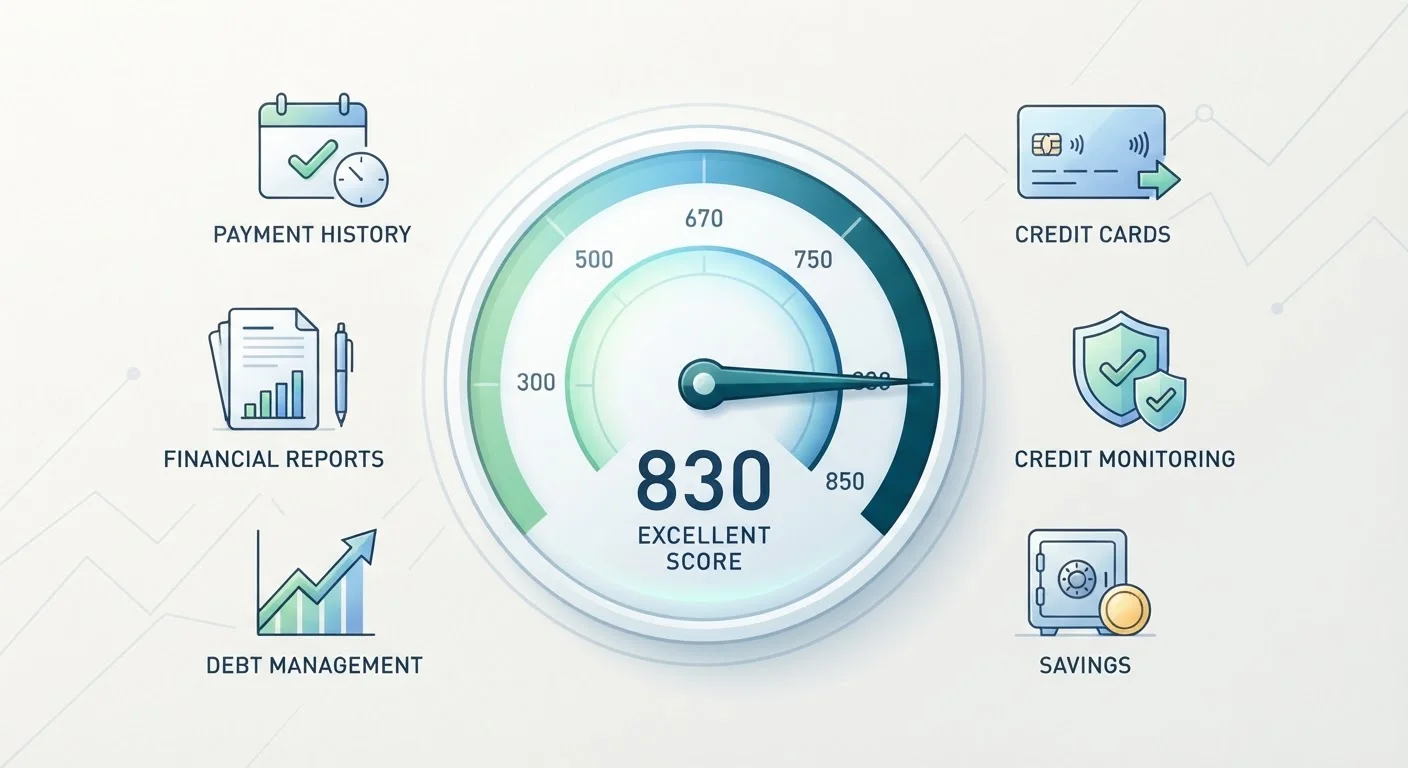
A credit score is a three-digit number, typically ranging from 300 to 850, that summarizes how reliably a person has managed borrowed money. Lenders use it to quickly gauge the likelihood that a borrower will repay a new debt on time. The higher the score, the lower the perceived risk to a lender.
The most widely used scoring model is the FICO Score, though VantageScore is also common. Each model may weight factors slightly differently, but both draw data from your credit reports maintained by the three major bureaus: Equifax, Experian, and TransUnion.
Where the Number Comes From
A credit score doesn't appear from thin air. It's calculated by running the data in your credit report through a mathematical model. Your credit report, maintained by each of the three major bureaus - Equifax, Experian, and TransUnion - is a detailed record of your borrowing history: every account you've opened, every payment you've made or missed, and every time a lender has requested your report.
The scoring model reads that history and assigns a number. FICO, the most commonly used model, evaluates five distinct factors. Each carries a specific weight that reflects how strongly it predicts future repayment behavior. Understanding those factors is the fastest way to understand your score. For a broader foundation, see our beginner's guide to debt and credit.
35%
Weight of payment history in FICO Score
According to FICO's published scoring model breakdown, payment history is the single largest factor in a standard FICO Score calculation.
300-850
Standard FICO Score range
FICO Scores follow this scale, with most lenders considering scores above 670 as acceptable and scores above 740 as strong.
1 in 5
Americans with a credit report error
A study by the Federal Trade Commission found that approximately one in five consumers had an error on at least one of their three credit reports.
The Five Factors and How They're Weighted
Payment History - ~35%
This is the most influential factor. It reflects whether you've paid your bills on time across all credit accounts: credit cards, mortgages, auto loans, student loans, and more. A single missed payment - especially one that goes 30 days or more past due - can meaningfully lower a score. Consistent, on-time payment is the most reliable way to build and maintain a strong score over time. See habits that quietly strengthen a credit score for the behavioral side of this.
Credit Utilization - ~30%
Utilization measures how much of your available revolving credit - primarily credit cards - you're currently using. If your combined credit card limit is $10,000 and your current balance is $3,000, your utilization rate is 30%. Lower utilization rates are generally better for your score. Most guidance suggests staying below 30%, though lower is typically more favorable.
Length of Credit History - ~15%
Longer credit histories give scoring models more data to work with. This factor considers the age of your oldest account, the age of your newest account, and the average age of all accounts. Closing old accounts can shorten your history and reduce available credit, which may negatively affect both this factor and your utilization rate.
Credit Mix - ~10%
Lenders like to see that borrowers can manage different types of credit responsibly - revolving credit (like credit cards) and installment credit (like auto loans or mortgages). Having a healthy mix can be a minor positive signal, but it's not worth taking on unnecessary debt just to diversify.
New Credit - ~10%
Applying for new credit generates a hard inquiry on your report, which can cause a small, temporary dip in your score. Opening several new accounts in a short period may signal financial stress to lenders. Rate shopping for a single loan type - like a mortgage or auto loan - within a short window is typically treated as a single inquiry by most models.
Monitor Your Credit Report, Not Just Your Score
Your score is a summary - your credit report is the source data. You're entitled to a free report from each of the three major bureaus periodically through AnnualCreditReport.com, the official source authorized under federal law. Reviewing your reports regularly helps you catch errors or signs of fraud that could be silently dragging your score down.
Why Lenders - and Others - Use This Number
A credit score condenses years of financial behavior into a single, comparable number that lenders can evaluate quickly. When a bank or lender reviews a loan application, they're trying to answer one core question: how likely is this person to repay? Your score is a standardized answer to that question, allowing consistent comparisons across millions of applicants.
The score influences not just whether you're approved, but the terms offered - including the interest rate. Borrowers with higher scores typically qualify for lower rates, which can translate into meaningful savings over the life of a loan.
Beyond traditional lending, credit scores also surface in other contexts. Landlords frequently check scores before approving lease applications. In many states, insurers use credit-based scores as one factor in calculating auto and home insurance premiums - as explored in our article on what goes into your car insurance premium. It's also worth knowing that lenders look at more than just your score. Your debt-to-income ratio is another key metric they weigh when assessing an application.
Common Misunderstandings Worth Clearing Up
Many people act on assumptions about credit scores that simply aren't accurate - and those assumptions can quietly work against them. For a thorough look, our piece on credit score myths that keep people stuck covers the most common ones. Two worth flagging here: carrying a balance on a credit card does not help your score (paying in full is better), and checking your own score does not hurt it.
If you're new to some of the terminology in this space - terms like utilization, hard inquiry, or charge-off - our credit terminology glossary is a useful reference point.
Different Models, Slightly Different Numbers
Your score can vary depending on which bureau's data is used and which scoring model is applied. A lender using FICO Score 8 may see a slightly different number than one using VantageScore 3.0. These differences are usually small, but they explain why the score you see through a free app may not exactly match what a lender sees. Focus on the overall picture and trends rather than any single number.
This article is for general informational purposes only and does not constitute personalized financial advice. Consult a qualified financial professional for guidance specific to your situation.