

Key Takeaways
Why a Weekly Grooming Routine Matters
Regular grooming is far more than aesthetics. A structured routine maintains skin and coat health, prevents painful conditions like matting and overgrown nails, and gives owners a reliable opportunity to notice early signs of illness or injury. Dogs that are groomed consistently from a young age tend to be more comfortable with handling - a quality that also makes veterinary exams less stressful. If you're weighing whether to handle grooming at home or work with a professional, understanding when each approach makes sense is a useful starting point.
The specific frequency of each task depends on your dog's breed, coat type, activity level, and individual health needs. A dense double-coated breed like a Siberian Husky has very different brushing requirements than a short-coated Beagle. Use the steps below as a general framework and adjust based on your veterinarian's guidance and your dog's responses.
What you will need
Slicker brush or breed-appropriate comb
Removes loose fur, tangles, and debris from the coat without irritating the skin.
Dog nail clippers or grinder
Trims nails to a safe length, preventing discomfort and joint strain from overgrown nails.
Dog-safe ear cleaning solution
Loosens wax and debris during routine ear checks to help prevent infection.
Dog toothbrush and enzymatic toothpaste
Removes plaque buildup and supports long-term dental health between professional cleanings.
Styptic powder
Stops minor bleeding quickly if a nail is accidentally trimmed too short.
Dog-formulated shampoo
Used during baths to clean the coat without disrupting the skin's natural pH balance.
Your Weekly Grooming Checklist
Follow these steps in order - they build on each other logically, beginning with coat care and ending with a full-body check. Keep sessions calm and reward-based. If your dog shows signs of distress at any point, pause and return to that task in smaller increments over subsequent sessions. For dogs still building comfort with handling, the trust-building principles used in crate training - gradual exposure, positive reinforcement, and patience - translate well to grooming too.
Make Grooming a Positive Experience
Pair each grooming task with calm praise and small treats to build a positive association. Keeping sessions short - especially in the early stages - helps prevent anxiety. Over time, most dogs learn to tolerate or even enjoy routine grooming.
Brush the coat thoroughly
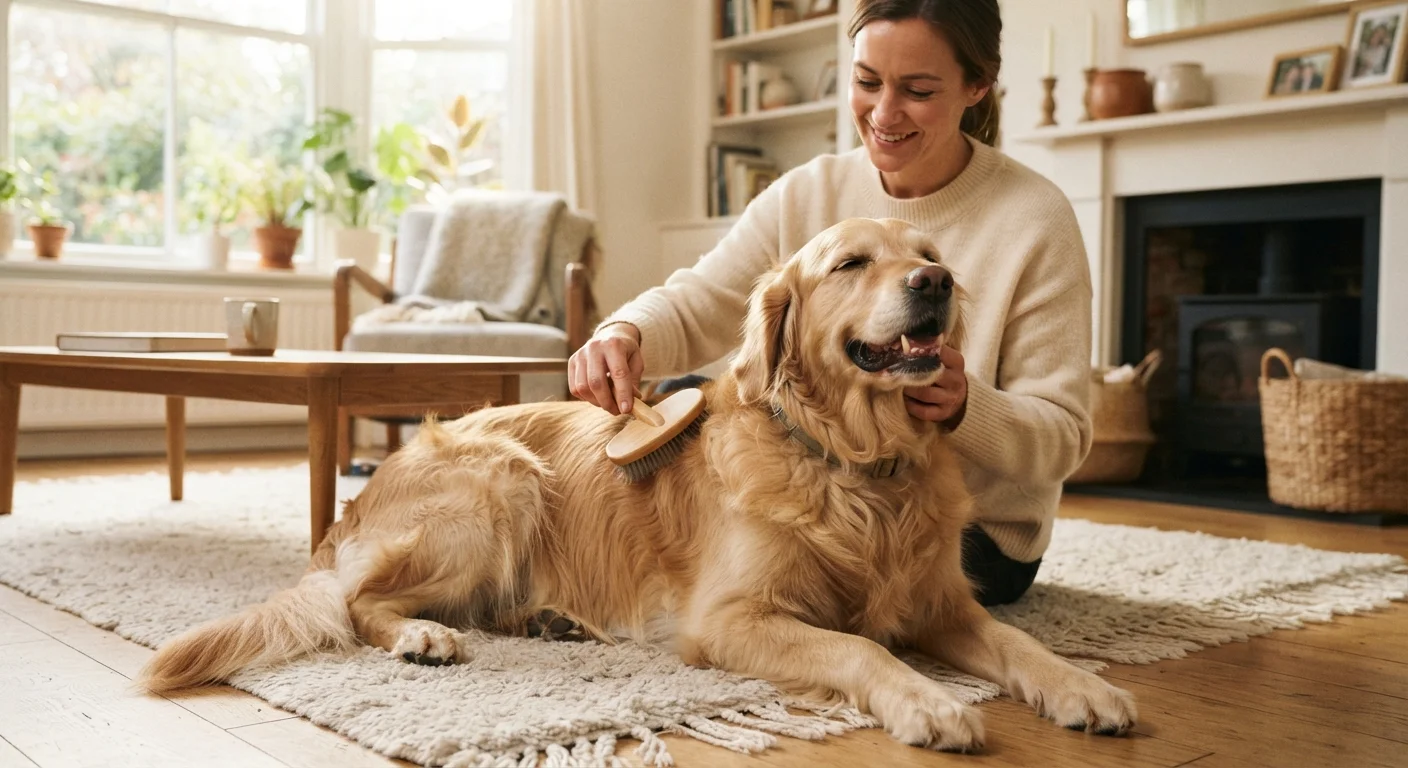
Begin each grooming session with a full brush-out. Work from head to tail in the direction of hair growth, using a slicker brush, pin brush, or comb suited to your dog's coat texture. Long-coated breeds may need daily brushing to prevent matting, while short-coated dogs generally do well with once-weekly sessions. Pay attention to friction-prone areas - behind the ears, under the armpits, and around the collar - where tangles form fastest.
As you brush, scan for skin irregularities: redness, flaking, lumps, or evidence of parasites such as flea dirt (tiny dark specks). Catching these early is one of the most practical benefits of a routine. For a broader view of how grooming fits into your dog's overall health, see the annual pet wellness checklist.
Inspect and clean the ears
Fold each ear flap back gently and look into the ear canal. Healthy ears appear light pink, smell neutral, and show minimal wax. A foul odor, dark discharge, redness, or persistent head-shaking are signs that warrant a veterinary visit rather than home cleaning.
For routine maintenance, apply a small amount of dog-safe ear cleaning solution to a cotton ball - never insert anything into the ear canal itself - and wipe the visible inner surface of the ear flap. Breeds with floppy ears or heavy ear hair, such as Cocker Spaniels and Poodles, are more prone to moisture buildup and benefit from more frequent checks.
Check and trim the nails
Overgrown nails force a dog's toes into an unnatural position, which over time can affect gait and joint health. A general rule: if you can hear nails clicking on a hard floor, they're due for a trim. Clip small amounts at a time using sharp, purpose-made dog nail clippers, cutting just below the curve of the nail to avoid the quick.
If your dog has dark nails that obscure the quick, trim conservatively - a few millimeters at a time - until you see a gray or pink oval appear at the center of the cut surface. That signals proximity to the quick and is your cue to stop.
Brush the teeth
Dental disease is among the most common health issues in adult dogs, according to the American Veterinary Medical Association, yet it's also highly preventable with consistent home care. Aim to brush your dog's teeth at least two to three times per week - daily is ideal. Use a soft-bristled toothbrush and enzymatic toothpaste formulated for dogs. Never use human toothpaste, which contains ingredients such as xylitol and fluoride that are toxic to dogs.
Start by letting your dog lick a small amount of toothpaste from your finger, then gradually introduce the brush over several sessions. Focus on the outer surfaces of the upper back teeth, where tartar accumulates fastest.
Examine paws and skin
Conclude the session by examining each paw - check between the toes for debris, cracking, or swelling. In colder months, road salt and ice-melt chemicals can irritate paw pads; rinsing paws after walks reduces exposure. In warmer months, hot pavement can cause burns. Gently separate the toes to look for redness or growths that might otherwise go unnoticed.
Do a quick body scan with your hands: feel along the spine, ribs, and limbs for any new lumps, tender spots, or asymmetries. This hands-on familiarity with your dog's body makes it easier to notice changes between veterinary visits.
Consult Your Vet Before Trimming Nails
Cutting a dog's nails too short can sever the quick - a blood vessel inside the nail - causing pain and bleeding. If you're new to nail trimming, ask your veterinarian or a professional groomer for a hands-on demonstration before attempting it at home. Keep styptic powder on hand in case of accidental nicks.
Never Use Human Grooming Products on Dogs
Shampoos, conditioners, and ear-cleaning solutions formulated for humans have pH levels unsuitable for canine skin and can cause irritation, dryness, or infection. Always use products specifically formulated for dogs, and consult your veterinarian if your dog has sensitive skin or an existing skin condition.
This article is for general informational purposes only and is not a substitute for professional veterinary advice. Always consult your veterinarian about grooming practices specific to your dog's breed, age, or health status.