

Key Takeaways
Our Verdict
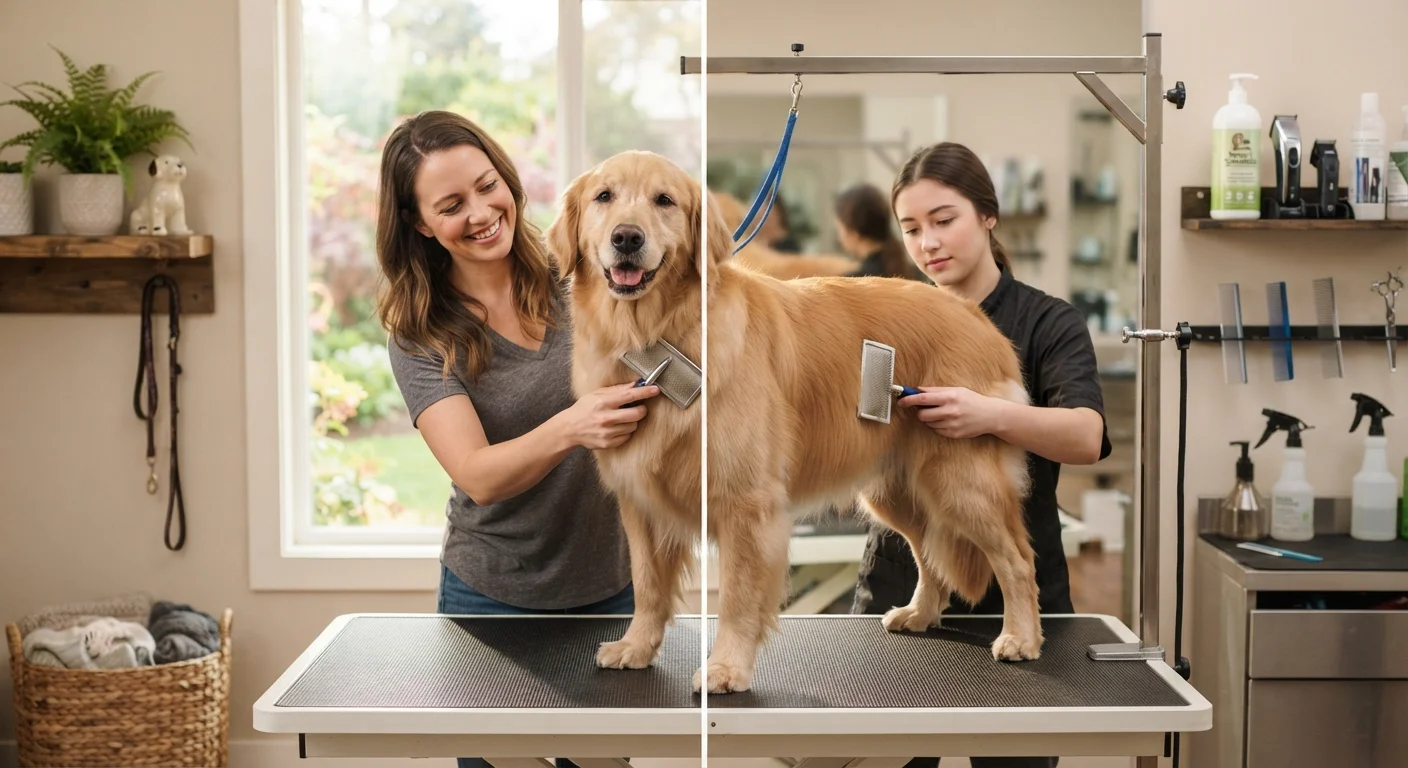
Home grooming is well-suited for regular brushing, light cleaning, and keeping your pet comfortable between appointments. Professional grooming excels for complex coat management, precise cuts, and tasks that require specialized tools or trained hands. For most pet owners, a blended approach - consistent home maintenance paired with periodic professional visits - delivers the best outcomes for coat health and pet wellbeing.
| Best for | Recommended |
|---|---|
| Pet owners managing routine upkeep between appointments | Home Grooming |
| Dogs with thick, curly, or breed-specific coats requiring styling | Professional Grooming |
| Owners building trust and comfort with a new or anxious pet | Home Grooming |
| Nail trimming, ear cleaning, or anal gland expression | Professional Grooming |
Why the Grooming Question Matters
Grooming isn't just about appearance - it's a fundamental part of a pet's physical health. Regular coat care reduces matting, skin irritation, and parasite concealment. Nail maintenance affects posture and joint comfort. Ear and eye cleaning can catch early signs of infection before they escalate.
The question of where that grooming happens - at home or in a professional salon - depends on several intersecting factors: your pet's breed and coat type, their temperament, your own skill level, and the specific task at hand. For a structured grooming schedule, understanding where each task fits is the first step.
Neither option is inherently better. What matters is matching the approach to the animal's actual needs.
What Home Grooming Does Well
Grooming your pet at home offers meaningful advantages beyond cost savings. Frequent, gentle handling - brushing, wiping paws, checking ears - helps pets become more comfortable with touch over time. This desensitization pays dividends at veterinary appointments and professional grooming sessions alike.
Home grooming is particularly effective for:
- Daily or weekly brushing to prevent mats and reduce shedding
- Wipe-downs and paw cleaning after walks or outdoor play
- Monitoring skin and coat condition for unusual bumps, redness, or parasites
- Toothbrushing, which is most effective when done multiple times per week
The American Veterinary Medical Association (AVMA) emphasizes that regular at-home dental care is one of the most impactful things owners can do for long-term pet health. These small, consistent routines build a baseline of care that no monthly appointment can fully replicate.
Start Grooming Habits Early
Introducing grooming tools and handling to puppies and kittens during their socialization period (typically up to 12-16 weeks) builds lasting tolerance for being touched, examined, and groomed. Even brief, positive sessions with a brush or having their paws handled can significantly reduce stress during both home and professional grooming throughout their life.
The main limitation is skill and equipment. Tasks like trimming around the eyes, thinning thick double coats, or expressing anal glands require either professional training or significant practice - and mistakes can cause discomfort or injury.
When Professional Grooming Makes the Difference
Professional groomers bring specialized training, appropriate tools, and breed-specific knowledge that most pet owners reasonably can't replicate at home. For certain dogs - Poodles, Doodle mixes, Bichon Frises, Cocker Spaniels - the coat structure requires professional cutting and dematting techniques that, if done incorrectly, can damage the coat or skin.
Professionals are also better positioned to handle:
- Full haircuts and breed-standard styling
- Severe matting requiring careful, humane removal
- Nail grinding on dogs sensitive to clippers
- Ear hair removal and cleaning in breeds prone to ear infections
- Anxious or reactive pets who benefit from a calm, structured environment
| Home Grooming | Professional Grooming | |
|---|---|---|
| Cost | Lower ongoing cost | Higher per-session cost |
| Frequency | Daily to weekly | Every 6-12 weeks typically |
| Skill required | Basic to moderate | Trained, breed-specific expertise |
| Equipment needed | Brushes, combs, nail clippers | Professional dryers, clippers, tables |
| Best suited for | Maintenance, brushing, monitoring | Haircuts, dematting, specialized tasks |
| Pet comfort building | High - familiar environment | Variable - depends on pet temperament |
| Health observation | Good for daily monitoring | Experienced eye for abnormalities |
If your pet shows signs of skin issues, unusual lumps, or ear discharge during a grooming visit, a good professional groomer will flag these concerns - making it a useful supplementary health checkpoint. You can maximize those observations by communicating effectively with your veterinarian about anything noted during grooming.
How to Think Through Your Pet's Specific Needs
The right balance depends heavily on your individual animal. A short-coated Labrador may need little beyond weekly brushing, nail trims every few weeks, and an occasional bath - all manageable at home for a confident owner. A Standard Poodle or a long-haired cat with a tendency toward matting presents a very different set of requirements.
Consider these factors when deciding:
- Coat type
- Single-coated, short breeds are generally easier to maintain at home. Double-coated, curly, or long-haired breeds often benefit from professional grooming every 6-10 weeks.
- Temperament
- Anxious dogs may actually do better with shorter, more frequent home sessions rather than infrequent professional appointments that feel overwhelming.
- Your confidence level
- Tasks like nail trimming carry real risk if done incorrectly - cutting the quick causes pain and bleeding. If you're uncertain, starting with a professional demonstration is a sound approach.
The pet health hub offers additional guidance on recognizing when grooming-related symptoms - persistent scratching, coat dullness, or ear odor - warrant a veterinary evaluation rather than just a grooming visit.
This article is for general informational purposes only and is not a substitute for veterinary advice. Always consult a licensed veterinarian for guidance specific to your pet's health needs.