

Key Takeaways
Start here
When Does a Pet Become 'Senior'?
Next
How Veterinary Visits Change With Age
Then
Key Health Concerns in Aging Pets
Apply it
What You Can Monitor at Home
Round it out
Nutrition and Lifestyle Adjustments
When Does a Pet Become 'Senior'?
The label "senior" isn't arbitrary — it reflects measurable shifts in how an animal's body functions and what it needs to stay healthy. For most cats and small-to-medium dogs, veterinarians begin considering an animal senior around age 7. Large and giant breeds of dogs cross that threshold earlier, often around 5 to 6 years, because their accelerated growth correlates with faster aging at the cellular level.
The shift matters practically. A 7-year-old Labrador Retriever has a very different risk profile for organ disease, joint degeneration, and cancer than a 2-year-old. Recognizing where your pet falls on that spectrum helps you and your veterinarian set appropriate expectations for screening, monitoring, and care routines.
Senior wellness panel
A set of routine laboratory tests — typically including bloodwork and urinalysis — run on older pets to screen for organ disease and other age-related conditions before symptoms appear.
Chronic kidney disease (CKD)
A progressive, irreversible loss of kidney function common in older cats and dogs. Early detection through bloodwork and urinalysis is key, since symptoms often appear only after significant damage has occurred.
Cognitive dysfunction syndrome (CDS)
An age-related neurological condition in dogs and cats that resembles dementia, causing disorientation, behavioral changes, and disrupted sleep patterns.
Hyperthyroidism
An overactive thyroid gland that produces excess hormone, very common in older cats. It causes weight loss, increased appetite, and elevated heart rate, and is typically detected through a blood test.
Osteoarthritis
Degenerative joint disease that causes pain and reduced mobility. It is one of the most common conditions in senior dogs and cats and is often underdiagnosed because animals hide discomfort.
Periodontal disease
Bacterial infection of the tissues supporting the teeth. It worsens with age and, left untreated, can affect the heart, kidneys, and liver through systemic inflammation.
How Veterinary Visits Change With Age
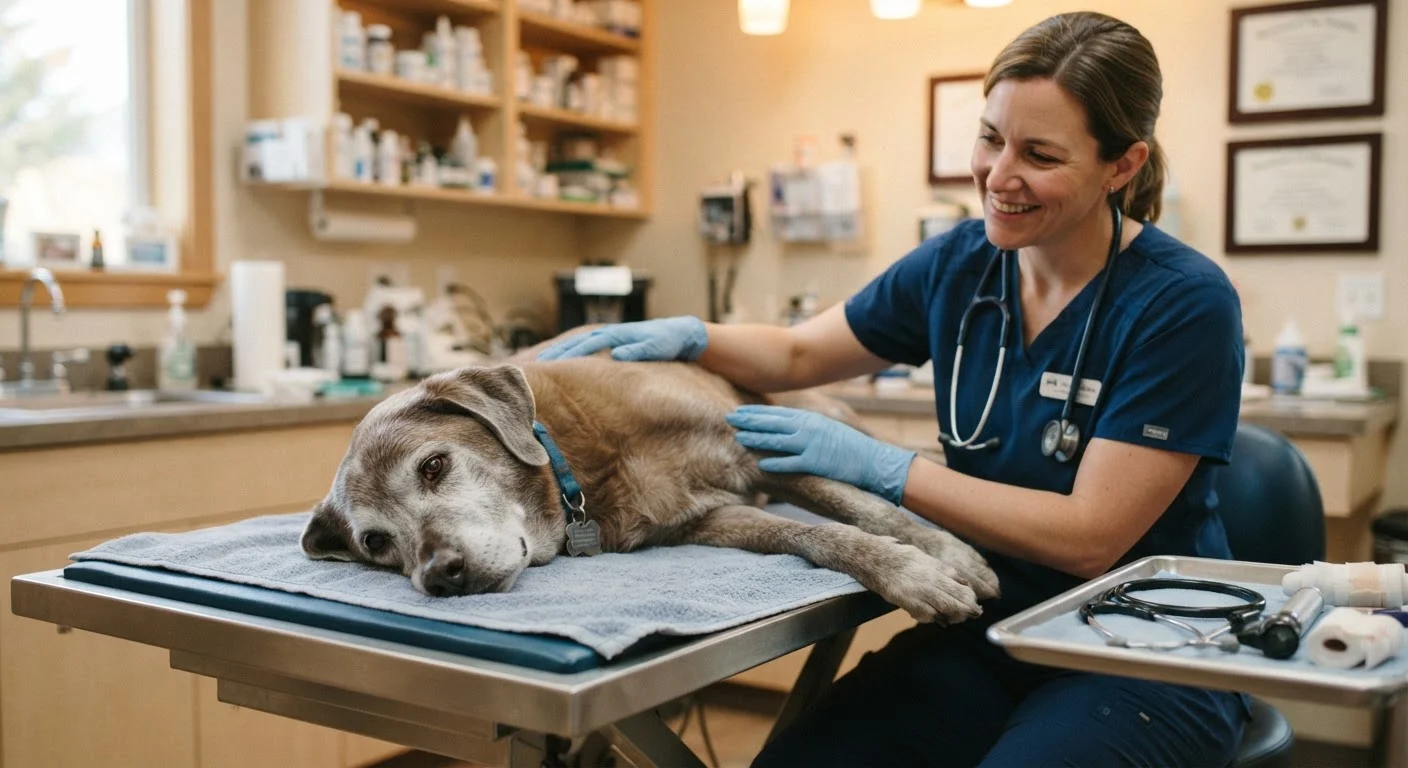
Annual exams are the standard baseline for healthy adult pets, but most veterinary organizations — including the American Veterinary Medical Association (AVMA) — recommend that senior pets be seen twice a year. The reasoning is straightforward: animals age faster than humans do, and conditions like kidney disease, diabetes, or heart disease can progress significantly within six months.
At a senior wellness visit, your veterinarian will typically go beyond a physical exam to include laboratory diagnostics. A senior wellness panel usually covers a complete blood count (CBC), a chemistry panel that evaluates organ function, and a urinalysis. For cats, thyroid levels are commonly added, as hyperthyroidism is one of the most prevalent conditions in older felines. Blood pressure measurement is also increasingly standard, since hypertension frequently accompanies thyroid and kidney disease in cats.
These lab baselines are genuinely valuable — not because something is always wrong, but because they establish a reference point. When values shift in future tests, your vet can detect trends early rather than reacting to a crisis.
Establish Baseline Labs Early
If your pet is approaching senior age but appears healthy, starting bloodwork now gives your veterinarian a personalized reference point. Subtle changes in kidney values or thyroid levels are far easier to interpret when compared against your pet's own prior results rather than population averages alone.
Key Health Concerns in Aging Pets
Several conditions become significantly more common as pets enter their senior years. Understanding them helps you recognize early warning signs rather than waiting for obvious symptoms.
- Osteoarthritis: Joint degeneration is widespread in older dogs and cats. Because animals instinctively mask discomfort, reduced activity, reluctance to use stairs, or changes in posture may be the only visible clues.
- Chronic kidney disease (CKD): One of the leading causes of illness and death in senior cats. Increased thirst and urination, weight loss, and decreased appetite are common indicators — though early CKD often shows no symptoms at all.
- Cognitive dysfunction syndrome (CDS): Analogous to dementia in humans, CDS can cause disorientation, altered sleep cycles, reduced interaction, and house-soiling in previously reliable pets.
- Dental disease: Periodontal disease worsens with age and is linked to systemic health problems. See our overview of dental disease in pets for what this looks like and how to address it.
- Cancer: The incidence of certain cancers increases with age. Early detection through routine exams and bloodwork improves options for management.
If your pet displays any sudden or unexplained changes, consult your veterinarian promptly. Some symptoms warrant urgent evaluation — our resource on pet health emergencies covers warning signs that require immediate attention.
Don't Dismiss 'Slowing Down' as Normal Aging
Reduced activity, decreased appetite, or changes in behavior are not simply the inevitable price of getting older — they are often signs of treatable conditions like arthritis, dental pain, or thyroid disease. Reporting these changes to your veterinarian gives your pet the best chance of effective management.
What You Can Monitor at Home
Veterinary visits are essential, but what happens between appointments matters too. As a pet owner, you are in the best position to notice gradual changes that a once- or twice-yearly exam might miss.
Keep an informal log of the following:
- Appetite and water intake: Significant increases or decreases in either can signal metabolic or organ changes.
- Weight: Gradual weight loss is common in senior cats with hyperthyroidism or CKD, while weight gain may indicate hypothyroidism in dogs or reduced activity levels.
- Mobility and activity: Note any new reluctance to jump, hesitation on stairs, or reduced interest in play.
- Litter box and bathroom habits: Changes in urination frequency, volume, or accidents in the house deserve veterinary attention.
- Grooming and coat quality: Over-grooming, under-grooming, or a dull coat can reflect pain, systemic illness, or cognitive changes.
Bringing specific observations to appointments makes them more productive. Our guide to communicating effectively with your vet offers practical strategies for getting the most from each visit. You can also use our annual pet wellness checklist to stay organized year-round.
Nutrition and Lifestyle Adjustments
A senior pet's dietary and activity needs shift in ways that a standard adult maintenance routine doesn't fully address. Senior-formulated diets are generally designed with adjusted caloric density, modified protein levels, and sometimes added joint-supporting nutrients — but the appropriateness of any specific food depends on your individual pet's health status. Always discuss diet changes with your veterinarian before switching, especially if your pet has an existing condition like CKD, where protein levels require careful management.
Exercise remains important for senior pets, though it may need to be modified. Shorter, more frequent walks often suit arthritic dogs better than a single long outing. Low-impact activity helps maintain muscle mass and supports joint health without overtaxing an aging body.
Mental enrichment also matters. Cognitive dysfunction can be slowed — or its onset recognized earlier — when pets remain engaged. Puzzle feeders, gentle training sessions, and regular social interaction all contribute to cognitive health. For guidance on working with an older pet's changing capabilities, see our article on training older pets.
This article is for general informational purposes only and does not constitute veterinary advice. Always consult a licensed veterinarian for guidance specific to your pet's health and medical history.