

Key Takeaways
Option A
Group Classes
The social, structured learning environment.
Best for: Dogs that benefit from real-world distraction practice and owners looking for a cost-accessible, community-supported format.
Option B
Private Training
The tailored, one-on-one coaching approach.
Best for: Dogs with specific behavioral challenges or owners who need individualized guidance on technique and handling.
If your dog is a puppy needing foundational skills and socialization
Group Classes
A well-run puppy group class builds basic obedience while exposing young dogs to other animals, people, and distractions — all critical during the socialization window.
If your dog has reactive, fearful, or aggressive behavior
Private Training
A group setting can overwhelm or trigger reactive dogs. A private trainer can design a controlled, step-by-step behavior modification plan that a group class cannot safely accommodate.
If you're a first-time owner unsure of your own handling technique
Private Training
One-on-one sessions allow a trainer to observe and correct your mechanics in real time, building handler confidence before moving into a group environment.
If your dog has solid basics and needs real-world proofing
Group Classes
Practicing known cues around other dogs and unfamiliar people is invaluable for reliability — something that's difficult to replicate in a private session.
If your schedule or budget is a significant constraint
Group Classes
Group classes are generally less expensive per session and offered on predictable weekly schedules, making consistent attendance more practical for many households.
What Each Format Actually Looks Like
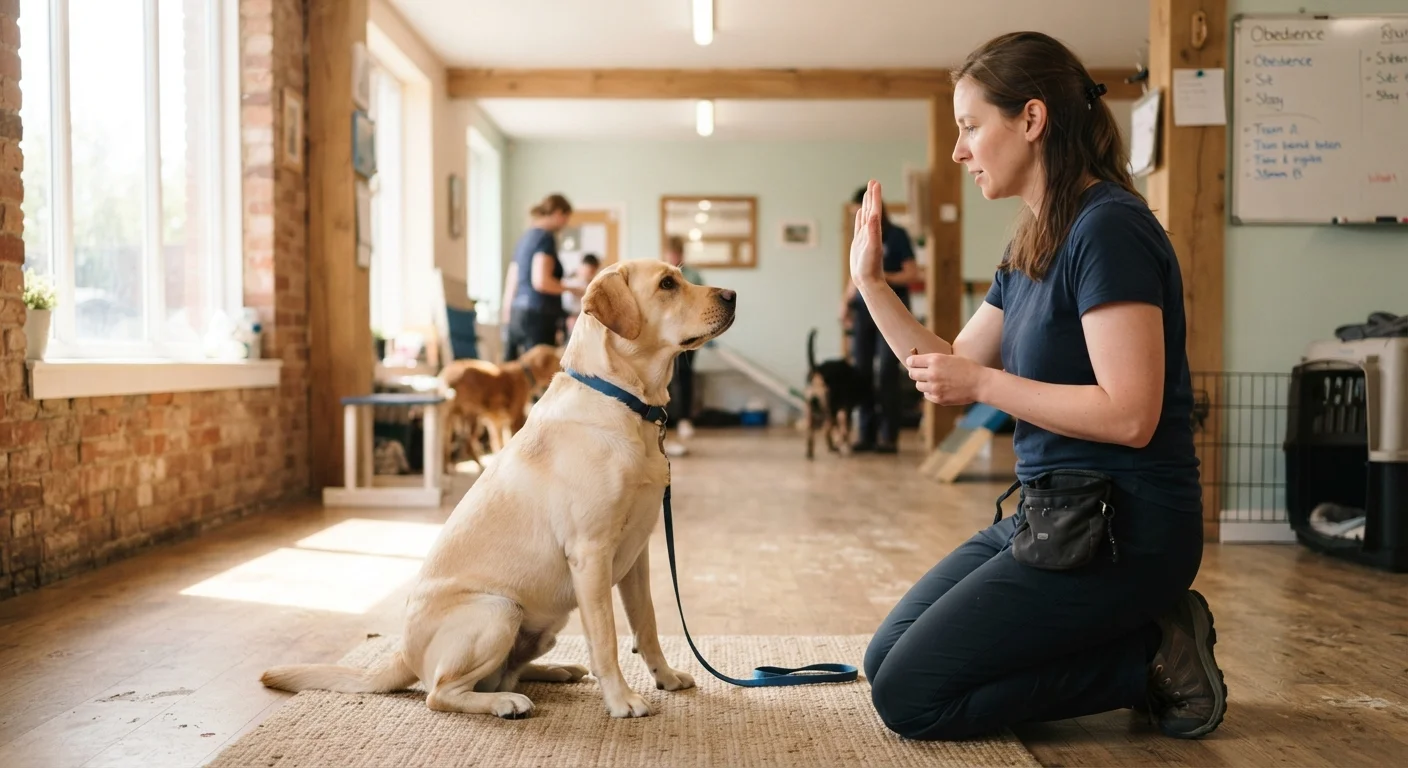
Group obedience classes typically involve several dog-and-owner pairs working through exercises together under the guidance of one or two trainers. Sessions usually run 45–60 minutes per week over a multi-week course. The curriculum tends to follow a set progression — sit, down, stay, recall, leash manners — with all participants moving through the same material at roughly the same pace.
Private training, by contrast, is a session designed entirely around one dog and one owner. A trainer may come to your home, meet you at a park, or work with you at a training facility. The agenda is set by your specific goals, and a skilled trainer will observe your dog's responses and adjust the approach accordingly. This format is especially common when owners are dealing with behavioral concerns that go beyond basic manners.
If you're entirely new to the process, a beginner's overview of pet training can help you understand the core concepts before committing to either format.
Key Differences Side by Side
Understanding how these two formats compare across practical dimensions makes it easier to match your choice to your situation.
| Criterion | Group Classes | Private Training |
|---|---|---|
| Cost per session | Generally lower per session | Generally higher per session |
| Distraction practice | Built into every session | Requires deliberate setup |
| Personalization | Limited; shared curriculum | Fully tailored to your dog |
| Suitable for reactive dogs | Often not appropriate initially | Yes, with proper planning |
| Handler coaching depth | Shared attention across group | Focused entirely on you |
| Socialization opportunity | Inherent in the format | Not included by default |
| Schedule flexibility | Fixed weekly class times | Typically more flexible |
It's worth noting that cost structures vary widely by region, trainer credentials, and facility. These categories reflect general patterns rather than fixed figures.
Where Group Classes Have a Real Edge
The defining advantage of group training is the presence of other dogs. Learning to respond to cues despite nearby distractions — other animals moving, people talking, unexpected sounds — is called proofing, and it's what turns a behavior that works in the living room into one that works at the park. A dog that will only sit reliably in a quiet kitchen hasn't fully learned the behavior.
Group classes also expose dogs to unfamiliar people in a structured, low-stakes way. For puppies especially, this kind of early exposure supports healthy social development. The ASPCA and many veterinary behaviorists emphasize that the socialization window in young puppies — roughly up to 12–16 weeks — is a particularly valuable period for positive novel experiences.
There's also an often-underestimated benefit for owners: watching other handlers work through the same challenges you're facing is genuinely instructive, and the shared context builds accountability. Consistency and timing are foundational to effective training, and the weekly rhythm of a group class helps reinforce those habits.
12–16 weeks
Puppy socialization window
Veterinary behaviorists and organizations such as the ASPCA identify this early period as especially important for positive novel experiences that shape long-term temperament.
~6–8 weeks
Typical group course length
Most structured group obedience courses run six to eight weekly sessions, providing a repeating practice schedule that supports owner consistency.
Where Private Training Makes More Sense
Some dogs are not good candidates for group settings, at least initially. A dog that reacts intensely to other dogs by barking, lunging, or shutting down will struggle to learn anything meaningful in that environment — and may have the reactivity reinforced rather than addressed. For these dogs, a private trainer can work at a sub-threshold distance from triggers, gradually building tolerance through systematic desensitization and counter-conditioning.
Private sessions are also the right call when owner mechanics need significant work. Timing a reward incorrectly, using inconsistent cue words, or misreading a dog's body language are all things a group instructor may not have time to address individually. A private trainer can slow down and focus entirely on how you're communicating with your dog.
Owners working with adult or senior dogs dealing with established habits may also find private training more practical. Training older pets involves some different considerations, and a private trainer can build a plan that accounts for those differences without holding back a group class.
Using Both Formats Together
Group and private training don't have to be mutually exclusive. A common approach is to start with private sessions to address specific problem behaviors or build handler skills, then transition into a group class once the dog is ready for a distraction-rich environment. Some owners also use occasional private sessions alongside ongoing group classes to work through plateaus. Thinking about these formats as complementary rather than competing often leads to better outcomes.
Choosing a Trainer: What Credentials and Methods Signal
Whether you choose group or private, the trainer's qualifications and methods matter more than the format itself. The dog training industry in the United States is not formally regulated, which means anyone can call themselves a trainer. Recognized credentialing bodies — including the Certification Council for Professional Dog Trainers (CCPDT) and the International Association of Animal Behavior Consultants (IAABC) — offer certifications that require demonstrated knowledge and adherence to an ethical code.
Look for trainers who use positive reinforcement as their primary method, meaning behaviors are built by rewarding what you want rather than punishing what you don't. The American Veterinary Society of Animal Behavior (AVSAB) has issued position statements recommending against punishment-based techniques, citing evidence that they can increase fear, anxiety, and aggression in dogs.
Just as you'd weigh professional involvement against a DIY approach in other areas of pet care — as covered in our piece on grooming at home vs. professional grooming — the same logic applies here: the quality of the professional matters as much as the decision to hire one.