

Key Takeaways
Why Stay Is Harder Than It Looks
"Stay" is one of the most practically valuable behaviors a dog can learn — useful at doorways, during vet visits, and whenever you need your dog to hold position while the world moves around them. Yet it's also one of the most commonly broken commands. The reason is almost always the same: owners increase difficulty too quickly, stacking duration, distance, and distraction together before the dog understands any of them individually.
If you're starting from scratch or rebuilding after inconsistent results, our beginner's guide to pet training covers the core concepts worth reviewing first. Understanding timing and consistency is especially critical here — a stay that's rewarded at the wrong moment teaches the wrong behavior.
The good news: stay is teachable at any age. Older dogs can learn it too, though you may need to adjust your pace and reward value accordingly.
What you will need
Step-by-Step: Teaching the Stay
Follow these steps in order. Progress to the next step only when your dog succeeds reliably — at least 8 out of 10 repetitions — at the current level. There's no fixed timeline; some dogs move through this in days, others in weeks.
Introduce the Stay Cue at Zero Distance
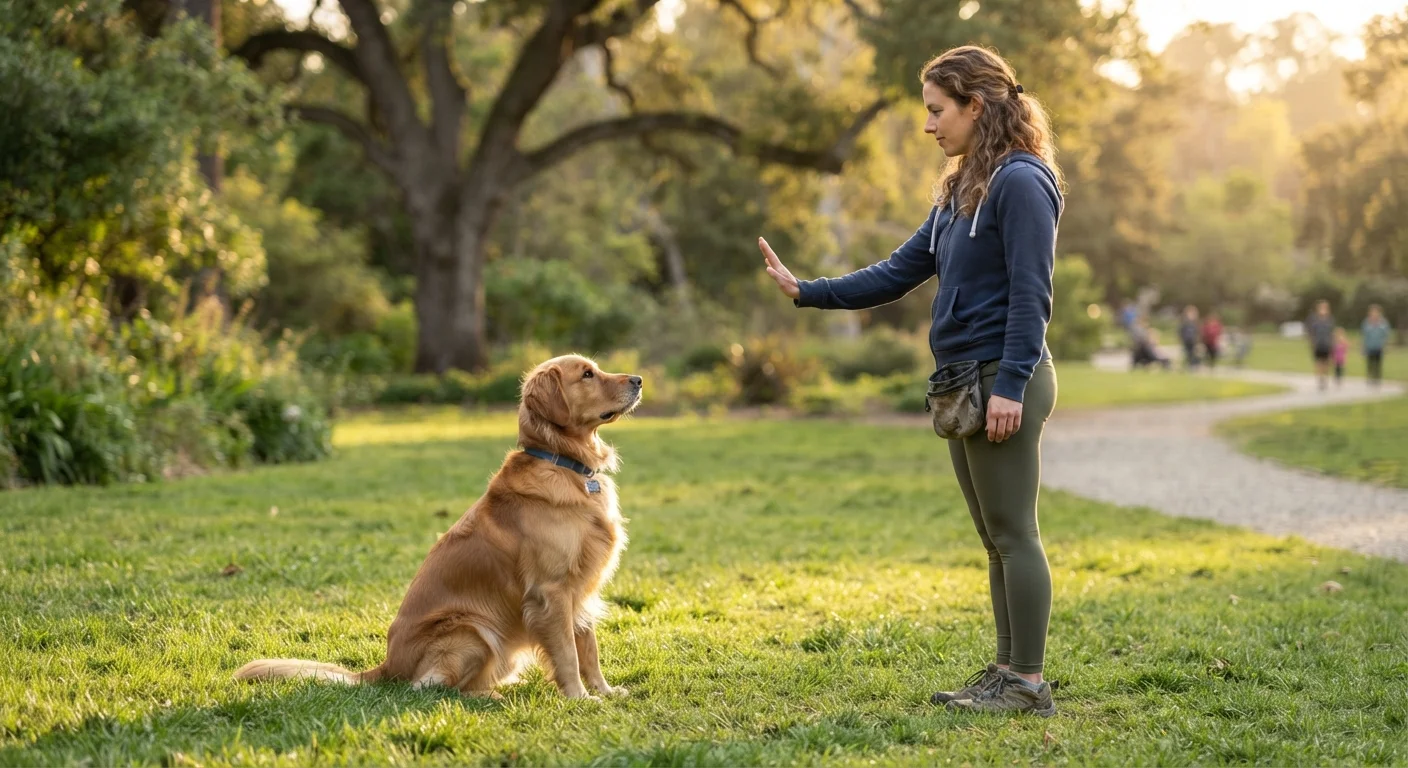
Ask your dog to sit or lie down. The moment they settle, say "stay" once in a calm, clear voice and immediately mark and reward — no pause yet. You're simply pairing the word with the position. Repeat five to ten times in the same session.
Build Duration — Add Time Before the Reward
Ask for a sit-stay, then wait one to two seconds before marking and rewarding. Over several sessions, extend the time gradually: three seconds, five seconds, ten seconds, then thirty. Vary the intervals — don't always make it longer. Occasionally reward at two seconds even when your dog can hold for twenty. Unpredictability keeps attention sharp.
Only increase duration when your dog succeeds consistently. If they break position, you waited too long — go back to a shorter interval.
Add Distance — Step Away While the Dog Stays
Once your dog holds a stay reliably for thirty seconds at your side, begin adding distance — but reset duration back to just a few seconds when you do. Take one step away, pause, return to your dog, mark, and reward. Do not call your dog to you yet; walk back to them so they learn that stay ends when you return, not when you move.
Increase distance by one step at a time over multiple sessions. Build toward standing ten to fifteen feet away before introducing the next variable.
Introduce a Release Word
Your release word — "free," "okay," "break," or any consistent term — tells your dog the stay is officially over. Use it every single time you end the behavior, even when you're done rewarding. Say the word, then move or allow movement. Never let your dog self-release without hearing the cue; if they break early, calmly reset them and try again at a shorter duration or closer distance.
Add Distractions — Last and Gradually
Distractions are the final and most challenging variable. Begin with mild ones: a toy placed on the floor nearby, a family member walking through the room, or a door opening. Each new distraction should start with a short duration and close distance — essentially restarting the progression with the new challenge factored in.
Progress from low-level distractions (quiet indoor movement) to moderate ones (another person entering the room, knocking sounds) before attempting high-level outdoor environments.
Keep Sessions Short and End on a Win
Two to five minutes is plenty for a focused training session. End while your dog is still succeeding — not after they've broken the stay multiple times. Frequent short sessions build retention faster than occasional long ones, and your dog will approach the next session eager rather than fatigued.
Common Mistakes and How to Fix Them
Even with good intentions, certain patterns quietly undermine a stay. Here are the most frequent ones:
- Drilling too long. Once a dog loses focus, additional repetitions rehearse failure. Keep sessions to two to five minutes and end while your dog is still succeeding.
- Repeating the cue. Saying "stay, stay, stay" teaches the dog that multiple cues are needed. Say it once, clearly.
- Returning with excitement. Rushing back and praising loudly when you return can trigger the dog to break position before the release word. Return calmly, reward, then release.
- Skipping the release word. Without a consistent release cue — "free," "okay," or any word used only for this purpose — your dog will learn to self-release when they feel like it.
For related training challenges, see our article on leash pulling and what goes wrong — many of the same reinforcement principles apply.
Never Use Punishment for a Broken Stay
If your dog breaks position, the appropriate response is to calmly reset — not to scold or physically correct. Punishment during training undermines trust and can create anxiety around the cue itself. A broken stay is information: it means the criterion was too hard, not that the dog is being disobedient.