

Key Takeaways
Why Order Isn't Just a Preference
You can own all the right products and still get underwhelming results — if you're putting them on in the wrong sequence. Skincare layering isn't an arbitrary beauty ritual invented by influencers. It's grounded in how your skin absorbs different substances and how product formulas interact with each other.
The outer layer of skin, the stratum corneum, acts as a selective barrier. Smaller molecules and water-based formulas pass through more easily than large, oil-based ones. That single fact explains the entire logic of product order: thin, water-based products go on before thick, oil-based ones. If you reverse that sequence, the heavier formula sits on top and physically prevents lighter ones from penetrating.
Think of it like clothing layers — you put on a fitted base layer before a heavy coat, not the other way around. The same principle applies to your skin. For a fuller walkthrough of each step, see our step-by-step skincare routine guide.
The Core Layering Sequence — and the Reasoning Behind It
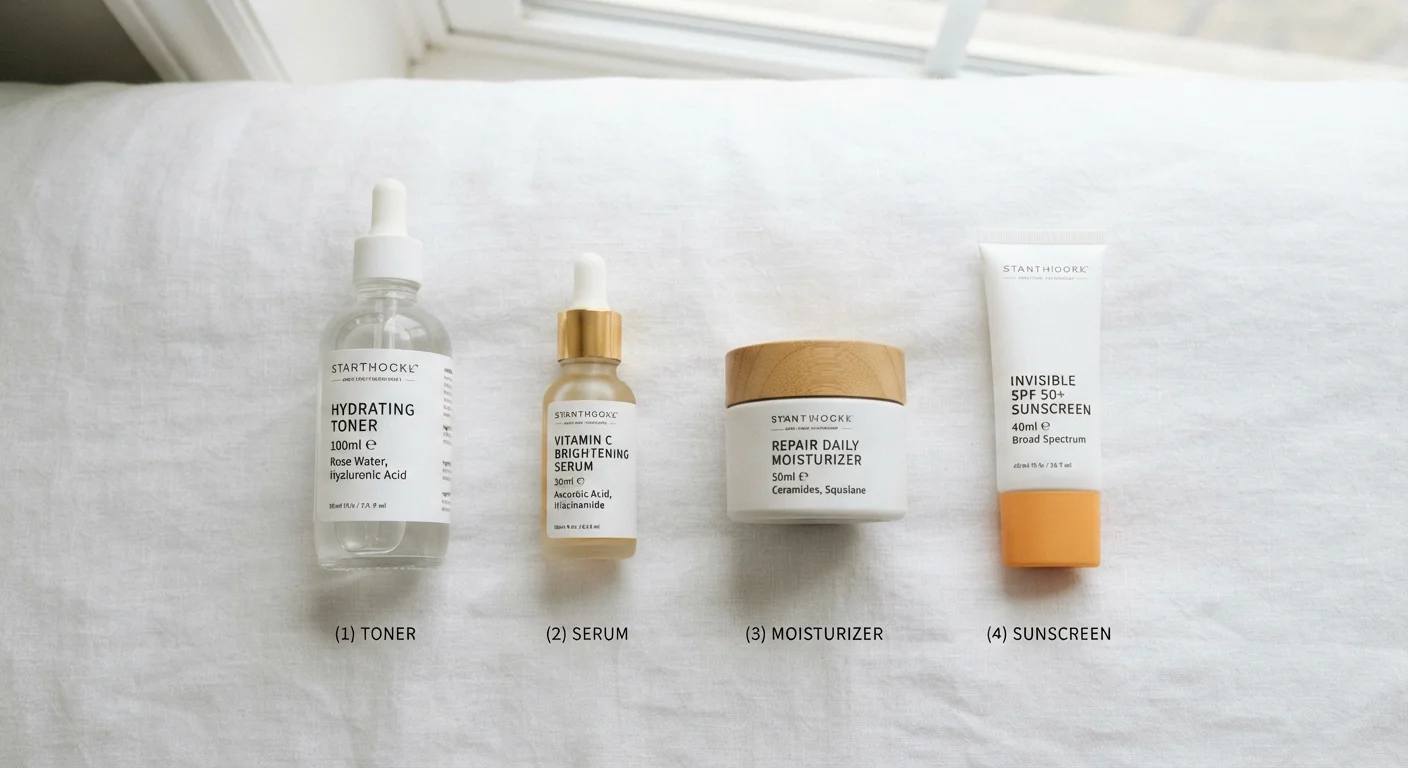
Here's how a standard routine typically stacks up, and why each position makes sense:
Cleanse first to give every product a clean surface to work on
Dirt, oil, and leftover sunscreen create a film that blocks absorption. Starting with a cleanser removes that barrier so subsequent products can actually reach skin. Skipping this step is one of the most common reasons a routine underperforms.
Apply toner or essence immediately after cleansing while skin is slightly damp
Toners and essences are typically water-heavy and work partly by prepping the skin's surface pH and adding a layer of lightweight hydration. Applying them to damp skin helps them spread evenly and absorb quickly before anything else goes on.
Layer serums from thinnest to thickest when using more than one
Serums are concentrated treatments — they're meant to deliver active ingredients where they're needed. A watery, lightweight serum applied before a thicker gel-textured one ensures neither blocks the other. Reversing the order can trap lighter formulas on the surface.
Use moisturizer to seal in treatments, not as a first layer
Moisturizers — especially cream-based ones — form a partial occlusive layer that locks in hydration and helps active ingredients do their job over time. Applying moisturizer before a serum reverses this benefit, effectively blocking the serum from the skin it needs to reach.
Apply sunscreen as the final morning step, never mixed into another product
Sunscreen's protective function depends on it forming an even, uninterrupted film on the skin's surface. Mixing it with a moisturizer or applying something on top dilutes that film and reduces SPF effectiveness. It always goes last in the morning lineup.
If you're uncertain what a product's active ingredients actually do, our plain-English ingredient glossary is a useful reference before you build your stack.
Ingredient Combinations That Don't Play Well Together
Layering order matters not just for absorption, but for chemistry. Certain ingredients become less effective — or more irritating — when applied together or in the wrong sequence.
Not All 'Conflicts' Are Deal-Breakers
Ingredient interaction warnings are often more cautious than the research strictly requires. Many skin types tolerate combinations that others don't, and concentration levels matter significantly. Rather than overhauling your entire routine based on a rule you read online, introduce one change at a time and monitor your skin's response. When in doubt about actives, a dermatologist can give personalized guidance.
A few pairings to be mindful of:
- Vitamin C (ascorbic acid) and AHAs/BHAs: Both are acidic and using them simultaneously can destabilize vitamin C or increase skin sensitivity. Many routines split them — vitamin C in the morning, acids at night.
- Retinoids and acids: Using both in the same routine can cause significant irritation, especially for sensitive skin. Consult a dermatologist before combining these.
- Niacinamide and vitamin C: Historically flagged as a problematic pair, though current evidence suggests the concern is largely overstated at typical skincare concentrations. Still, if you notice flushing or redness, separate them.
If your routine has stalled or you're experiencing unexpected breakouts or irritation, incorrect layering or ingredient clashes could be a factor. See why your skincare may have stopped working for a practical troubleshooting guide.
For context on how fragrance interacts with active ingredients and skin sensitivity, the case for and against fragrance in skincare covers the evidence fairly.
Start Simple, Layer Smarter
One of the most common mistakes is building a ten-product routine before understanding how two or three work together. More steps don't equal better skin — and some combinations actively get in each other's way.
If you want to go deeper on decoding the products you already own, reading a skincare label without a chemistry degree breaks down ingredient lists in plain language. And if moisturizer is part of your routine (it should be), common moisturizer myths worth knowing is worth a read too.
This article is for general informational purposes only and does not constitute medical or dermatological advice. For concerns about your skin's health, consult a qualified healthcare professional or board-certified dermatologist.