

Key Takeaways
Why Routine Order Actually Matters
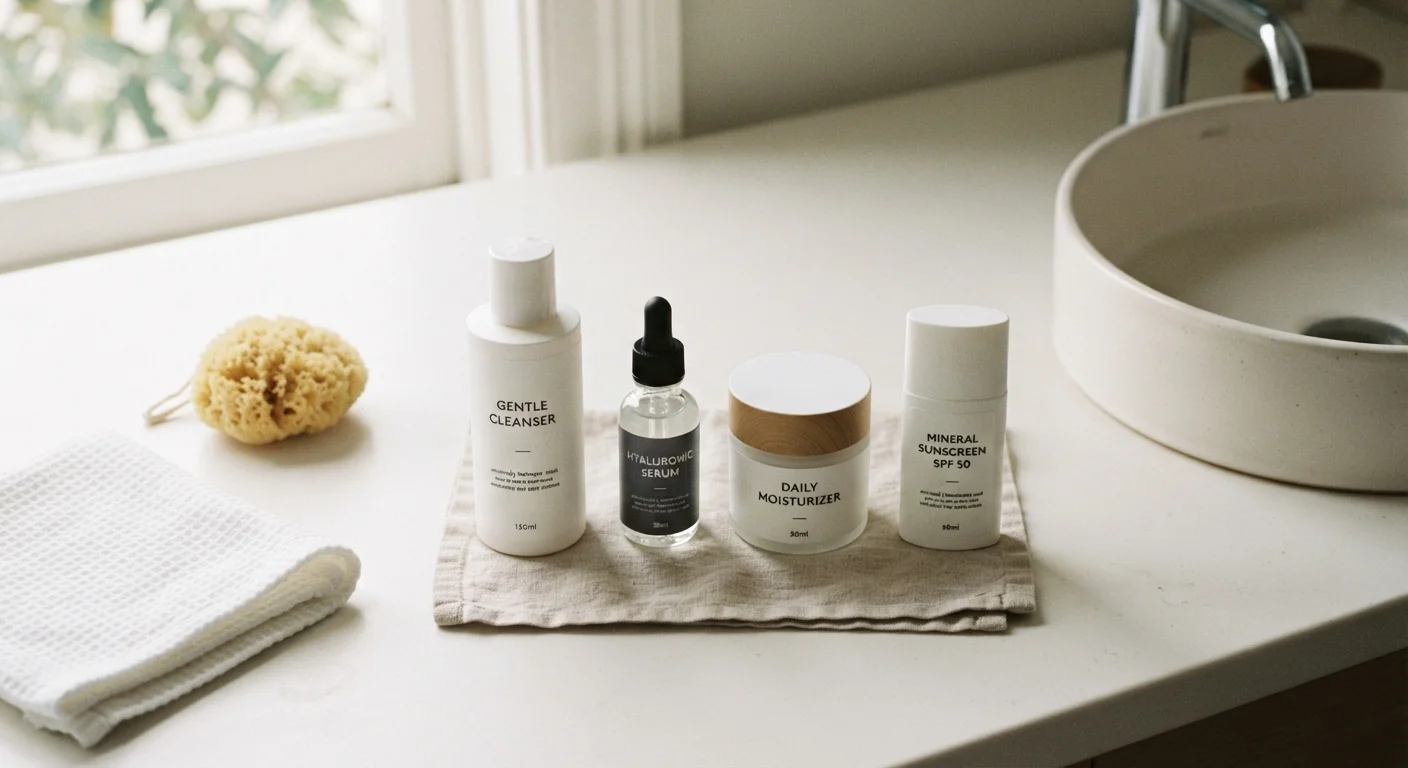
Skincare isn't just about what you use — it's about when and how you layer it. Apply a thick moisturizer before a lightweight serum, and that serum may never reach the skin cells it's formulated to target. The general rule: go thinnest to thickest, lightest to heaviest. This gives each product the best chance of absorbing rather than sitting on top of the one before it.
If you want a deeper look at the science behind layering, our guide to skincare layering breaks down exactly why absorption order changes what your products can do. For now, the steps below give you a reliable framework whether you're starting from scratch or untangling a routine that's gotten complicated.
What you will need
Your Morning Routine, Step by Step
Morning skincare has one non-negotiable goal: protect skin from the day ahead — UV exposure, environmental pollution, and anything else it'll encounter between your door and wherever you're going.
Cleanse (gently)
Wash your face with a gentle cleanser and lukewarm water. In the morning, a light cleanse removes overnight oil and any residue from evening products. You don't need a deep clean first thing — over-cleansing strips the skin barrier and can trigger more oil production, not less.
Apply serum (if using one)
Serums are concentrated formulas designed to address specific concerns — uneven tone, dullness, fine lines, or dehydration. Apply a few drops to fingertips and press gently into skin while it's still slightly damp. Allow 30–60 seconds to absorb before moving to the next step.
Moisturize
Even oily skin needs moisture — skipping this step often leads skin to overcompensate with more oil. Apply moisturizer while skin is still slightly tacky from your serum; this helps lock in hydration. Use upward, gentle strokes rather than pulling downward on the skin.
Apply sunscreen (morning only — this step is non-negotiable)
SPF is the most evidence-backed step in any skincare routine. UV exposure is a primary driver of premature skin aging and increases skin cancer risk. Apply a broad-spectrum SPF 30 or higher as the final step in your morning routine, after moisturizer. Give it about two minutes to set before applying makeup.
Your Evening Routine, Step by Step
At night, the focus shifts from protection to recovery. Skin cell turnover increases while you sleep, making it an effective window for targeted treatments. The evening is also when you clear away everything the day left behind — sunscreen, pollutants, makeup, excess oil.
Double Cleansing at Night — Worth It?
If you wear sunscreen, makeup, or both during the day, a two-step evening cleanse can be genuinely useful. Start with an oil-based cleanser or micellar water to dissolve surface products, then follow with your regular cleanser to clean the skin itself. If you're bare-faced most days, a single gentle cleanse is enough.
If your skin has started feeling like your routine isn't doing much anymore, that's a separate puzzle worth exploring. Our article on why skincare routines plateau covers the real reasons and how to troubleshoot them.
What You Can Honestly Skip
The skincare industry has an incentive to make routines feel incomplete without the next product. Here's a reality check on what's optional for most people:
- Toner: Originally designed to restore pH after harsh cleansers, it's largely unnecessary if you're using a gentle, balanced cleanser.
- Eye cream: A lightweight moisturizer applied carefully around the eye area works just as well for most people.
- Face mist: Pleasant but not essential — hydration comes from your moisturizer, not a spritz.
- Multiple serums: One well-chosen serum beats three competing ones. Start with a single active ingredient and add from there only if needed.
The core routine — cleanser, moisturizer, SPF in the morning — is genuinely enough for many people. If you're curious about building a complete look beyond skincare, our minimal makeup kit guide takes the same practical approach to makeup essentials.
Sunscreen Is Not Optional
Across dermatology research, daily broad-spectrum sunscreen use is consistently associated with reduced UV-related skin damage. No serum, cream, or treatment can compensate for skipping this step. If sunscreen is the only thing you take from this guide, that alone makes a meaningful difference to your skin over time.