

Key Takeaways
Why Clothing Care Actually Matters
Most of us don't think twice before tossing everything into the washer on the hottest setting. But how you wash, dry, and store your clothes has a direct impact on how long they hold up. A well-cared-for mid-range garment can easily outlast a pricier piece that's been laundered carelessly—which is worth keeping in mind if you're trying to stretch your clothing budget season to season.
As we cover in our piece on why expensive clothes don't always mean better quality, durability comes down to construction and care habits, not just price tags. The good news? Better laundry habits cost nothing to adopt.
Best Practices for Washing and Drying
The laundry cycle is where most garment damage quietly accumulates. Heat is the biggest culprit—it breaks down elastic fibers, causes shrinkage, and fades color faster than almost anything else. A few deliberate adjustments make a real difference.
Wash most clothes in cold water on a gentle or delicate cycle.
Hot water accelerates color fading and breaks down elastic and synthetic fibers over repeated washes. Cold water cleans everyday soil effectively while being far gentler on fabric structure.
Turn dark and brightly colored garments inside out before washing.
The outer surface of the fabric takes the most mechanical friction inside the drum. Reversing the garment keeps that friction away from the visible face, slowing color loss.
Air-dry most garments instead of using a machine dryer.
Dryer heat degrades elastic fibers, causes shrinkage, and wears down fabric texture over time. Air-drying is the single highest-impact change most people can make to extend garment life.
Read and follow the care label on every garment.
Care labels reflect how the specific fabric blend and construction will respond to heat, water, and agitation. Ignoring them is the most common reason garments shrink, warp, or felt unexpectedly.
Give clothes a rest day between wears when possible.
Fibers that have been stretched by body heat and movement need time to recover their structure. Wearing the same item every day without a break accelerates pilling, bagging at the knees and elbows, and general fabric fatigue.
Storage Habits That Protect Your Investment
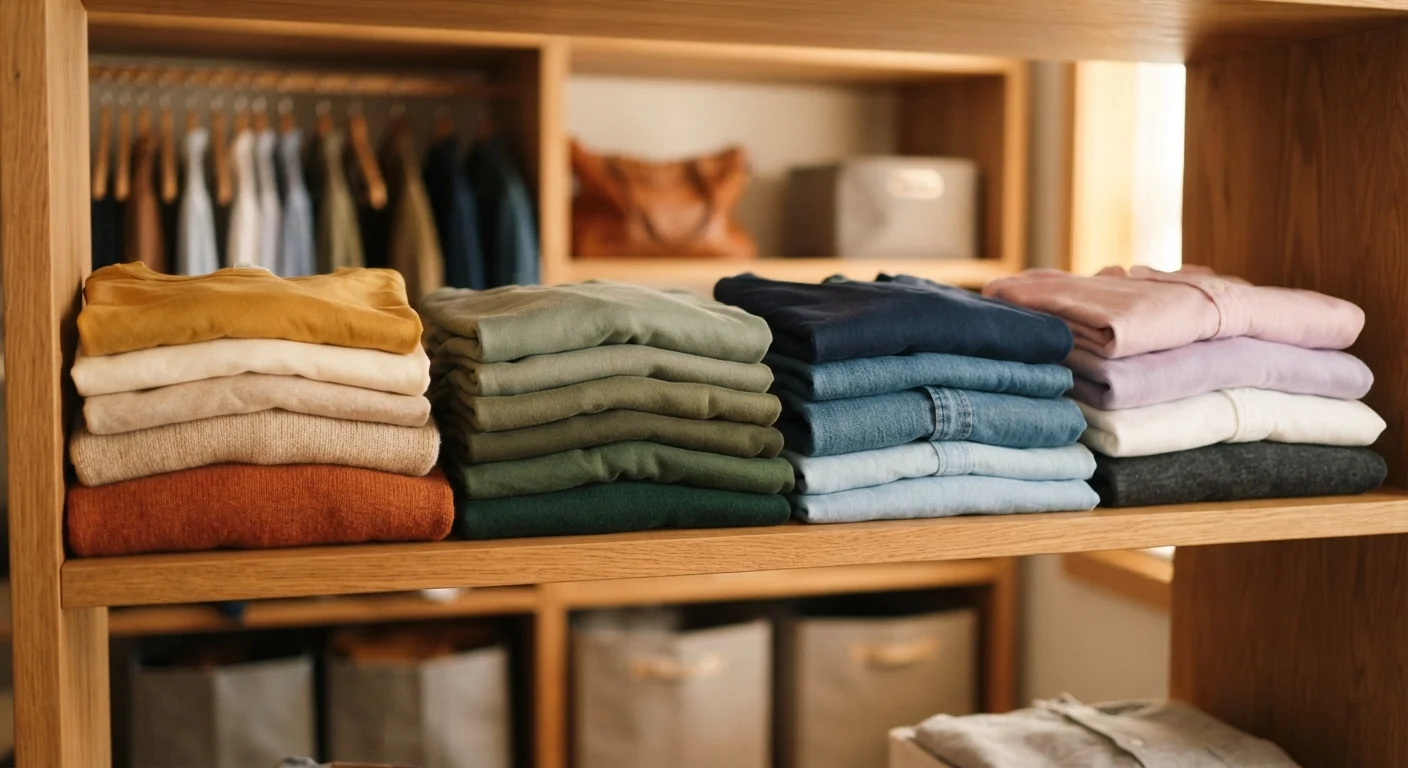
How you store clothes between wears matters just as much as how you wash them. Cramming a closet beyond capacity creates persistent creases and warps fabric structure over time. Certain garments—knitwear especially—should never be hung, because the weight of the fabric causes shoulders to stretch out of shape irreversibly.
Cedar Blocks vs. Mothballs: What to Know
Cedar blocks are a popular natural option for deterring moths in stored clothing and are generally considered safer for fabrics and household air quality than traditional mothballs, which contain chemicals that can irritate the respiratory system. Cedar's effectiveness does diminish over time—lightly sanding the block periodically can help restore its scent. Neither option replaces making sure clothes are clean before long-term storage, which is the most important preventive step.
For seasonal items you're putting away, make sure everything is clean before storage. Even invisible oils and residues from body heat or food can set into fabric over months, attracting pests and causing discoloration that won't wash out later. This connects well to the broader idea of seasonal wardrobe transitions without buying everything new—good storage prep is half the work.
If your closet is built around a few reliable staples, protecting those pieces is especially worthwhile. See our guide to wardrobe staples every American closet benefits from for a practical foundation to build on.
~$1,700
Average annual U.S. household spending on apparel
According to the U.S. Bureau of Labor Statistics Consumer Expenditure Survey, American households spend roughly this amount on clothing and footwear each year, underscoring how much is at stake in garment longevity.
Up to 2x
Longer lifespan with proper garment care
Textile and consumer research has generally found that appropriate washing, drying, and storage practices can double the usable lifespan of common everyday garments compared to improper care.
Stain Treatment and Minor Repairs
Speed is everything with stains—blotting (never rubbing) a fresh spill prevents it from bonding with fibers. Cold water works for most food and beverage stains; hot water can actually cook proteins like blood or egg into fabric permanently. When in doubt, check the garment's care label before applying any treatment.
Small repairs—a loose button, a popped seam, a minor snag—are worth addressing early. Ignored, they escalate into damage that makes a garment unwearable. A basic sewing kit and five minutes of attention can add months or years to a piece's lifespan. Think of it the same way you'd think about catching a small problem early in any area of maintenance, whether that's home upkeep or, as we note in a parallel context, smart habits that help your car last longer.
“Clothing care is the most underrated form of sustainability. The greenest garment is the one you already own—kept in good condition and worn as long as possible.”
— Elizabeth L. Cline, Author and journalist specializing in fashion sustainability and labor