

Key Takeaways
Why You Probably Don't Need to Shop
Every season change seems to come with an implied obligation to refresh your wardrobe from scratch. In reality, most people own far more wearable clothing than they realize — it's just organized (or buried) for the wrong time of year. Before you reach for your wallet, it's worth understanding what a real transition actually involves.
Seasonal wardrobe shifting is primarily about access and layering, not replacement. The goal is to bring weather-appropriate pieces to the front of your closet, store what you won't need, and identify any genuine functional gaps — not style whims. If you're curious about how this connects to a broader philosophy of owning less, our look at minimalist wardrobe trade-offs covers the honest advantages and downsides worth knowing first.
What you will need
Step-by-Step: Transitioning Your Wardrobe
Follow these steps at the start of each new season — fall-to-winter and spring-to-summer transitions tend to require the most effort, while the shoulder seasons in between are lighter lifts.
Do a Full Closet Audit
Pull everything out — or at minimum, go through every item in your closet and dresser. Sort into three groups: keep and wear now, store for next season, and remove entirely (donate, repurpose, or discard). Be honest about what you've actually worn in the past 12 months.
Clean Everything Before Storing
Any item going into storage should be freshly laundered or dry-cleaned first. Oils from skin, deodorant residue, and food particles become permanent stains over months in a bin. Clean clothes also resist mildew and pest damage far better than worn ones.
Reorganize Your Active Closet for the Season
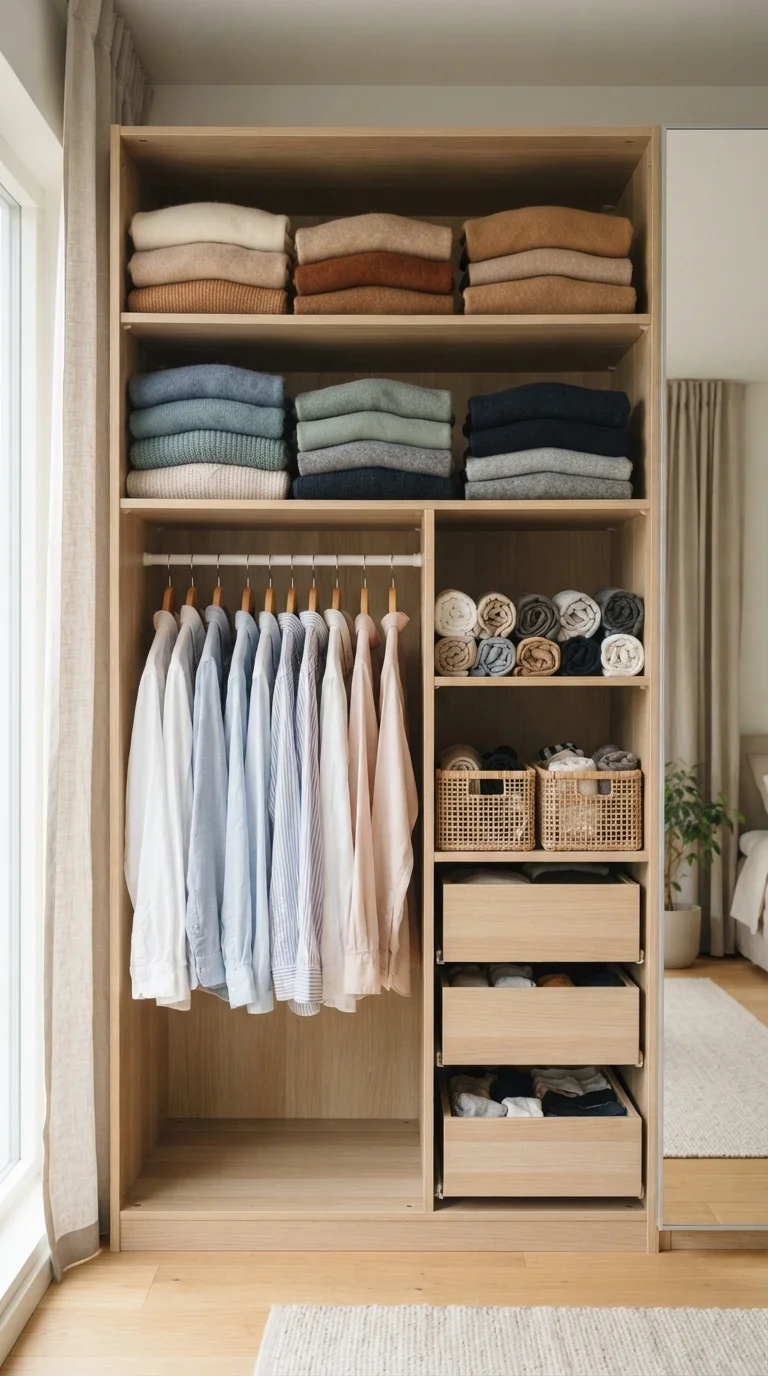
Once off-season items are stored, rearrange what's left so the most seasonally useful pieces are easiest to reach. Lighter fabrics go to the front in warmer months; heavier layers come forward in cooler months. Group items by type (tops, bottoms, layers) rather than color for faster outfit building.
Build Outfits From What You Already Have
Before concluding you need anything new, spend 20–30 minutes combining pieces in ways you haven't tried. Transitional weather is often when unexpected pairings — like a summer dress over a long-sleeve tee, or summer trousers with a chunky knit — come together well. Take photos of combinations you like so you remember them.
Identify Only Genuine Functional Gaps
After the audit and outfit-building exercise, note any real gaps — not "I want something new" but "I don't own a single warm layer that works with my work clothes." Write these down specifically before shopping. This prevents impulse buying dressed up as practical necessity. If you do shop, secondhand options are worth considering; our comparison of thrift vs. fast fashion gives an honest breakdown of both approaches.
Storing Off-Season Clothes the Right Way
How you store clothes during the off-season determines how they look when you pull them back out. Improper storage leads to musty smells, stretched-out shapes, and fabric damage that makes perfectly good pieces feel unwearable.
Vacuum Storage Bags Have Limits
Vacuum-seal bags work well for bulky items like comforters and puffy coats, but they can permanently compress delicate knits and structured garments. Use them selectively, and choose breathable fabric bins for anything with structure or stretch.
General rules: fold heavy knits rather than hanging them (hanging stretches the shoulders over time); use breathable cotton bags or pillowcases instead of plastic for anything delicate; and keep storage containers in a cool, dry place away from direct sunlight. Cedar blocks or sachets can help deter moths without harsh chemicals.
For a deeper dive into caring for individual garment types, our guide on making your clothes last season after season covers washing, drying, and storage habits that genuinely extend a garment's life.
Layering as a Year-Round Strategy
Layering isn't just a cold-weather trick — it's how versatile dressers get mileage out of the same pieces across multiple seasons. A lightweight linen shirt works in summer on its own, under a denim jacket in fall, and under a heavier coat in winter. That's three seasons from one item.
Avoid Buying for Trends, Not Gaps
Transitional seasons generate a lot of marketing around "must-have" new pieces. Be skeptical of anything positioned as urgent or season-specific. A purchase that only works for six weeks is rarely a good use of your clothing budget, regardless of the price point.
Focus on what are sometimes called "bridge pieces" — mid-weight cardigans, unlined blazers, long-sleeve tees, and lightweight scarves. These items don't belong to any single season; they extend your range in both directions. If your current wardrobe feels thin on these, that's where a targeted, intentional addition actually makes sense — rather than buying trend pieces that only work for a few weeks. Our practical guide to building a wardrobe on a tight budget can help you fill those gaps thoughtfully.
It's also worth noting that seasonal changes affect more than just your clothes. If you find your hair reacting to humidity shifts or dry indoor heating, our article on seasonal hair care walks through routine adjustments that can help.