

Key Takeaways
Color Palette in Fashion
A color palette in fashion refers to the set of colors you consistently wear together — typically a foundation of neutrals plus one or more accent shades. Neutrals are colors with low saturation (think white, beige, gray, black, and navy) that pair easily with almost anything. Accent colors are more saturated shades that add personality and visual interest to an outfit.
In color theory, neutrals are often described as achromatic (no hue) or near-neutral (very low chroma), while accent colors carry enough hue and saturation to create contrast against a neutral base.
Why Palette Thinking Makes Getting Dressed Easier
Most wardrobe frustration doesn't come from having nothing to wear — it comes from having pieces that don't talk to each other. When you don't have a consistent color logic running through your closet, even a full rack can feel like a dead end every morning.
Building a personal palette — even a loose one — changes that dynamic. Instead of evaluating every item in isolation, you start thinking in combinations. Clothes that share a palette feel naturally coordinated, which means more outfit options from fewer pieces. That's genuinely budget-friendly thinking: you're not buying more, you're making what you have work harder.
If your wardrobe already has some go-to staples, you likely have a palette starting point already. Our guide to wardrobe staples every American closet benefits from explains how foundational pieces anchor daily outfits — and most of them are neutral for good reason.
Palette and Skin Tone: A Starting Point, Not a Rule
While warm and cool undertones in clothing can complement skin tone undertones, there are no strict rules — personal preference and confidence matter more than any color 'system.' Think of undertone guidance as a useful starting point for narrowing choices, not a limit on what you're allowed to wear.
The Role Neutrals Play (and Why They Dominate Most Closets)
Neutrals — black, white, gray, navy, beige, camel, cream — exist in nearly every well-functioning wardrobe because they do something accent colors can't: they disappear into an outfit rather than competing with it. A camel blazer over a white shirt and dark jeans reads as put-together precisely because nothing is fighting for your eye's attention.
Neutrals also act as a buffer. Pair two bold accent colors directly and the result can feel chaotic. Add a neutral between them — a white layer, a gray trouser, a beige shoe — and suddenly the same colors feel intentional.
70%
of closet items rarely or never worn
Consumer behavior research has consistently suggested that a large portion of owned clothing goes unworn, often because pieces don't coordinate well with the rest of the wardrobe.
3–5
colors in a functional working palette
Style educators and personal stylists commonly recommend limiting a working wardrobe palette to three to five shades to maximize outfit combinations.
The practical upside is significant: neutrals rarely go out of style, they're easier to find at every price point, and they extend the wearability of every accent piece you own. A bright cobalt blue blouse pairs with far more pieces when your wardrobe foundation is neutral.
How Accent Colors Work — and How to Use One Well
An accent color is any shade with enough saturation to stand out against a neutral base. It's what gives an outfit personality — a warm terracotta scarf against a navy coat, a soft sage top tucked into cream trousers. The accent creates a focal point without overwhelming the look.
The most common mistake is treating accent colors like neutrals and wearing several saturated shades at once. One or two accents per outfit is the practical guideline most stylists work with. The goal is emphasis, not competition.
Test an Accent Color With Accessories First
Before committing to a full garment in a new color, try it as an accessory — a scarf, belt, or bag. This low-risk approach lets you see how the shade interacts with your existing neutrals before spending more. If it keeps working its way into outfits naturally, that's a signal it belongs in your palette.
Warm and cool undertones matter here. A warm camel base works naturally with rust, olive, and warm reds. A cool gray base pairs well with lavender, cobalt, and forest green. Mixing a warm-toned accent into a cool-toned neutral base isn't wrong — but it takes more intention to feel cohesive rather than clashing. This temperature logic also applies beyond clothing: it's the same principle explored in how warm and cool paint colors affect a room.
Building Your Own Palette Without Buying Anything New
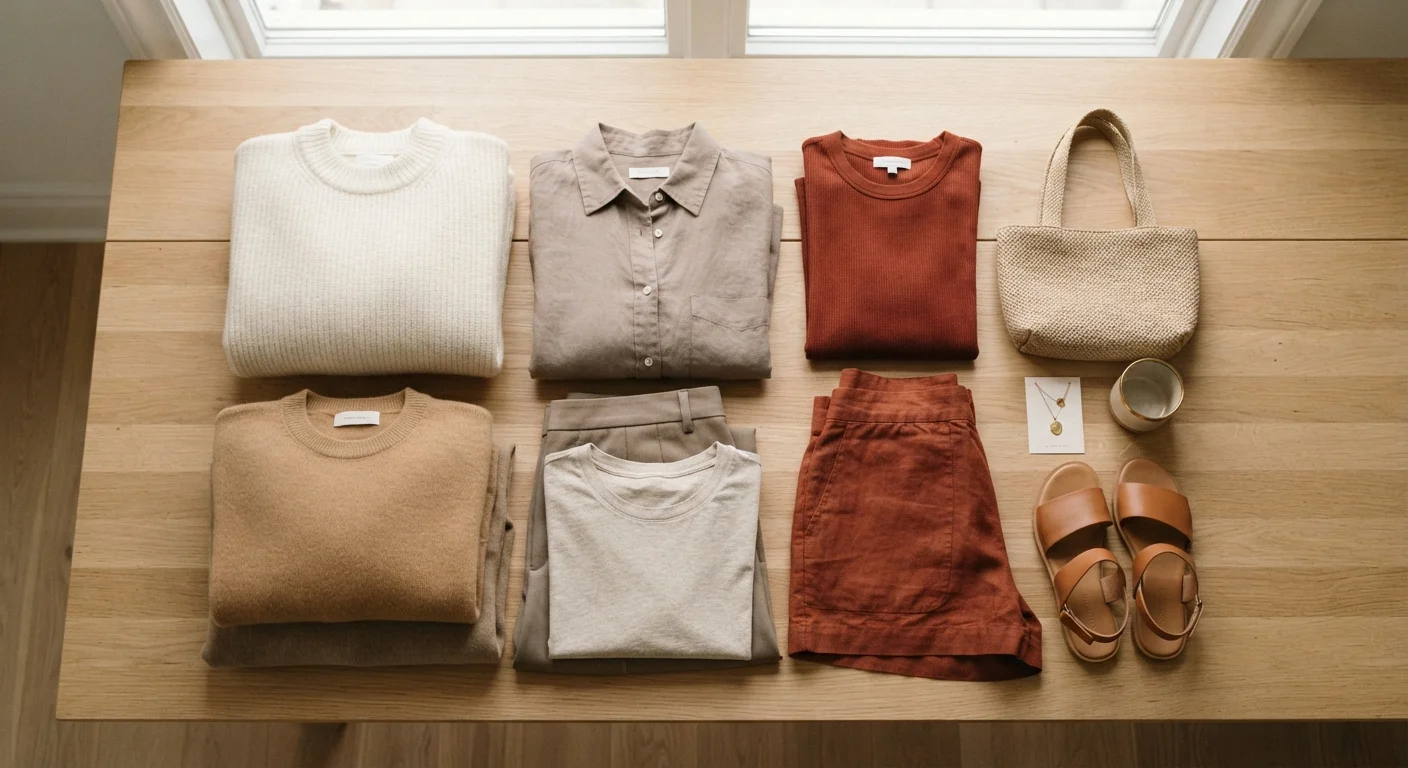
You don't need a shopping trip to define your personal palette. Start by pulling out the pieces you actually reach for. Lay them on a flat surface and look for the colors that keep appearing — those are already your palette. Most people discover they've been working with a loose color story all along without realizing it.
Identify your neutrals first (what's doing most of the background work?), then your accents (what colors do you love to wear but aren't your default?). If everything you own is a neutral, that's useful information too — your palette is monochromatic and intentional styling through texture will do the heavy lifting.
From there, shopping becomes more deliberate. New pieces earn their place by either reinforcing your neutrals or adding a usable accent. This is the mindset shift that makes a smaller wardrobe feel abundant. And if an outfit still feels unresolved even after you've sorted the palette, proportion and fit are usually the next layer to address — something our article on why outfits feel off even when the clothes are fine covers in detail.