

Key Takeaways
Why Early Habits Make the Biggest Difference
A beard isn't just facial hair — it's skin, pores, and follicles all working together. When you build good habits early, you're not just managing appearance; you're preventing common problems like flaking, itchiness, patchy growth, and ingrown hairs before they start.
The good news is that beard care doesn't need to be complicated or expensive. A handful of consistent, well-chosen habits will outperform any elaborate product regimen. This article focuses on those fundamentals, whether you're growing your first beard or looking to sharpen what you're already doing. For context on how beard care fits into a full facial routine, see our men's grooming routines guide.
The Core Habits Worth Starting Today
Each of the practices below targets a specific gap that shows up when beard care is treated as an afterthought. None require professional skill — just regularity.
Notice that moisturizing the skin underneath is listed separately from conditioning the hair. That distinction matters. Beard itch and flaking are almost always a skin problem, not a hair problem. Treating the beard as isolated from the face leads to missed steps. Our everyday skincare routine walkthrough covers the foundational skin steps that pair well with beard care.
Shaping, Trimming, and Knowing When to See a Professional
Even men who are growing a longer beard benefit from occasional trimming. Trimming removes split ends, encourages uniform thickness, and keeps the neckline and cheek lines readable — which makes the beard look intentional rather than overgrown.
The Neckline Rule Most People Get Wrong
Trimming the neckline too high is one of the most common beginner mistakes — it creates an awkward gap between the beard and the jaw. A practical rule of thumb: place two fingers above your Adam's apple and trim below that line. This leaves enough coverage to look full while keeping the beard clearly defined.
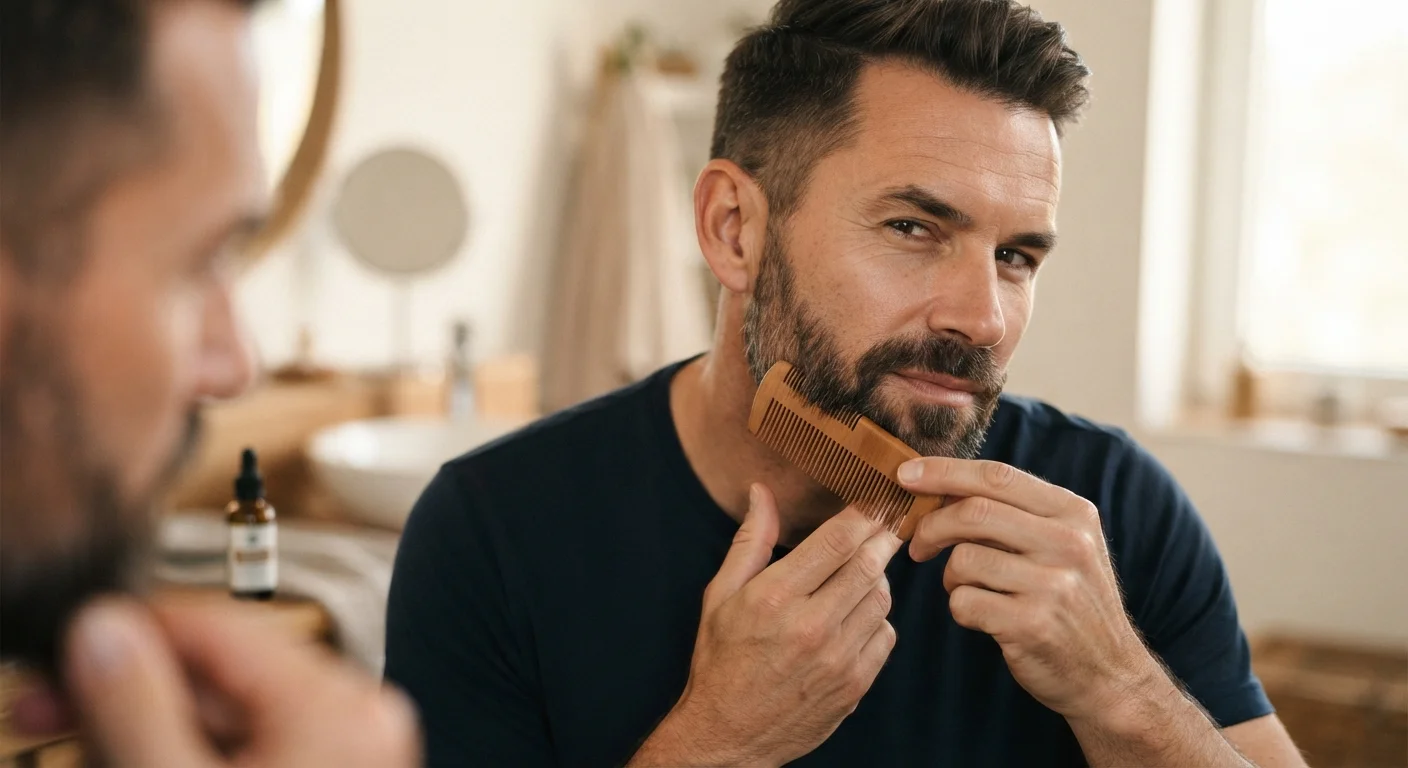
For home trimming, a comb and small scissors or a quality trimmer with guards will cover most needs. The neckline is the trickiest part: a common guideline is to trim just above the Adam's apple rather than too high, which can make the beard look disconnected from the jaw.
When precision matters — for a wedding, job interview, or a major style change — a visit to a skilled barber is worth considering. Scalp and follicle health also plays a role in beard density; for more on that connection, see our scalp health primer.
2–3×
Recommended weekly beard wash frequency
Dermatologists generally advise washing beard hair less frequently than scalp hair to preserve sebum (natural oil) production.
~½ inch
Average monthly beard growth rate
The American Academy of Dermatology notes that facial hair, like scalp hair, grows roughly half an inch per month on average — though this varies significantly by individual.
Building a Routine That Actually Sticks
Consistency beats intensity in beard care. A simple daily routine — rinse, moisturize, comb — combined with a twice-weekly wash takes under five minutes and covers most of what your beard actually needs.
Stack beard care onto habits you already have: washing during your morning shower, applying oil or balm right after drying your face, and trimming on the same day each week. Habit stacking — attaching a new behavior to an existing one — is one of the most well-supported methods for building lasting routines.
Beard Growth Varies Widely — That's Normal
Beard density, growth rate, and patchiness are largely determined by genetics and hormone levels — factors outside your control. Products and routines can support healthy growth conditions, but they cannot change your underlying hair pattern. If you're concerned about significant or sudden changes in hair growth, a conversation with a healthcare professional is the right next step.
Patience is also part of the routine. Full beard growth timelines vary widely by genetics and hormones, and comparing your progress to others is rarely useful. Focus on what you can control: cleanliness, hydration, and shape. The rest follows with time.