

Key Takeaways
Summary
24 items · 30-60 minutes per seasonal review
Why Seasonal Maintenance Matters
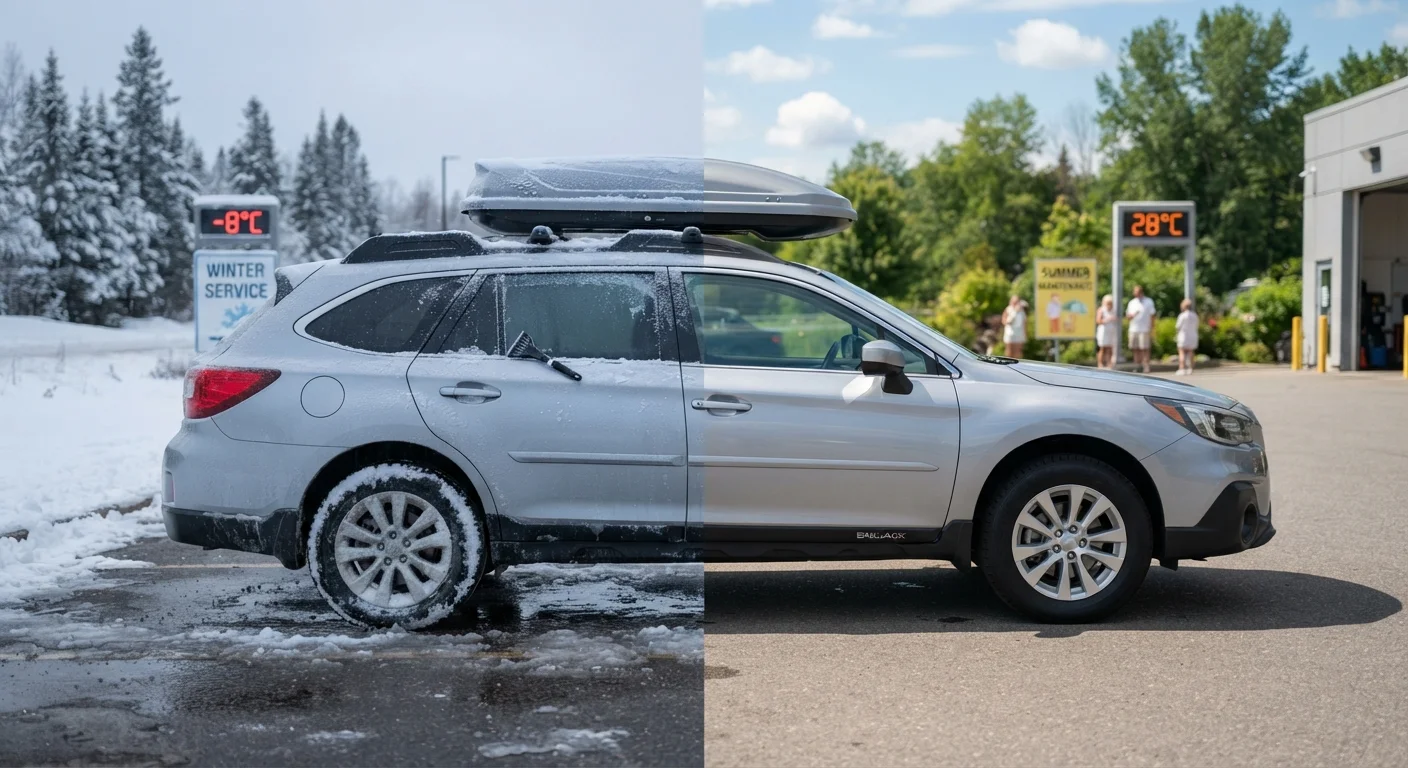
Vehicles don't experience the year the same way humans do. Cold temperatures thicken fluids, heat accelerates wear on rubber components, and spring moisture invites rust and corrosion. Treating your car's maintenance as a single annual task - rather than an evolving seasonal routine - means you're often catching problems after they've already caused damage.
A season-by-season approach spreads the workload, keeps inspections timely, and lets you address vulnerabilities before they become failures. If you want to understand the broader picture of how driving conditions vary across the country, the regional seasonal driving guide is a useful companion to this checklist. For those planning trips through mountains or desert terrain, it's also worth reviewing how elevation and terrain affect your car's performance.
Use the checklist below as a framework - then verify specific intervals and specifications in your owner's manual.
Don't Skip the Owner's Manual
General seasonal advice applies broadly, but your vehicle has specific fluid grades, belt inspection intervals, and service schedules that vary by make, model, and mileage. Applying the wrong fluid type or missing a manufacturer-specified interval can void warranties or cause accelerated wear. Always cross-reference this checklist with what your owner's manual actually recommends.
What You'll Need
Most seasonal checks require only basic tools and a few minutes in your driveway. Some items - particularly brake inspections and coolant system work - should be confirmed by a qualified mechanic if you're unsure what you're looking at.
Tire pressure gauge
Check and monitor inflation levels across all four tires during seasonal temperature swings.
Battery load tester
Measure a battery's cold-cranking performance before winter; available at most auto parts retailers or performed free at many service centers.
Coolant/antifreeze test strips
Quickly verify that your coolant mixture can handle the low temperatures expected in your region.
Flashlight or inspection light
Illuminate the undercarriage, wheel wells, and engine bay for visual inspections.
Tread depth gauge
Measure remaining tire tread to determine whether tires need rotation or replacement before a seasonal transition.
Owner's manual
The authoritative reference for your vehicle's specific fluid types, service intervals, and component specifications.
The Season-by-Season Checklist
Work through each group at the start of the relevant season. Items marked must are non-negotiable for safety and reliability. Should items are strongly recommended, and nice-to-have tasks add extra protection if time allows.
Understanding what each fluid in your car does will help you interpret what you're seeing when you open the hood. For a broader framework on prevention versus repair, see scheduled maintenance vs. reactive repairs.
Winter Preparation (Late Fall)
Spring Inspection (After Winter)
Summer Readiness (Late Spring)
Fall Wrap-Up (Before First Frost)
Brake and Cooling System Work Requires a Mechanic
While visual checks of brake pads and coolant hoses are within most drivers' ability, actual brake replacement and cooling system service involve safety-critical components. If you spot anything unusual - thin pads, soft brake feel, coolant leaks, or overheating - have the vehicle inspected by a qualified mechanic before driving further. Do not delay brake or cooling system repairs.
Building It Into Your Routine
The most effective maintenance habit is a simple calendar reminder at the start of each season. Pair it with one of the naturally recurring moments - like an oil change or a trip to the gas station - and the checks become second nature rather than a chore. For year-round habits that extend your vehicle's lifespan well beyond seasonal care, see smart habits that help your car last longer. New owners who are still finding their footing with routine upkeep will also benefit from reviewing common first-year mistakes new car owners make.
No checklist replaces your owner's manual or a conversation with a trusted mechanic - but it does ensure you're asking the right questions at the right time of year.
This article is for general informational purposes only. Always consult your vehicle's owner's manual and a qualified mechanic for guidance specific to your car's make, model, and condition.