

| Most frequently checked fluid | Engine oil |
| Brake fluid replacement interval | Typically every 2 years (General manufacturer guidance; verify in your owner's manual) |
| Coolant flush interval (general range) | Every 30,000-50,000 miles (Varies by vehicle and coolant type) |
| Transmission fluid interval (auto) | Every 30,000-60,000 miles (Driving conditions and vehicle type affect interval) |
| Fluids that require no tools to check | 5 of 6 (all except sealed transmissions) |
| Washer fluid safe for winter use | Purpose-made fluid with freeze protection |
Why Fluids Are the Lifeblood of Your Vehicle
Your car relies on a network of fluids to lubricate moving parts, transfer heat, transmit force, and protect systems from corrosion. When any one of them runs low or degrades, it can accelerate wear, trigger warning lights, or lead to costly repairs. The good news: most fluid checks take only a few minutes and require no special tools.
If you're new to car ownership, our first-time car owner's roadmap covers fluid checks alongside other essential maintenance responsibilities. This article goes deeper - explaining what each fluid actually does and how often it typically needs attention.
| Most frequently checked fluid | Engine oil |
| Brake fluid replacement interval | Typically every 2 years (General manufacturer guidance; verify in your owner's manual) |
| Coolant flush interval (general range) | Every 30,000-50,000 miles (Varies by vehicle and coolant type) |
| Transmission fluid interval (auto) | Every 30,000-60,000 miles (Driving conditions and vehicle type affect interval) |
| Fluids that require no tools to check | 5 of 6 (all except sealed transmissions) |
| Washer fluid safe for winter use | Purpose-made fluid with freeze protection |
The Six Fluids Every Driver Should Know
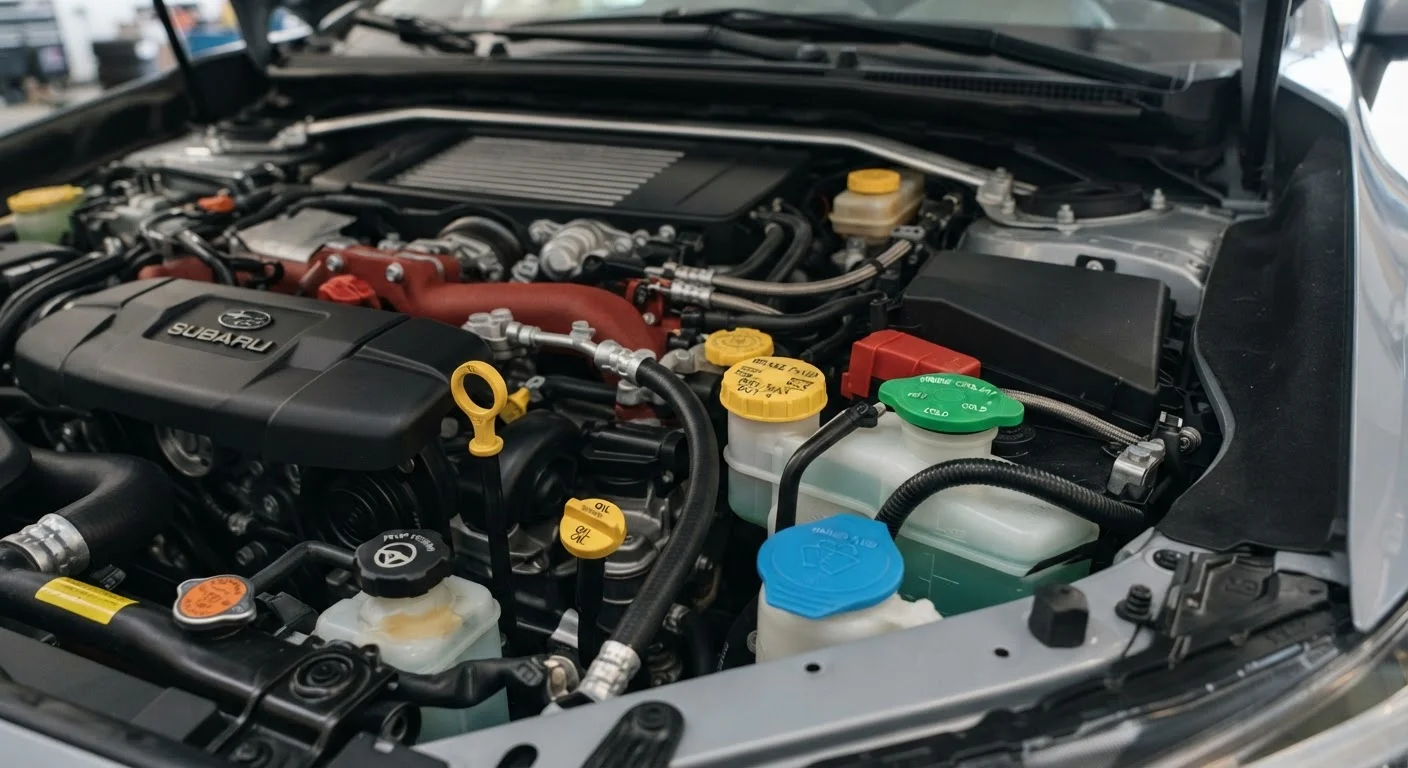
Engine Oil - Oil lubricates the hundreds of moving metal parts inside your engine, reducing friction and carrying heat away. It also holds combustion byproducts in suspension until the next oil change. Low or dirty oil is one of the most common causes of premature engine wear. Check the dipstick monthly (engine off, on level ground); look for a clear amber color. Dark, gritty oil means a change is overdue. Change intervals vary widely by vehicle and oil type - consult your owner's manual rather than relying on outdated rules. See common oil-change myths for more on that.
Coolant (Antifreeze) - Coolant circulates through the engine and radiator to regulate temperature, preventing both overheating in summer and freezing in winter. Check the overflow reservoir (never open a hot radiator cap) every few months. Most manufacturers recommend a full coolant flush every 30,000-50,000 miles, but check your manual. Low coolant is a serious warning sign - if the level keeps dropping, have a mechanic inspect for leaks.
Brake Fluid - Brake fluid is a hydraulic fluid that transfers the pressure from your pedal to the brake calipers. It's hygroscopic, meaning it absorbs moisture over time, which lowers its boiling point and reduces braking performance. Most manufacturers suggest replacing it every two years regardless of mileage. Check the reservoir under the hood; the level should fall between MIN and MAX. A sudden drop indicates a potential leak - have it inspected immediately.
Hygroscopic
A substance that absorbs moisture from the surrounding air over time. Brake fluid is hygroscopic, which is why it degrades and must be replaced periodically even without a visible leak.
Hydraulic fluid
A liquid used to transfer mechanical force through a system. In your car, brake fluid and power steering fluid work hydraulically, translating pedal or steering input into physical force on brakes or wheels.
Dipstick
A long, thin metal rod inserted into the engine oil reservoir that allows you to check the oil level and condition by pulling it out and reading the film of oil against marked indicators.
Coolant flush
A service procedure in which old coolant is fully drained from the cooling system, the system is cleaned, and fresh coolant is added. It prevents corrosion and maintains proper freeze and boil-over protection.
Power Steering Fluid - This fluid powers the hydraulic assist that makes steering feel light. Many modern vehicles use electric power steering and have no fluid reservoir; check your owner's manual. If your car does have hydraulic steering, low fluid typically causes a whining noise when turning. Check it monthly and top up with the exact fluid type specified.
Transmission Fluid - Transmission fluid lubricates gears and keeps the automatic or manual transmission running smoothly. Unlike oil, it doesn't always have a traditional dipstick - some vehicles have sealed transmissions serviced only by a shop. Where accessible, check it warm with the engine running. Burned or dark fluid signals it's time for a change, typically every 30,000-60,000 miles depending on driving conditions and vehicle type.
Windshield Washer Fluid - While not mechanical, this fluid affects visibility and safety. Use a purpose-made washer fluid, not plain water, which can freeze in winter and doesn't cut through road film effectively. Refill whenever the reservoir runs low. Seasonal car care tips can help you choose the right formulation for cold or hot climates.
Warning Signs and When to Act
Fluid problems often announce themselves before they become serious. Dashboard warning lights for oil pressure, temperature, and brake systems are worth understanding - learn what each warning light means before you're caught off guard. Beyond lights, watch for these physical signs:
- Puddles under the car: Clear water is usually normal condensation from the AC. Oily, green, red, or brown puddles suggest a fluid leak.
- Burning smell: Can indicate oil or coolant contacting hot engine surfaces - don't ignore it.
- Soft or spongy brake pedal: A possible sign of low or contaminated brake fluid; have it checked promptly.
- Overheating gauge: Pull over safely and let the engine cool - do not open the radiator cap on a hot engine.
Always Check Your Owner's Manual First
Intervals listed in this article are general guidelines. Your vehicle's manufacturer provides specific recommendations for fluid types, capacities, and service intervals in the owner's manual - and those should take precedence. Using the wrong fluid type can cause as much harm as running low on the right one.
Building smart maintenance habits around fluid checks is one of the most cost-effective things you can do for your vehicle's long-term reliability.
This article provides general vehicle maintenance information for educational purposes. For specific guidance on your vehicle, consult your owner's manual or a qualified mechanic.