

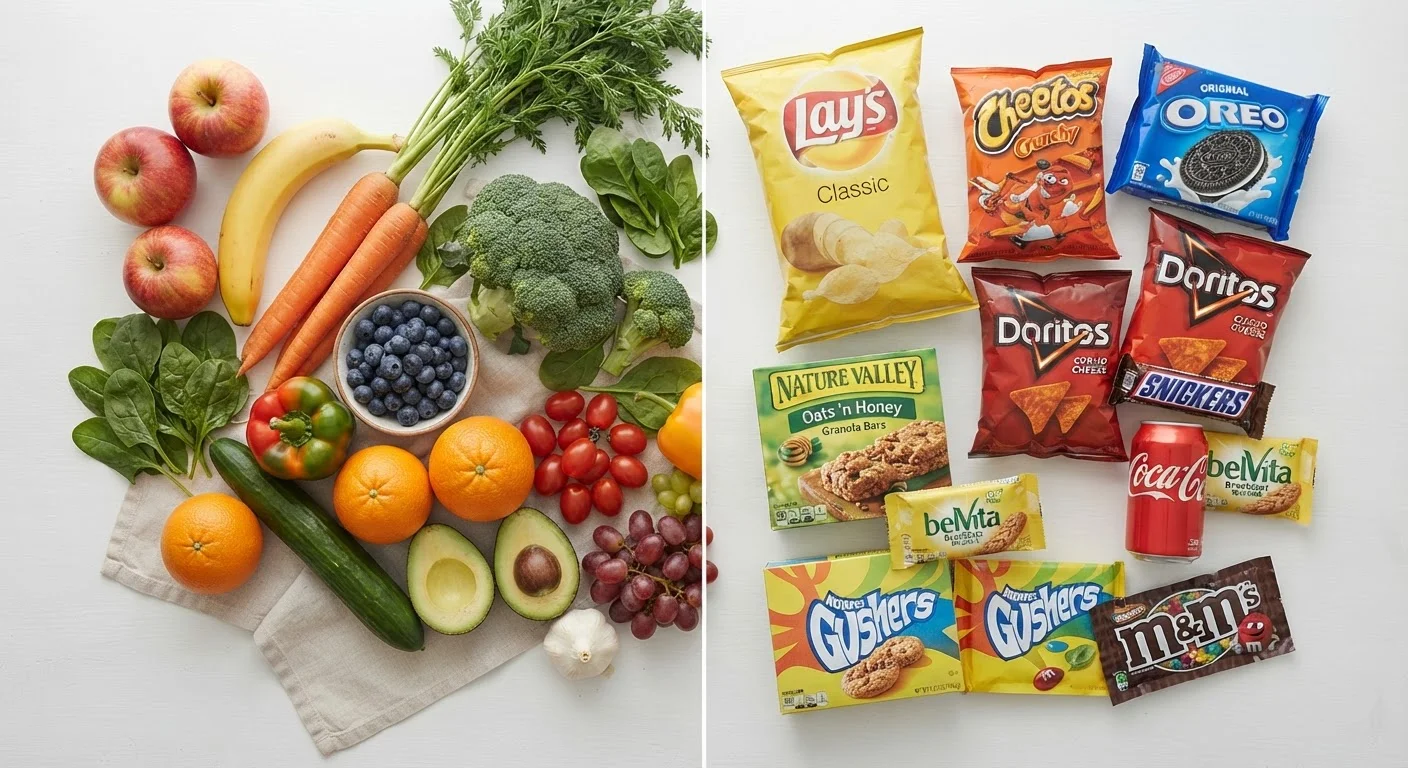
Key Takeaways
Option A
Natural Sugar
Sugar that occurs inherently within whole, unprocessed foods.
Best for: Everyday consumption as part of a balanced, whole-food diet where sugar comes packaged with fiber, vitamins, and minerals.
Option B
Added Sugar
Sugar introduced during food manufacturing, processing, or preparation.
Best for: Understanding and limiting - added sugars contribute calories with little to no accompanying nutritional benefit.
If you want to reduce overall sugar intake without cutting whole foods
Natural Sugar
Focusing reductions on added sugar rather than naturally occurring sugar preserves the nutritional value of fruits, vegetables, and dairy in your diet.
If you are scanning ingredient lists for hidden sweeteners
Added Sugar
Knowing the many names added sugar travels under - such as cane syrup, dextrose, or fruit juice concentrate - helps you identify it quickly on any label.
If you are managing a condition like type 2 diabetes or metabolic syndrome
Natural Sugar
For most people in this situation, whole-food sources of sugar with fiber are generally better tolerated, but personalized medical guidance is essential - speak with your healthcare provider.
If you are evaluating packaged 'health' foods like granola bars or flavored yogurt
Added Sugar
These products frequently contain high amounts of added sugar despite a healthy image; checking the Added Sugars line on the label gives you an accurate picture.
What Makes These Two Sugars Different
At a chemical level, glucose is glucose - your body cannot tell whether a molecule of fructose came from a fresh peach or a bottle of high-fructose corn syrup. The meaningful distinction lies not in molecular structure but in context: what else comes along for the ride when you consume that sugar.
Natural sugars exist as an inherent component of whole or minimally processed foods. The lactose in a glass of milk and the fructose in an apple arrive bundled with protein, fat, fiber, vitamins, and minerals. These co-passengers slow digestion, blunt blood-glucose spikes, and deliver genuine nutritional value. Fiber in particular slows the rate at which sugar enters the bloodstream, which matters for energy regulation.
Added sugars, by contrast, are any sugars or caloric sweeteners introduced to a food or beverage during processing, manufacturing, or preparation. They include cane sugar, honey, maple syrup, agave nectar, fruit juice concentrate, corn syrup, dextrose, maltose, and dozens of other ingredient names. Stripped of the fiber and micronutrients of their original sources, they add calories while contributing little else of nutritional significance.
This is why two foods showing the same number of grams under "Total Sugars" on a Nutrition Facts label can have very different effects on the body and your overall dietary quality. For a deeper look at how the full label is structured, see our guide to reading a Nutrition Facts label.
How to Find Each Type on a Nutrition Label
The updated U.S. Nutrition Facts label, rolled out under FDA rules effective for most manufacturers, now requires a dedicated "Includes X g Added Sugars" line indented beneath Total Sugars. This change was specifically designed to help consumers distinguish between sugars that naturally occur in a food and those that were introduced during production.
| Criterion | Natural Sugar | Added Sugar |
|---|---|---|
| Origin | Inherent in whole foods | Added during processing or prep |
| Common sources | Fruit, dairy, vegetables | Cane sugar, corn syrup, honey, syrups |
| Accompanying nutrients | Fiber, vitamins, minerals | Typically none |
| Shown on Nutrition Label | Under Total Sugars | Separate Added Sugars line |
| Impact on blood sugar | Generally slower (fiber present) | Generally faster (no fiber buffer) |
| Health organization guidance | No specific limit for whole foods | Limit recommended by major bodies |
Here is how to read it in practice: a plain, unsweetened yogurt may show 8 g of Total Sugars with 0 g of Added Sugars - all of that sugar is naturally occurring lactose. A flavored variety of the same yogurt might show 22 g of Total Sugars with 12 g of Added Sugars, meaning 12 of those grams were added in the form of a sweetener during manufacturing.
Ingredient lists are also revealing. Ingredients are listed in descending order by weight, so a sweetener appearing near the top signals a significant contribution. Be aware that manufacturers sometimes use several different sweetener names - cane syrup, brown rice syrup, dextrose - which distributes them across the list and can obscure how much added sugar is actually present.
Foods marketed as natural, organic, or wholesome can still carry considerable added sugar. Foods often labeled 'healthy' like granola bars, flavored oatmeal packets, and fruit-flavored drinks frequently land high on added sugar when you check the label.
Why the Distinction Matters for Your Diet
Health organizations including the American Heart Association and the World Health Organization have issued guidance recommending limits on added sugar specifically - not on sugars found naturally in fruits, vegetables, and dairy. The reasoning is grounded in evidence linking high added-sugar intake to increased risk for weight gain, elevated triglycerides, poor dental health, and other metabolic concerns. Whole-food sugar sources, in typical dietary amounts, have not shown the same associations.
17 tsp
Average daily added sugar consumption in the U.S.
According to CDC data, Americans consume an average of about 17 teaspoons of added sugar per day - well above commonly cited guidance levels.
~39%
Share of added sugar coming from beverages
Dietary data from the National Cancer Institute suggests beverages - including sodas, energy drinks, and sweetened coffees - are among the largest single sources of added sugar in the American diet.
That said, individual tolerance and dietary context vary significantly. Someone managing blood sugar levels, for example, may need to moderate naturally occurring fruit sugars as well as added ones - a conversation best had with a registered dietitian or physician rather than addressed through general population guidance alone.
Practically speaking, reducing added sugar often means shifting toward less processed foods rather than eliminating entire food groups. Pairing this approach with attention to whole grains is another useful step - see our overview of whole grains vs. refined grains for context on how food processing affects nutritional quality more broadly.
This article is for general informational and educational purposes only and does not constitute medical or dietary advice. Individual health needs vary. Consult a qualified healthcare professional or registered dietitian before making significant changes to your diet, especially if you have a health condition.