

Key Takeaways
Option A
Whole Grains
The structurally complete, nutrient-dense option.
Best for: People seeking more fiber, vitamins, and minerals from their carbohydrate sources.
Option B
Refined Grains
The processed, longer-shelf-life alternative.
Best for: Situations where texture, shelf stability, or digestive tolerance takes priority over nutrient density.
If you want to increase daily fiber intake
Whole Grains
Whole grains retain their bran layer, which is the primary source of dietary fiber in grain foods. Refined grains deliver only a fraction of that fiber.
If you have certain digestive sensitivities requiring lower-fiber foods
Refined Grains
In some clinical contexts, lower-fiber refined grains are better tolerated. Always discuss dietary modifications with a healthcare provider.
If you want to build a diet aligned with federal dietary guidelines
Whole Grains
U.S. Dietary Guidelines consistently recommend prioritizing whole grains over refined grains as part of a balanced eating pattern.
If texture or palatability is the deciding factor
Refined Grains
Refined grains are milder in texture and flavor; gradually blending whole grain options into meals can help transition preferences over time.
What Happens Inside the Mill
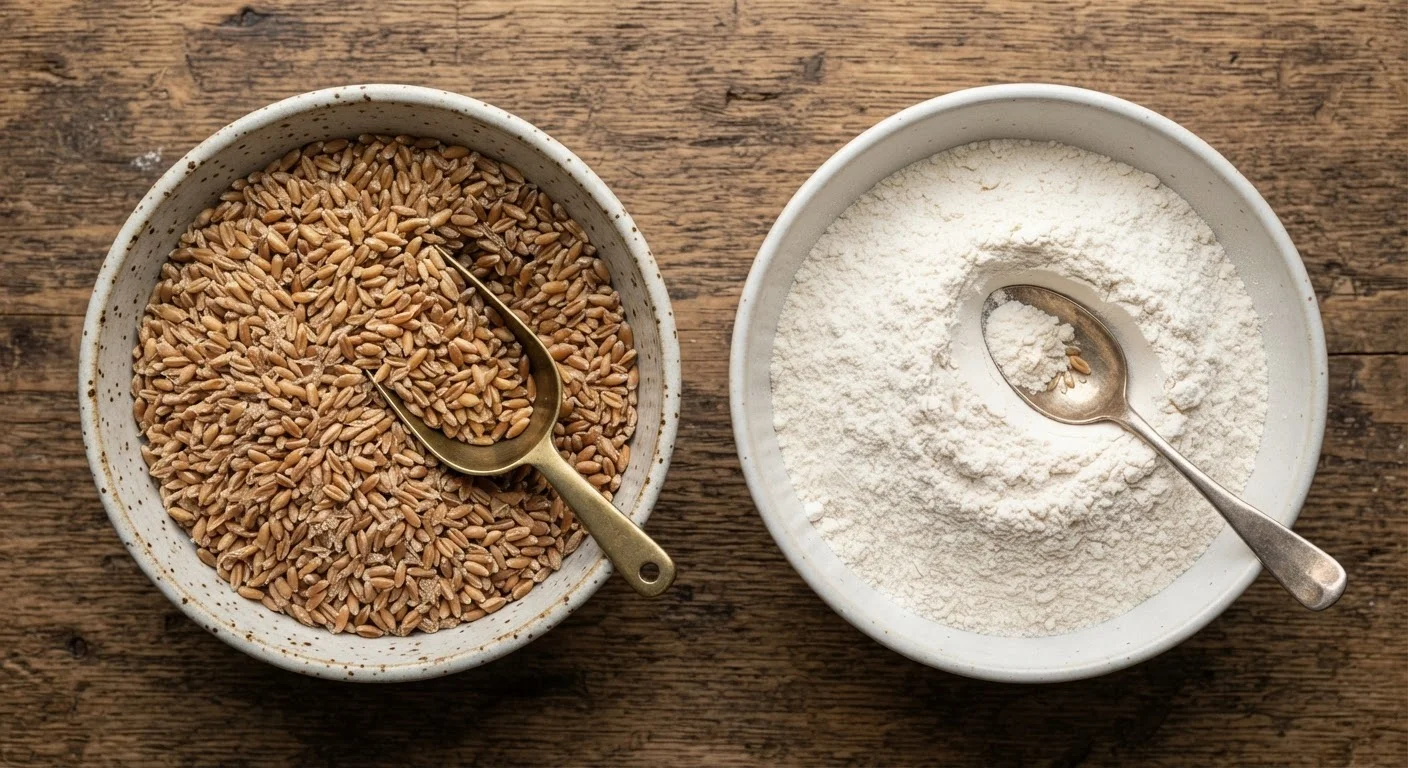
Every grain - wheat, rice, oats, corn - begins as a whole kernel made up of three distinct layers. The bran is the tough outer shell, rich in fiber, B vitamins, and antioxidants. Beneath it sits the germ, the seed's nutrient-dense embryo containing healthy fats, vitamin E, and additional B vitamins. The endosperm - the largest layer - provides starch and a modest amount of protein but relatively few micronutrients.
Refining strips away the bran and germ, leaving only the endosperm. The result is a lighter, smoother product with a longer shelf life and a more neutral flavor. It also means the kernel loses the majority of its fiber content, much of its B vitamins (thiamin, riboflavin, niacin, folate), vitamin E, iron, and a range of phytochemicals. What started as a nutritionally complex food is reduced to mostly starch.
Enrichment - a process mandated in the U.S. for many refined grain products - adds back iron and four B vitamins after milling. This addresses some of the loss, but it does not restore fiber, vitamin E, magnesium, zinc, or the full spectrum of plant compounds present in the original kernel.
Side-by-Side Nutritional Differences
The differences between whole and refined grains become especially concrete when you compare similar serving sizes of comparable foods - for example, whole wheat bread versus white bread, or brown rice versus white rice.
| Criterion | Whole Grains | Refined Grains |
|---|---|---|
| Kernel layers retained | Bran, germ, and endosperm | Endosperm only |
| Dietary fiber (per serving) | Significantly higher | Substantially reduced |
| B vitamins | Naturally present in full | Mostly removed; some added back via enrichment |
| Vitamin E | Present (from germ) | Largely absent after milling |
| Iron | Naturally present | Removed; often re-added via enrichment |
| Phytochemicals / antioxidants | Broader range retained | Significantly reduced |
| Shelf life | Shorter (germ fats can oxidize) | Longer and more stable |
| Texture and flavor | Denser, nuttier, more complex | Lighter, milder, smoother |
These differences compound over time. When whole grains make up a substantial portion of daily carbohydrate intake, the cumulative fiber and micronutrient intake increases meaningfully compared to a diet built on refined grains. When reading packaged grain foods, the ingredient list is more reliable than front-of-package claims - look for a whole grain listed first. Our guide on reading a nutrition label explains how to interpret those details accurately.
What the Research Generally Shows
A substantial body of observational research has linked higher whole grain consumption with lower risks of cardiovascular disease, type 2 diabetes, and certain digestive conditions. Major health organizations - including the American Heart Association and the Dietary Guidelines Advisory Committee - cite this evidence base in their recommendations.
3+ servings/day
Whole grain intake linked to reduced CVD risk
Multiple large cohort studies, including those reviewed by the American Heart Association, associate this level of consumption with meaningfully lower cardiovascular disease risk.
~25%
Share of American adults meeting whole grain recommendations
According to analysis cited in U.S. Dietary Guidelines Advisory Committee reports, most Americans consume far fewer whole grains than recommended.
~70%
Fiber reduction from milling a whole wheat kernel
Estimates from nutritional composition databases suggest refining removes roughly two-thirds or more of a grain's original fiber content.
It is worth noting that most of this research is observational, meaning it identifies associations rather than proving direct causation. People who eat more whole grains often have other health-promoting habits as well, which makes it difficult to isolate the effect of grains alone. Still, the overall weight of evidence favors a dietary pattern that emphasizes whole over refined grains, and few credible researchers argue the reverse.
The fiber in whole grains also plays a functional role in blood sugar regulation. Because fiber slows digestion, whole grain foods tend to produce a more gradual rise in blood glucose compared to their refined counterparts - a distinction relevant to people managing blood sugar levels, though individual responses vary. Always consult a healthcare professional about dietary changes if you have a diagnosed condition.
Practical Ways to Shift the Balance
Replacing all refined grains at once is rarely necessary - or realistic. A more sustainable approach involves gradually shifting the proportion of grains you consume toward whole grain options, which aligns with how federal dietary guidelines frame the recommendation: aim to make at least half of daily grain servings whole grains.
Some straightforward swaps include choosing whole grain bread instead of white, brown or wild rice instead of white rice, and oats or whole grain cereals instead of highly processed breakfast options. Be cautious, though, of products that use language like "multigrain" or "made with whole grain" - these phrases don't always mean the product is predominantly whole grain. As noted in our piece on foods often labeled healthy, marketing language and actual nutritional content don't always match.
For those curious about how sugar content fits into the broader grain picture, it's also worth understanding how processing affects carbohydrate quality - something explored in our article on added sugar vs. natural sugar.
This article is for general informational and educational purposes only and does not constitute medical or dietary advice. Individual nutritional needs vary. Consult a qualified healthcare professional or registered dietitian before making significant changes to your diet, especially if you have a health condition.