

Key Takeaways
Macronutrients
Macronutrients are the three main categories of nutrients your body needs in relatively large amounts to function: carbohydrates, protein, and fat. Each one provides energy, measured in calories, and supports specific biological processes - from fueling your brain to repairing muscle tissue. Unlike vitamins and minerals (micronutrients), macros are the structural and energy foundation of your diet.
Carbohydrates and protein each provide 4 calories per gram; dietary fat provides 9 calories per gram. Alcohol provides 7 calories per gram but is not classified as a macronutrient because it has no essential physiological role.
Carbohydrates: Your Body's First-Choice Fuel
Carbohydrates are the body's primary and most readily available energy source. When you eat carbs - whether from bread, fruit, beans, or dairy - your digestive system breaks them down into glucose, which circulates in the blood and powers your cells. The brain in particular depends heavily on a steady glucose supply to maintain focus and cognitive function.
Not all carbohydrates behave the same way. Simple carbohydrates (found in table sugar and refined grains) digest quickly and can produce rapid spikes in blood sugar. Complex carbohydrates (found in whole grains, legumes, and vegetables) digest more slowly, providing sustained energy and valuable dietary fiber. Fiber, while technically a carbohydrate, is not digested for energy - instead it supports gut health, regulates blood sugar, and promotes satiety.
Diets that severely restrict carbohydrates force the body to produce an alternative fuel called ketones from fat, a metabolic state known as ketosis. While this approach works for some people under medical supervision, it is not necessary for most healthy adults and can be difficult to sustain long-term.
Prioritize Fiber-Rich Carbohydrate Sources
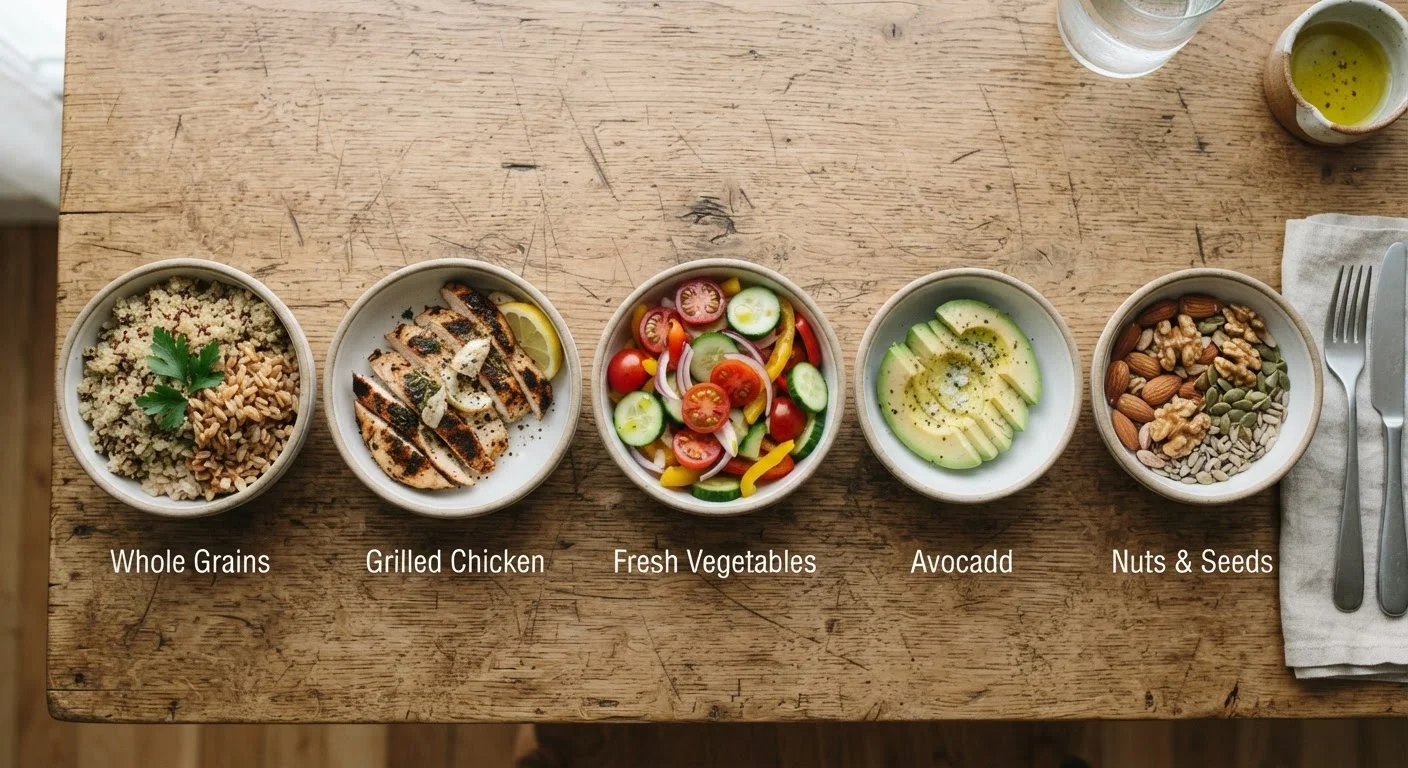
When building meals around carbohydrates, choosing whole food sources - like oats, brown rice, sweet potatoes, legumes, and fresh fruit - provides fiber alongside energy. Fiber slows glucose absorption, supports digestive health, and helps you feel satisfied longer. Most Americans consume far less fiber than recommended daily amounts.
Protein: The Body's Builder and Repairman
Protein is composed of amino acids - often described as the building blocks of life. Your body uses them to construct and repair muscle tissue, produce enzymes and hormones, support immune function, and transport molecules through the bloodstream. Of the 20 amino acids your body uses, nine are considered essential, meaning they must come from food because the body cannot synthesize them on its own.
Complete proteins contain all nine essential amino acids in adequate amounts. Animal sources - meat, poultry, fish, eggs, and dairy - are typically complete. Most plant proteins are incomplete (low in one or more essential amino acids), though eating a variety of plant foods throughout the day reliably covers all amino acid needs. Soy and quinoa are notable exceptions that provide a complete amino acid profile from plant sources.
Protein also has a higher thermic effect than carbs or fat - meaning your body burns more calories processing it - and it tends to promote feelings of fullness, which can support appetite management as part of a broader healthy eating pattern.
For readers interested in how protein intake relates to exercise outcomes, see our breakdown of cardio vs. strength training and how each affects body composition.
0.8 g/kg
Minimum daily protein intake for sedentary adults
According to the Dietary Reference Intakes established by the National Academies of Sciences, Engineering, and Medicine.
45-65%
Recommended share of daily calories from carbohydrates
Per the U.S. Dietary Guidelines for Americans, applicable to most healthy adults.
9 kcal/g
Calories per gram of dietary fat
Compared to 4 calories per gram for both protein and carbohydrates - making fat the most energy-dense macronutrient.
Dietary Fat: Essential, Not the Enemy
Fat spent decades as the nutritional villain in mainstream diet culture, but the science tells a more nuanced story. Dietary fat is essential for life. It enables the absorption of fat-soluble vitamins (A, D, E, and K), forms the structural membrane of every cell in your body, and serves as the raw material for key hormones including estrogen and testosterone. The brain itself is roughly 60% fat by dry weight.
The type of fat matters considerably:
- Unsaturated fats (found in olive oil, avocados, nuts, and fatty fish) are associated with cardiovascular and anti-inflammatory benefits.
- Saturated fats (found in red meat, butter, and full-fat dairy) are fine in moderation for most people, but current evidence supports limiting them relative to unsaturated fats.
- Trans fats (industrially produced, found in partially hydrogenated oils) are associated with increased cardiovascular risk and are largely banned from the U.S. food supply.
Fat is calorie-dense - 9 calories per gram compared to 4 for carbs or protein - which is why portions matter. But dietary fat does not translate directly into body fat; overall energy balance and metabolic health are the more relevant factors.
Omega-3 and Omega-6 Fatty Acids
Within the unsaturated fat category, omega-3 and omega-6 fatty acids are considered essential - your body cannot produce them, so they must come from food. Omega-3s (found in fatty fish like salmon, flaxseed, and walnuts) are particularly associated with cardiovascular and brain health. Most Americans consume adequate omega-6s but may fall short on omega-3s. Talk to your healthcare provider if you have concerns about your intake.
To see how macronutrients are listed on packaged foods, our guide to reading a nutrition label walks you through every section of a standard U.S. Nutrition Facts panel.
Finding Balance: What the Evidence Actually Supports
No single macro ratio has emerged as universally optimal for all people. General dietary guidelines in the United States suggest that for most adults, carbohydrates provide the largest share of daily calories (roughly 45-65%), followed by fat (20-35%), with protein making up the remainder (10-35%). These are broad ranges - not precise targets - and individual needs vary based on age, activity level, health conditions, and personal goals.
What the evidence does consistently support is food quality over macro fixation. Diets rich in whole grains, vegetables, legumes, lean proteins, and healthy fats are associated with better long-term health outcomes across a wide range of macro compositions. Conversely, diets dominated by ultra-processed foods tend to be associated with worse outcomes regardless of their macronutrient breakdown.
For a fuller picture of how vitamins and minerals complement the role of macronutrients, explore our overview of key micronutrients in everyday foods.
This article is for general informational purposes only and does not constitute medical or dietary advice. Individual nutritional needs vary. Please consult a registered dietitian or qualified healthcare professional before making significant changes to your diet, especially if you have a health condition.