

| Vitamin D primary function | Calcium absorption and bone health (National Institutes of Health, Office of Dietary Supplements) |
| Most common micronutrient deficiency globally | Iron deficiency (World Health Organization) |
| Vitamin B12 - primary dietary sources | Animal products (meat, fish, dairy, eggs) |
| Best vitamin C food source | Red bell peppers (higher mg/serving than citrus) (USDA FoodData Central) |
| Calcium absorption enhancer | Vitamin D (needed for intestinal absorption) |
| Iron absorption tip | Pair plant-based iron with vitamin C to improve uptake |
Why Micronutrients Matter
Vitamins and minerals - collectively called micronutrients - are nutrients your body needs in relatively small amounts but cannot function well without. Unlike carbohydrates, proteins, and fats (the macronutrients that supply energy), micronutrients act as catalysts and structural components: they help convert food into usable fuel, support immune defenses, maintain bone density, regulate fluid balance, and enable nerve signaling.
Most healthy adults can meet their micronutrient needs through a varied, whole-food diet. Gaps tend to arise when eating patterns become narrow or restrictive - which is why understanding what nutrients come from which foods is genuinely practical knowledge. For a broader picture of how macronutrients and micronutrients work together, see our guide to macronutrients.
Micronutrient
Vitamins and minerals required in small quantities for normal physiological function. Unlike macronutrients, they provide no direct energy but are essential for metabolic processes.
Fat-Soluble Vitamins
Vitamins A, D, E, and K, which dissolve in fat and can be stored in the body's fatty tissues and liver. Because they accumulate, excessive intake from supplements may carry risk.
Water-Soluble Vitamins
Vitamins C and the eight B vitamins, which dissolve in water and are not stored in significant amounts. They must be replenished regularly through diet.
Trace Minerals
Minerals required in amounts typically under 100 mg per day, including iron, zinc, iodine, and selenium. Despite the small quantities needed, deficiencies can cause significant health problems.
Bioavailability
The proportion of a nutrient that the body can actually absorb and use. Bioavailability varies by food source, preparation method, and what else is eaten at the same time.
Daily Value (%DV)
A reference figure used on U.S. Nutrition Facts labels indicating how much of a nutrient a serving provides relative to the general recommended daily intake for adults.
Key Vitamins and Their Food Sources
Vitamins are organic compounds divided into two groups based on how the body stores them.
Fat-Soluble Vitamins (A, D, E, K)
Vitamin A supports vision, immune function, and skin cell renewal. It's found as preformed retinol in liver, dairy, and eggs, and as provitamin A carotenoids in orange and dark-green vegetables like sweet potatoes, carrots, and spinach.
Vitamin D helps the body absorb calcium and supports bone health and immune regulation. Fatty fish (salmon, sardines), egg yolks, and fortified dairy or plant milks are key dietary sources; the skin also synthesizes it from sunlight exposure.
Vitamin E functions as an antioxidant protecting cell membranes. Nuts, seeds, and plant oils - particularly sunflower and wheat germ oil - are the richest sources.
Vitamin K is essential for blood clotting and bone metabolism. Leafy greens such as kale, collards, and broccoli are excellent sources of K1; fermented foods contain K2.
Water-Soluble Vitamins (B Complex and C)
The B vitamins form a group of eight nutrients involved in energy metabolism, red blood cell production, and nervous system maintenance. Whole grains, legumes, eggs, meat, dairy, and dark leafy greens collectively cover most of the B spectrum. Vitamin B12 is found almost exclusively in animal products, making it a key consideration for people following plant-based diets.
Vitamin C supports collagen synthesis, immune function, and iron absorption. Bell peppers, citrus fruits, strawberries, and broccoli are particularly rich sources. Because it's water-soluble, the body excretes excess rather than storing it, so regular dietary intake matters.
| Vitamin D primary function | Calcium absorption and bone health (National Institutes of Health, Office of Dietary Supplements) |
| Most common micronutrient deficiency globally | Iron deficiency (World Health Organization) |
| Vitamin B12 - primary dietary sources | Animal products (meat, fish, dairy, eggs) |
| Best vitamin C food source | Red bell peppers (higher mg/serving than citrus) (USDA FoodData Central) |
| Calcium absorption enhancer | Vitamin D (needed for intestinal absorption) |
| Iron absorption tip | Pair plant-based iron with vitamin C to improve uptake |
Essential Minerals: What They Do and Where to Find Them
Minerals are inorganic elements grouped as macrominerals (needed in larger amounts) and trace minerals (needed in smaller amounts). Both categories are equally essential.
Macrominerals
- Calcium - bone and tooth structure, muscle contraction, nerve signaling. Sources: dairy, fortified plant milks, canned fish with bones, tofu, kale.
- Magnesium - enzyme activity, muscle and nerve function, blood sugar regulation. Sources: nuts, seeds, legumes, whole grains, dark chocolate.
- Potassium - fluid balance, nerve transmission, heart rhythm. Sources: bananas, potatoes, beans, yogurt, avocado.
- Sodium - fluid balance and nerve signaling. Most Americans consume more than needed; processed foods are the primary source.
Trace Minerals
- Iron - oxygen transport in red blood cells. Heme iron (meat, poultry, fish) is absorbed more readily; non-heme iron (legumes, fortified cereals, spinach) absorption improves when eaten with vitamin C.
- Zinc - immune function, wound healing, protein synthesis. Sources: red meat, shellfish, seeds, legumes.
- Iodine - thyroid hormone production. Iodized salt, seafood, and dairy are the main sources in American diets.
- Selenium - antioxidant defense and thyroid function. Brazil nuts, seafood, and eggs are notable sources.
Dietary needs shift meaningfully across life stages - children, pregnant individuals, and older adults often have distinct micronutrient priorities. Our nutrition across life stages guide covers those distinctions in detail.
Putting It Into Practice
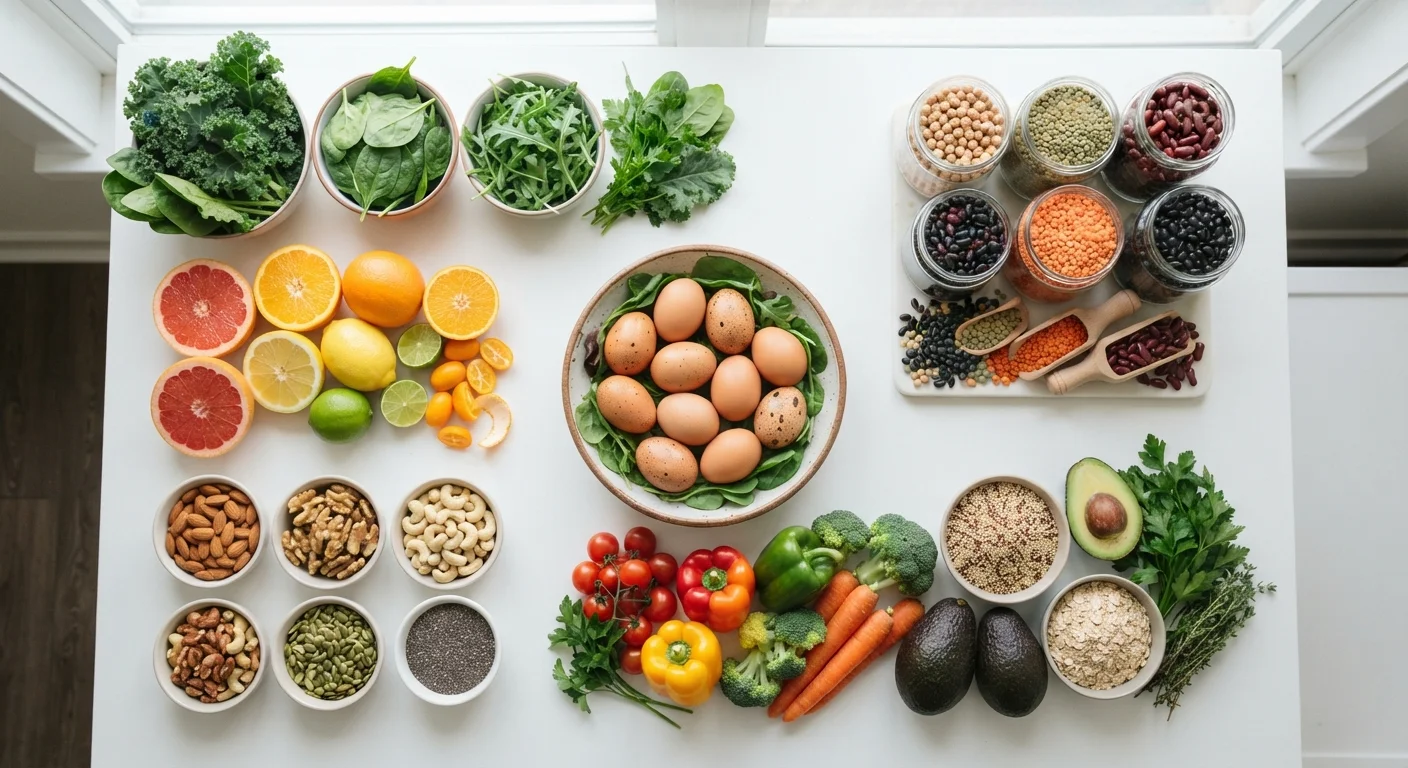
No single food provides everything. The most reliable strategy is dietary variety - rotating through different vegetables, protein sources, whole grains, and healthy fats over the course of a week naturally covers most micronutrient needs for most adults.
A few practical patterns worth noting:
- Eat a range of colors in fruits and vegetables; different pigments often signal different nutrients.
- Include legumes regularly - they contribute iron, magnesium, potassium, zinc, and several B vitamins simultaneously.
- Pair iron-rich plant foods with a vitamin C source at the same meal to improve absorption.
- If you follow a vegan or vegetarian diet, pay particular attention to vitamin B12, vitamin D, iron, calcium, and omega-3 fatty acids - a registered dietitian can help identify whether supplementation makes sense for your situation.
When reviewing packaged foods, the Nutrition Facts label lists the %Daily Value for key micronutrients. Our guide to reading nutrition labels explains how to interpret those figures accurately. Separately, dietary fiber - technically a carbohydrate, not a micronutrient - is another commonly under-consumed component worth understanding.
Supplements: Context Matters
For most healthy adults eating a varied diet, targeted supplementation is unnecessary. However, certain groups - including pregnant individuals (folate, iron), older adults (vitamin D, B12), and those on restrictive diets - may have gaps that a healthcare provider might recommend addressing. Always discuss supplementation with a qualified professional before starting, as some micronutrients can be harmful in high doses.
This article is for general informational and educational purposes only and is not a substitute for personalized medical or dietary advice. If you have concerns about your nutrient intake or health, please consult a qualified healthcare professional or registered dietitian.