

Key Takeaways
Soft Furnishings
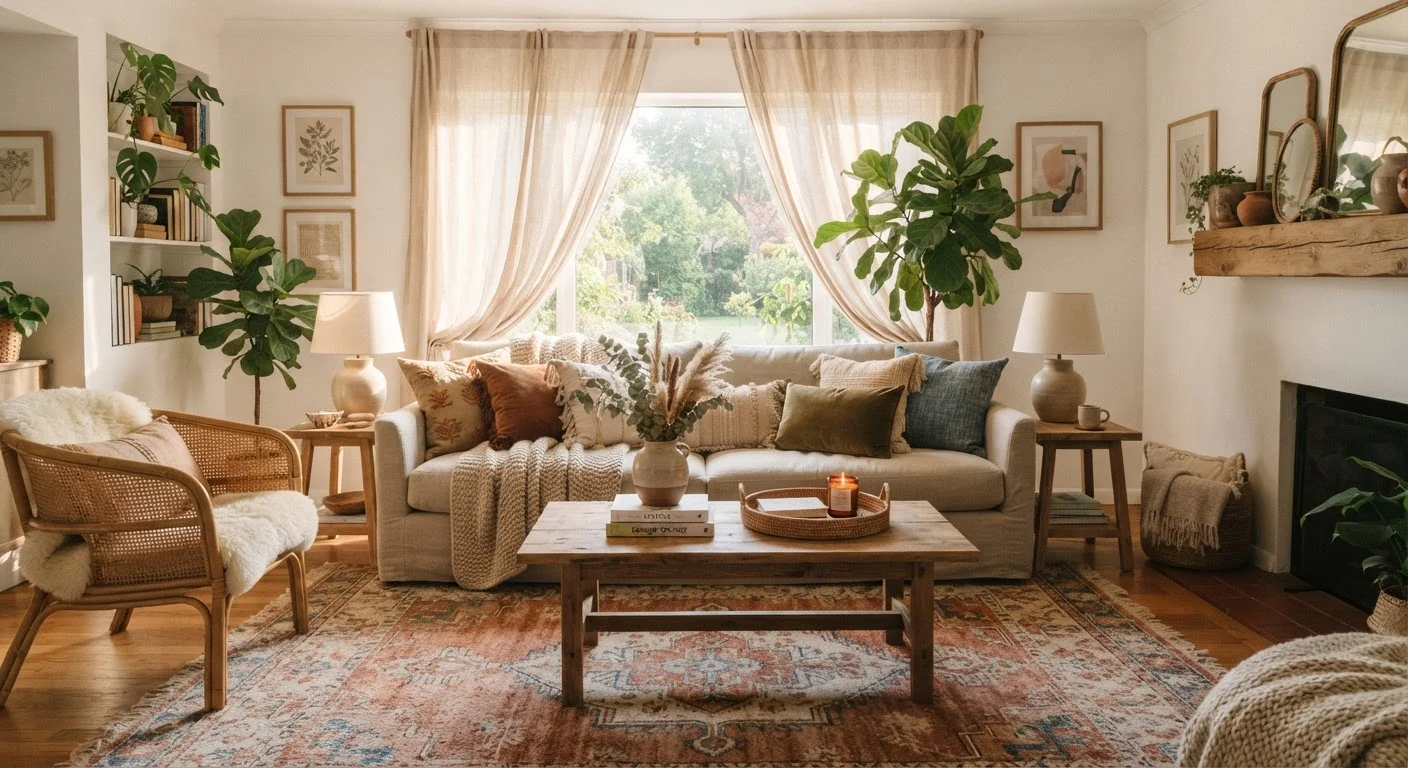
Soft furnishings are the fabric-based elements in a room - rugs, curtains, throw pillows, blankets, and upholstered pieces - that add color, texture, warmth, and acoustic comfort. Unlike hard furniture, they can be swapped out relatively easily, making them one of the most flexible tools in home decorating. Their collective effect shapes how a room looks, sounds, and feels to the people inside it.
Interior designers often refer to the layering of soft furnishings as 'textile dressing,' treating it as a distinct design phase that follows furniture placement and paint selection.
Why Textiles Matter More Than Most People Realize
Walk into two identically sized and furnished rooms - one with bare floors, bare windows, and no soft accessories, the other layered with rugs, curtains, and pillows - and the difference isn't just visual. The second room feels warmer, quieter, and more human. That shift is entirely the work of textiles.
Soft furnishings act on a room in several ways at once. They introduce color and pattern, yes, but they also absorb sound, diffuse light, define zones within an open floor plan, and signal to the people inside how a space is meant to be used. A thick wool rug and velvet pillows communicate rest and comfort. Crisp linen drapes and flat-woven cotton cushions communicate something lighter and more casual. Those signals are largely subconscious but reliably felt.
For anyone looking to refresh a room without repainting or replacing furniture, textiles are the most powerful lever available - and one of the most forgiving, since they can be changed without structural commitment.
~10-15%
Noise reduction from adding an area rug
Interior acoustic studies generally estimate that soft floor coverings can reduce impact and airborne noise transmission by roughly 10-15% in residential settings.
4-6 inches
Ideal curtain rod height above window frame
Design guidelines widely recommend mounting curtain rods 4-6 inches above the window frame - or closer to the ceiling - to maximize perceived room height.
2-3x
Window width for full, generous curtain panels
A common rule in window dressing is to use curtain panels totaling 2-3 times the window's width for a full, gathered appearance when closed.
Rugs: Anchoring the Room and Defining the Space
A rug does something no other textile does: it sits beneath the furniture and physically organizes the room. When sized correctly, a rug signals that a seating group belongs together, making a large or open-plan space feel cohesive rather than scattered. This principle works in tandem with furniture arrangement fundamentals - the rug reinforces the conversation area the layout creates.
Beyond composition, the pile and material of a rug shape a room's character. A high-pile shag rug reads as cozy and informal. A low-pile or flatweave in a geometric pattern reads as graphic and modern. A worn Persian-style rug adds warmth and history, even in an otherwise contemporary room.
Practically, rugs absorb impact noise and reduce echo - a significant benefit in apartments or rooms with hard flooring. In small living rooms, a single well-chosen rug can visually expand the space by grounding the layout and preventing the eye from bouncing off bare floors.
Curtains: Controlling Light, Scale, and Privacy
Curtains are the largest textile surface in most rooms, and they interact with natural light in ways that affect everything else. Sheer or lightweight fabrics scatter daylight softly across the room, lending an airy, expansive quality. Heavy lined panels absorb and block light, creating enclosure and intimacy. The same window can feel completely different depending on what hangs at it.
Hanging placement matters as much as the fabric itself. Mounting a curtain rod 4-6 inches above the window frame, or closer to the ceiling, makes the window appear taller and the ceiling higher. Using panels wide enough to stack fully off the glass when open maximizes natural light and makes the window look larger. These are low-cost choices with outsized visual impact.
Hang Rods High for an Instant Height Boost
Mounting curtain rods as close to the ceiling as possible - rather than just above the window trim - elongates the wall and makes the whole room feel taller. Pair this with floor-length panels for the strongest effect. This single adjustment costs nothing extra and is one of the most reliable tricks in window dressing.
Color and pattern in curtains function as a large canvas. A room with neutral walls and furnishings can absorb a bold or patterned curtain as a deliberate statement. Conversely, a room already rich in pattern benefits from solid, textural curtains that provide visual rest.
Throw Pillows and Blankets: The Finishing Layer
Throw pillows occupy less visual real estate than a rug or curtains, but they are where most people do the fine-tuning of a room's palette and personality. Because they're small and relatively inexpensive, they're ideal for testing color combinations that would feel risky at larger scale. An accent color introduced in a pillow can be evaluated and swapped out before committing to it in upholstery or paint.
Texture is as important as color here. Mixing a smooth velvet cushion with a nubby linen one and a tasseled or embroidered piece creates tactile and visual depth - even in a monochromatic palette. The eye reads variation in surface as interest, which is why a grouping of all-white pillows in different textures reads as sophisticated rather than plain.
Throw blankets draped over a sofa arm or chair perform a similar function: they add softness, color, and an invitation to settle in. They also allow for seasonal adjustment - a chunky knit in winter, a lightweight cotton throw in warmer months - making them one of the simplest tools for keeping a room feeling current and comfortable. For a broader checklist of low-effort updates, see our guide to refreshing a room without major changes.