

Key Takeaways
Why Getting Kids Involved Actually Works
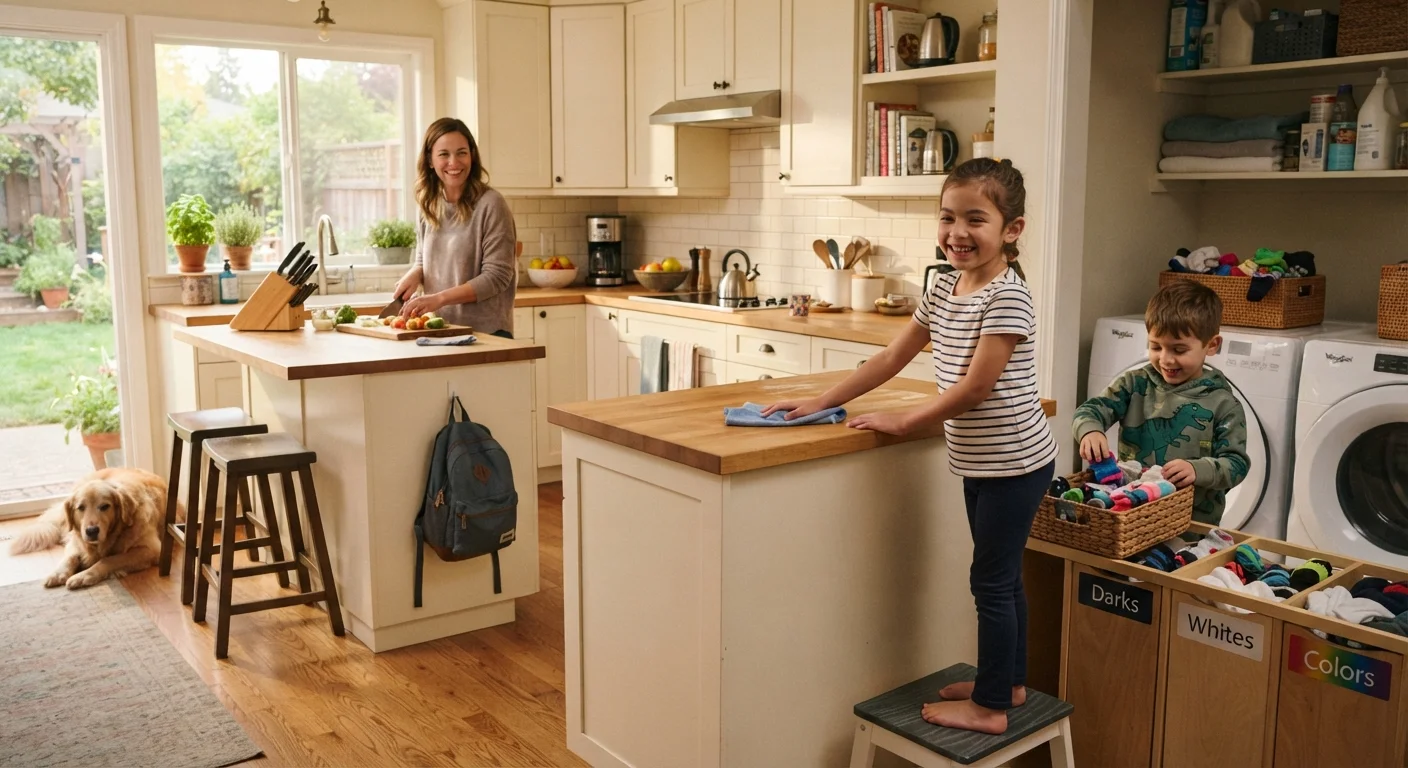
A household runs better when everyone pulls their weight - including the younger members. Beyond lightening the daily load for parents, assigning children meaningful responsibilities teaches them practical life skills, builds a sense of belonging, and reinforces the idea that a home is a shared space everyone helps maintain.
The key is matching the task to the child's developmental stage. Too easy and it feels dismissive; too difficult and it sets them up to fail. When the fit is right, kids often feel proud rather than burdened. This list walks through age-grouped responsibilities that are genuinely useful - not just symbolic - organized so you can build a system that grows with your family.
If you're working on broader household systems at the same time, chore division approaches that actually stick can help you think through how to distribute work fairly among all household members, adults included.
Ages 2-3: Simple Sorting and Tidying
Toddlers are naturally eager to imitate adults. Channel that energy into straightforward, low-stakes tasks they can complete with minimal supervision. At this age, the goal is participation and habit formation, not efficiency.
- Put toys into a bin or basket after play
- Place dirty clothes in a hamper
- Help carry lightweight groceries or unload soft items
- Wipe up spills with a cloth (with guidance)
Keep expectations realistic. A two-year-old won't sort with precision, and that's fine. Praise the effort, not the result.
Toddlers learn through imitation - simple tidying tasks build habits that last.
Ages 4-5: Light Daily Routines
Children at this age can follow multi-step routines with reminders and are ready for tasks that repeat predictably every day. Consistency at this stage builds the muscle memory that makes chores feel automatic rather than optional.
- Make their own bed (straightening covers, not perfecting it)
- Set and clear their place at the table
- Feed a pet with supervision
- Help transfer laundry from washer to dryer
- Wipe down low surfaces with a damp cloth
Visual chore charts with pictures rather than words work especially well for pre-readers.
Repeatable daily tasks at ages 4-5 turn chores into automatic habits rather than battles.
Ages 6-8: Expanded Ownership
Early elementary-age children can handle tasks with a clear start and end point and can be held accountable for completing them without constant prompting. This is a good stage to introduce the concept of "owning" a specific responsibility.
- Load and unload the dishwasher
- Sweep or vacuum a room
- Pack their own school bag
- Water indoor plants
- Fold and put away their own laundry
- Wipe bathroom sinks and mirrors
At this age, children respond well to knowing their contribution is genuinely necessary - not just educational. If they don't do it, it won't get done.
Giving 6-8 year olds real ownership of a task - not just assistance - changes how seriously they take it.
Ages 9-11: Increased Complexity and Independence
Tweens are capable of multi-step chores, some involving basic safety awareness. They can also start managing time around their responsibilities - understanding that a task needs to be done before screen time, for example, rather than being told exactly when to do it.
- Prepare simple meals or snacks independently (sandwiches, salads, reheating leftovers)
- Clean a bathroom including the toilet
- Vacuum multiple rooms
- Take out trash and recycling on schedule
- Wash, dry, and fold a full load of laundry
- Rake leaves or help with yard cleanup
This is also a good age to involve them in seasonal home transitions - see seasonal household management tasks for ideas on where they can contribute meaningfully.
Tweens can manage entire chore sequences independently - trust them with real tasks and real timelines.
Ages 12 and Up: Near-Adult Contributions
Teenagers are capable of handling most household tasks an adult would manage. The focus at this stage shifts from teaching the skill to building reliability and accountability. With guidance, teens can step into roles that meaningfully reduce household labor for parents.
- Plan and cook a full family meal once a week
- Grocery shop from a list (in person or online)
- Deep-clean kitchen surfaces and appliances
- Mow the lawn or handle basic outdoor maintenance
- Manage their own schedule of personal laundry independently
- Help with home organization projects
Teens who manage real responsibilities at home tend to transition more smoothly to independent living. Framing chores as life skills rather than punishments helps maintain cooperation. For households looking to reduce decision fatigue across the board, systems that reduce daily household decision fatigue offer useful structures teenagers can help implement and maintain.
Teenagers capable of near-adult contributions benefit most when responsibilities are framed as life skills, not punishments.
Building a System That Lasts
Assigning chores once isn't enough - the structure around them is what makes participation stick. A simple visual chart on the refrigerator, a shared digital checklist, or a consistent daily routine removes ambiguity and reduces the need for repeated reminders. Kids respond well to knowing what's expected and when.
Make the Upgrade Feel Like a Promotion
When a child is ready to take on a more advanced task, present it as a milestone rather than added work. Saying "you're responsible enough to handle this now" signals trust and respect, which tends to generate genuine effort. Avoid reassigning a task back to yourself the moment it isn't done perfectly - that removes the sense of real ownership.
Revisit responsibilities every few months as children grow. A task that challenged a six-year-old may bore an eight-year-old, and stepping up to a new responsibility often feels like a privilege rather than a burden. Framing promotions in those terms - "you're old enough now to handle this" - can make a real difference in buy-in.
For a structured approach to keeping every area of your home on track, a room-by-room weekly reset routine can serve as the backbone your family's chore system plugs into. And if you're building household management habits from the ground up, starting from scratch with a home management system offers a solid foundation to work from.