

Key Takeaways
Start here
What a Home Management System Actually Is
Next
Stock Your Home With the Right Supplies
Then
Build Your Daily and Weekly Routines
As you settle in
Create a Simple Home Maintenance Schedule
Big picture
Manage the Paperwork and the Money Side
If you share your home
Getting the Whole Household on the Same Page
What a Home Management System Actually Is
A home management system sounds formal, but it simply means having reliable answers to everyday questions: When do I clean the bathroom? Where do I keep the lease? How do I handle a leaking faucet? Without some kind of system, these things get handled reactively - and reactive home management is stressful and expensive.
Think of it as a set of lightweight routines, a few reference documents, and a basic schedule. You don't need a binder with color-coded tabs on day one. You need a starting point that fits your real life and expands as you learn what your home actually demands.
Home management system
A set of routines, schedules, and reference materials that keep a household running predictably without requiring constant decision-making.
Preventive maintenance
Regular, scheduled checks and small tasks that catch problems early - before they turn into costly repairs.
Household budget
A plan that accounts for all recurring and irregular home expenses, helping you avoid financial surprises.
Routine
A set of tasks done consistently on a fixed schedule, making them habitual rather than effortful decisions.
Task ownership
Assigning a specific person responsibility for a recurring chore so it doesn't fall through the cracks in a shared household.
The goal is to move from overwhelmed to prepared - one habit at a time.
Stock Your Home With the Right Supplies
Before you can maintain a home, you need the basic tools to do it. Build two starter kits: one for cleaning and one for minor repairs.
Cleaning Essentials
- All-purpose surface cleaner
- Disinfectant spray or wipes
- Dish soap and a scrub brush
- Microfiber cloths (they outperform paper towels for most surfaces)
- Toilet brush and bathroom cleaner
- Mop or dry/wet floor tool
- Vacuum or broom and dustpan
- Trash bags in multiple sizes
Basic Repair Kit
- Hammer and assorted nails
- Flathead and Phillips-head screwdrivers
- Adjustable pliers
- Measuring tape
- A few wall anchors and picture hooks
- Duct tape and painter's tape
Start With Just One Week of Consistency
Rather than building your entire system on day one, try running a single week's worth of routines first. Once those feel automatic, add the next layer - maintenance scheduling, paperwork organization, or budgeting. Gradual layering is how habits actually stick.
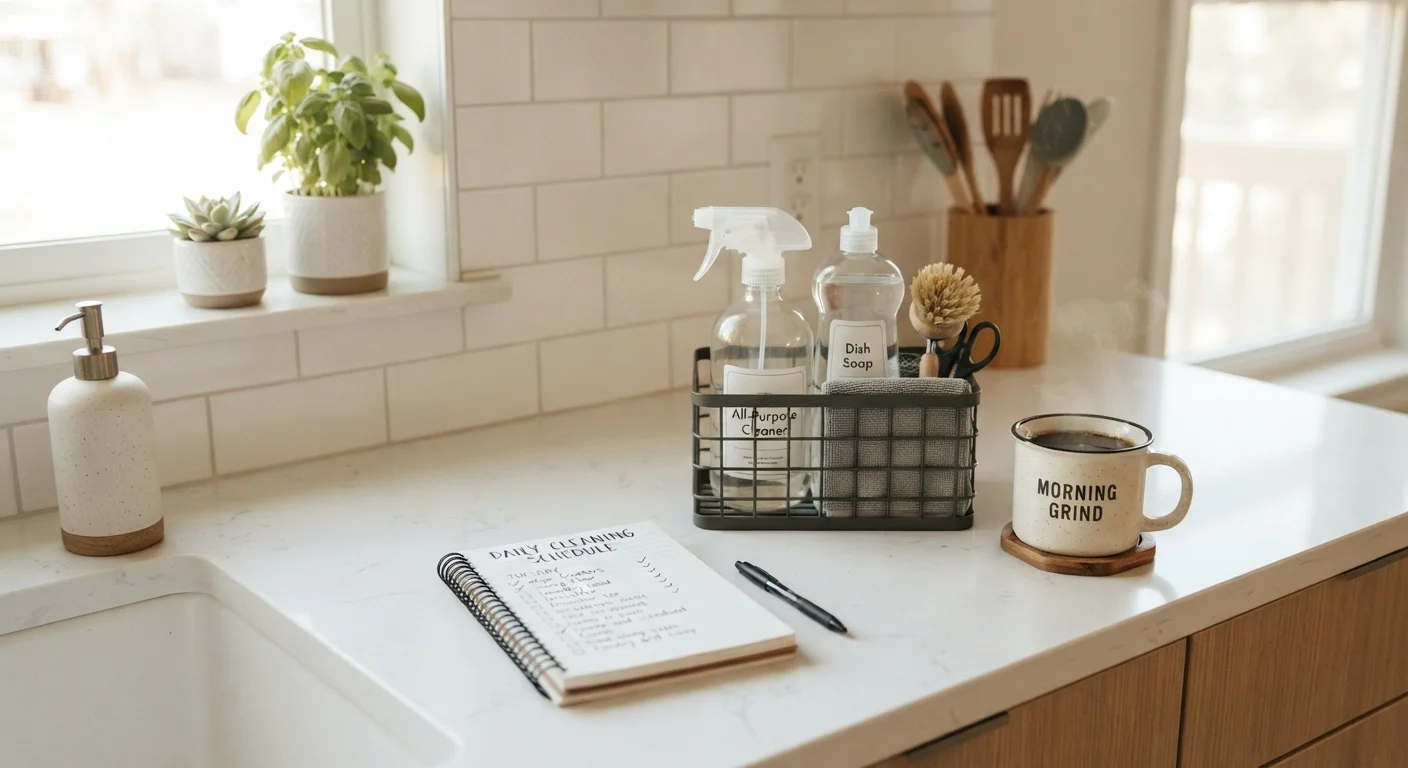
Store your cleaning supplies in a portable caddy so they move with you room to room. Keep repair tools in one designated drawer or box - hunting for a screwdriver derails the simplest tasks.
Build Your Daily and Weekly Routines
Routines are the engine of a well-run home. Without them, cleaning and tidying happen in bursts that feel overwhelming. With them, upkeep becomes almost automatic.
Daily Habits (10-15 minutes total)
- Make the bed each morning
- Wipe down kitchen counters after cooking
- Do a quick evening tidy - items returned to their places
- Run or empty the dishwasher before bed
Weekly Tasks (assign each to a specific day)
- Monday: Vacuum or sweep all floors
- Wednesday: Clean bathrooms
- Friday: Mop hard floors, wipe appliances
- Saturday: Laundry, change bed linens
You don't have to use this exact structure - the point is that every regular task has a home on the calendar, not a vague intention. If you share your space, see the section below on dividing responsibilities. You might also explore our article on getting children involved in household responsibilities if you're managing a family home.
Create a Simple Home Maintenance Schedule
Cleaning keeps a home pleasant. Maintenance keeps it functional. These are different, and both matter.
Home maintenance is about catching problems before they become expensive repairs. A home improvement mindset starts with prevention - knowing what to check and when.
Maintenance Calendar Basics
| Frequency | Task |
|---|---|
| Monthly | Check HVAC filter; replace every 1-3 months |
| Monthly | Test smoke and CO detectors |
| Seasonally | Clean gutters (fall and spring) |
| Seasonally | Inspect window and door seals |
| Annually | Check caulking in bathrooms and kitchen |
| Annually | Flush water heater sediment (consult a plumber if unfamiliar) |
Don't DIY Hazardous Home Tasks
Tasks involving electrical panels, gas lines, load-bearing structures, or major plumbing connections should always be handled by a licensed professional. Attempting these without the right training and permits can be dangerous and may violate local building codes. When in doubt, call a qualified contractor.
Set calendar reminders for every item on your maintenance list. A missed HVAC filter or undetected CO detector battery failure can have serious consequences. When in doubt about a maintenance task involving gas, electrical, or structural components, consult a licensed professional rather than attempting it yourself.
Manage the Paperwork and the Money Side
Running a home generates documents and recurring expenses. Getting organized here prevents missed payments, lost warranties, and unpleasant surprises.
Documents to Keep Accessible
- Lease or mortgage paperwork
- Utility account numbers and provider contacts
- Appliance manuals and warranty cards
- Renter's or homeowner's insurance policy
- Emergency contacts: plumber, electrician, building manager
A single folder - physical or digital - for each category is enough. The goal is being able to find the right document in under two minutes.
On the financial side, household expenses need their own line items in your budget. Recurring costs like rent or mortgage, utilities, and internet are easy to forecast. Irregular costs - repairs, replacement appliances, seasonal supplies - catch many first-time homeowners off guard. Our guide to building your first monthly budget walks through exactly how to account for both. For a deeper look, our complete personal budgeting guide covers long-term habit building as well.
Getting the Whole Household on the Same Page
A home management system only works if everyone living in the home understands and participates in it. Whether you live with a partner, roommates, or family members, the clearest systems are shared ones.
Start by listing every recurring task - cleaning, trash, grocery shopping, bill payment - and discuss who owns what. Be specific: "You handle trash and I handle bathrooms" is clearer than "we'll share everything."
Revisit the arrangement every month or two. Schedules shift, preferences change, and what worked at move-in may need adjustment six months later. A shared notes app, whiteboard, or simple printed list posted in a common area keeps expectations visible and reduces friction.
Building these habits at home mirrors the kind of consistency that helps in other areas of life, too. Just as steady routines underpin fitness goals - see our piece on building a home workout habit - they're what make household management sustainable rather than sporadic.
Start simple, stay consistent, and adjust as you go. A system that works imperfectly and reliably beats a perfect system that nobody actually follows.