

Key Takeaways
Why Pantry Organization Directly Affects Food Waste
The USDA estimates that American households discard between 30 and 40 percent of their food supply, and a poorly organized pantry is one of the quietest contributors. When canned goods stack three-deep and dried pasta disappears behind a bag of rice, expiration dates slip past unnoticed. The result isn't just wasted food - it's wasted money spent replacing things that were already on the shelf.
A functional pantry system isn't about aesthetics. It's about creating conditions where you consistently use what you buy, in the right order, before quality declines. The practices below address the most common failure points: invisible inventory, no rotation, and unclear labeling.
If you're also thinking about how pantry stock connects to healthy eating patterns, see our guide to stocking a home properly for perspective on how much is genuinely useful to keep on hand.
Core Practices for a Waste-Reducing Pantry
These practices work together. You don't need to implement every one on day one, but each one you adopt meaningfully reduces the chance that food quietly expires out of sight.
Apply first-in, first-out (FIFO) rotation every time you restock
FIFO - placing newly purchased items behind existing stock - ensures older items get used first. This is the same system used in commercial food service precisely because it reliably prevents expiration-date creep. Without it, new cans stack in front and older ones silently expire.
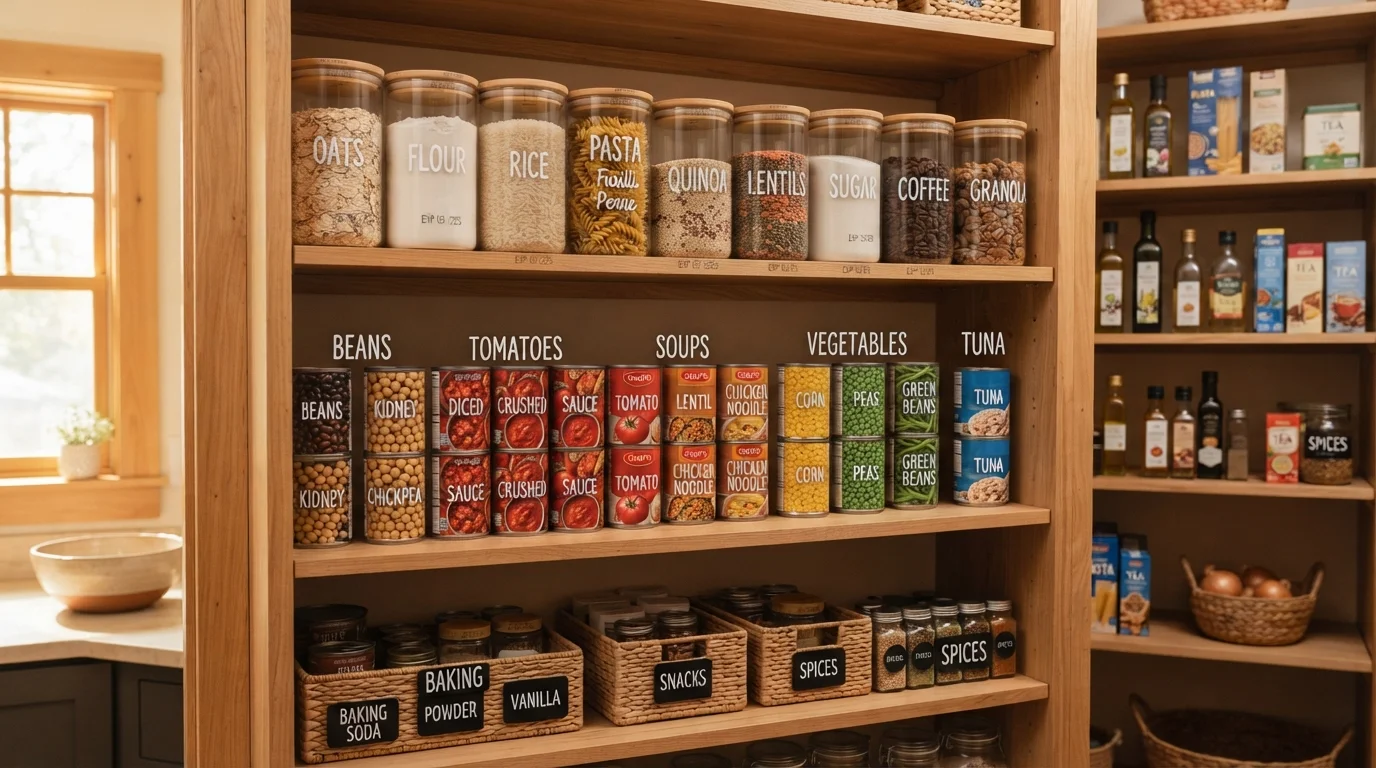
Group items by category and keep each category in a fixed location
Defined zones - one area for grains, one for canned goods, one for baking supplies - prevent the scatter that leads to duplicate purchases. When pasta always lives in one spot, you know at a glance whether you're out, and you stop buying a third box while two already exist.
Label containers and bins with contents and the date they were opened or purchased
Unlabeled containers and unmarked bags force guesswork about freshness. A simple date label transforms a vague concern into a concrete fact, making it easy to decide whether something is still usable or should be prioritized in the next meal.
Do a brief inventory check before every shopping trip
Buying what you already have is one of the most common ways pantry waste compounds. A 90-second scan before leaving for the store eliminates this. It also surfaces items that need to be used soon, which can inform your meal plan for the week.
Store dry goods in clear, airtight containers rather than their original packaging
Original bags and boxes are often difficult to reseal, accelerate moisture exposure, and obscure how much remains. Clear containers show quantity at a glance and maintain freshness longer, reducing both spoilage and the need to estimate mid-recipe.
Create a dedicated 'use soon' zone at eye level
Items approaching their best-by date tend to stay forgotten at the back or bottom of the pantry. A visible, accessible zone - ideally a small bin or designated shelf section at eye level - acts as a daily reminder to work those items into meals before they're lost.
Quick Wins You Can Do Today
A full pantry overhaul takes time, but several high-impact steps take under 15 minutes and immediately improve the system. Start here before committing to a bigger reorganization.
Photograph Your Pantry Before You Shop
Take a quick photo of your pantry before leaving for the grocery store. This gives you a real-time reference in the store aisle so you don't accidentally buy duplicates. It takes seconds and can prevent the common 'I thought I was out of that' mistake that fills shelves with doubles.
Putting It Into a Sustainable Routine
Organization systems only reduce waste if they're maintained. The goal is a light, recurring habit - not a once-a-year deep clean. A quick two-minute scan before each grocery run, checking for items that are nearly depleted or approaching their use-by dates, is enough to keep most pantries functional.
Pair your pantry check with your shopping list. Before you head to the store, cross-reference what you already have against what you plan to cook. Our grocery run nutrition checklist can help you think through both nutritional balance and pantry inventory in one pass.
For more on building balanced meals from what's already in your kitchen, see building a balanced plate without counting calories. A well-stocked, well-organized pantry makes that kind of flexible, nutritious cooking much easier on a regular basis.
Best-By Dates vs. Safety Dates
'Best by' and 'use by' dates on shelf-stable pantry items generally indicate peak quality, not safety cutoffs. Many canned and dried goods remain safe to eat after the printed date, though flavor or texture may diminish. The USDA recommends using your judgment on quality rather than treating all date labels as absolute disposal deadlines. When in doubt about a specific item, consult a reliable food safety resource.