

Key Takeaways
Our Verdict
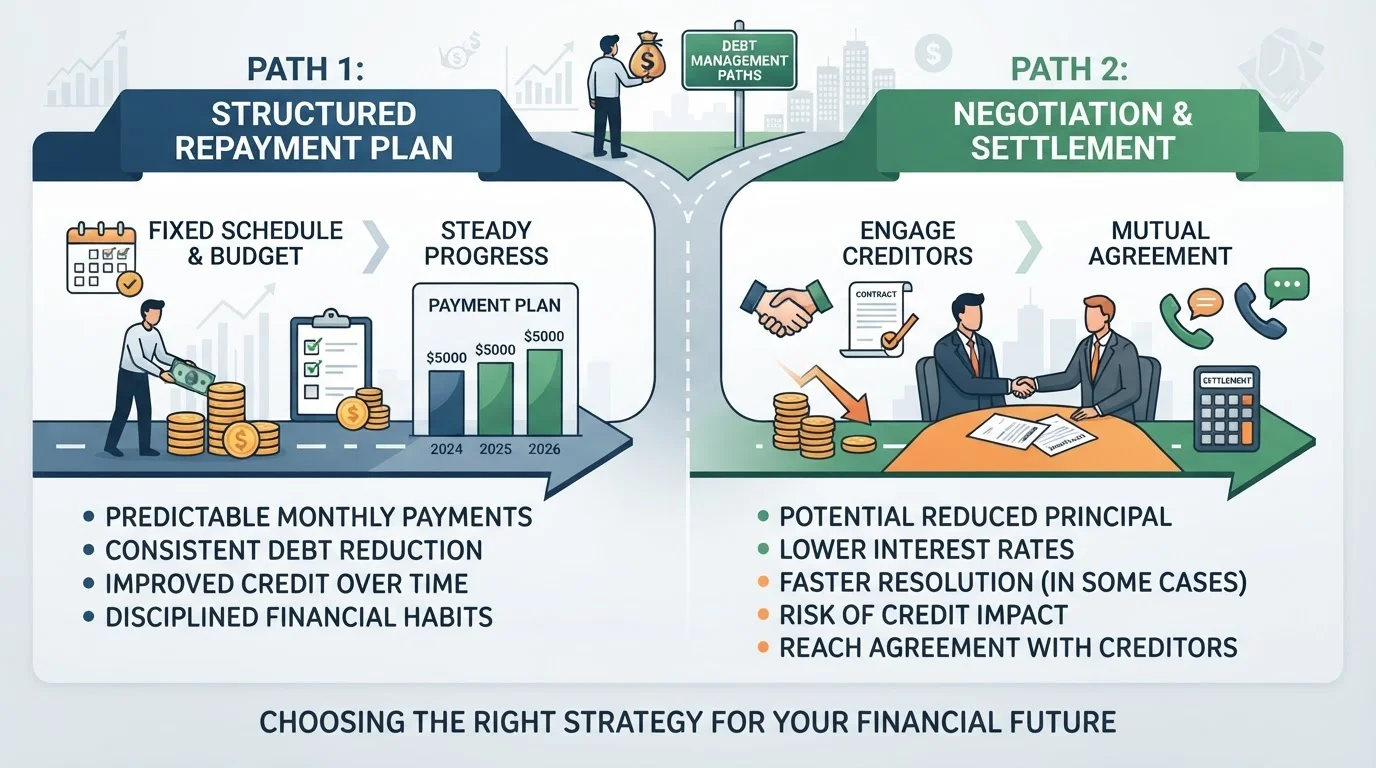
A debt management plan is the lower-risk option for consumers who can afford modest monthly payments and want to preserve their credit standing while repaying in full. Debt settlement may reduce the total amount owed but comes with significant credit consequences, potential tax liability, and no guarantee of creditor cooperation. Neither approach is universally superior - the right fit depends on your financial situation, the types of debt you carry, and how much risk you can absorb.
| Best for | Recommended |
|---|---|
| Those with steady income who want to repay in full at lower interest | Debt Management Plan |
| Those facing severe hardship unable to repay the full amount | Debt Settlement |
| Those prioritizing credit score preservation | Debt Management Plan |
| Those who have exhausted other options and face collection actions | Debt Settlement (with professional guidance) |
How Each Approach Actually Works
When unsecured debt - credit cards, medical bills, personal loans - becomes unmanageable, two structured relief options often come up: debt management plans and debt settlement. They sound similar but operate very differently.
Debt Management Plan (DMP): You work with a nonprofit credit counseling agency, which contacts your creditors to negotiate lower interest rates and waived fees. You make a single monthly payment to the agency, which distributes funds to creditors. You repay the full principal - just at a lower cost. The National Foundation for Credit Counseling (NFCC) and its member agencies are a commonly cited starting point for finding legitimate nonprofit counselors.
Debt Settlement: Either you or a for-profit settlement company negotiates with creditors to accept a lump-sum payment for less than the full balance. This typically requires you to stop paying creditors and accumulate funds in a dedicated account while the company attempts negotiations. Creditors are not obligated to settle, and the process can take years. For context on how this fits into a broader debt strategy, see The Complete Roadmap to Managing Debt.
| Debt Management Plan | Debt Settlement | |
|---|---|---|
| Amount repaid | Full principal, reduced interest | Less than full balance (if successful) |
| Who manages it | Nonprofit credit counseling agency | For-profit company or self-negotiated |
| Credit impact | Moderate, improves with on-time payments | Severe, "settled" notation for up to 7 years |
| Typical timeline | 3-5 years | 2-4 years (varies widely) |
| Fees | ~$25-$50/month (state-regulated) | 15%-25% of enrolled debt |
| Tax consequences | Generally none | Forgiven debt may be taxable income |
| Creditor participation | Most major creditors participate | Not guaranteed; creditors may refuse |
Credit Score Consequences: A Real Difference
Both options affect your credit, but the degree varies considerably.
With a DMP, your accounts are typically noted as enrolled in a repayment plan, which may lower your score modestly. However, consistent on-time payments through the plan can help rebuild credit over time. Most creditors require you to close enrolled accounts, which reduces available credit - another short-term score factor.
Debt settlement causes more lasting damage. Missing payments while saving for a settlement triggers delinquency marks on your credit report. Settled accounts are reported as "settled for less than full amount," which stays on your report for up to seven years and signals higher risk to future lenders. The credit gap between these two paths is meaningful if you plan to apply for a mortgage or auto loan within the next several years.
Watch Out for Debt Settlement Scams
The CFPB warns that some for-profit debt settlement companies make promises they cannot keep - including guarantees that creditors will settle or that your credit won't be affected. Be cautious of any company that charges upfront fees before settling a single debt, as this is prohibited under the FTC's Telemarketing Sales Rule for companies that sell debt relief services by phone. Always verify a company's credentials and read all contract terms before signing.
Costs, Fees, and Tax Implications
Neither option is free, and understanding the total cost matters.
DMP fees: Nonprofit agencies typically charge a modest monthly fee - often between $25 and $50 - which is regulated in many states. The interest rate reductions they negotiate frequently offset this cost many times over.
Settlement fees: For-profit debt settlement companies typically charge 15% to 25% of the enrolled debt amount, according to the Consumer Financial Protection Bureau (CFPB). These fees can be substantial and are often charged after a settlement is reached.
There is also a tax consideration unique to settlement: the IRS generally treats forgiven debt as taxable income. If a creditor forgives $5,000, you may owe income tax on that amount unless you qualify for an insolvency exemption. A tax professional can clarify whether an exemption applies to your situation.
Start With a Free Credit Counseling Session
Before enrolling in a DMP or signing with a settlement company, request a free or low-cost session with a nonprofit credit counselor certified by the NFCC or the Financial Counseling Association of America (FCAA). They can review your full financial picture and help you determine whether either option is appropriate - or whether a self-directed strategy makes more sense for your situation.
If you're simultaneously trying to build savings while addressing debt, the debt and savings balance guide can help you think through priorities.
Which Path Fits Which Situation
A DMP tends to work well when you have a reliable income, primarily unsecured debt, and can afford a structured monthly payment - even if it's tight. It's also worth exploring before considering more disruptive options. Note that DMPs generally don't cover secured debts like mortgages or auto loans.
Debt settlement is generally considered a last resort - more appropriate when someone is already significantly delinquent, facing collection lawsuits, or genuinely cannot repay the full amount even with reduced interest. It carries real risks: creditors may refuse to negotiate, lawsuits can proceed during the process, and credit damage is substantial.
Before choosing either path, it's worth understanding simpler self-directed strategies. The avalanche vs. snowball debt payoff comparison covers two approaches that may work if your debt level is manageable without third-party intervention. And if consolidation has come up in your research, what debt consolidation actually does to your finances lays out how that differs from both options covered here.
This article is for general informational purposes only and does not constitute financial, legal, or tax advice. Debt relief outcomes vary based on individual circumstances, creditor policies, and applicable law. Consult a licensed financial advisor, credit counselor, or tax professional before making decisions about your debt.