

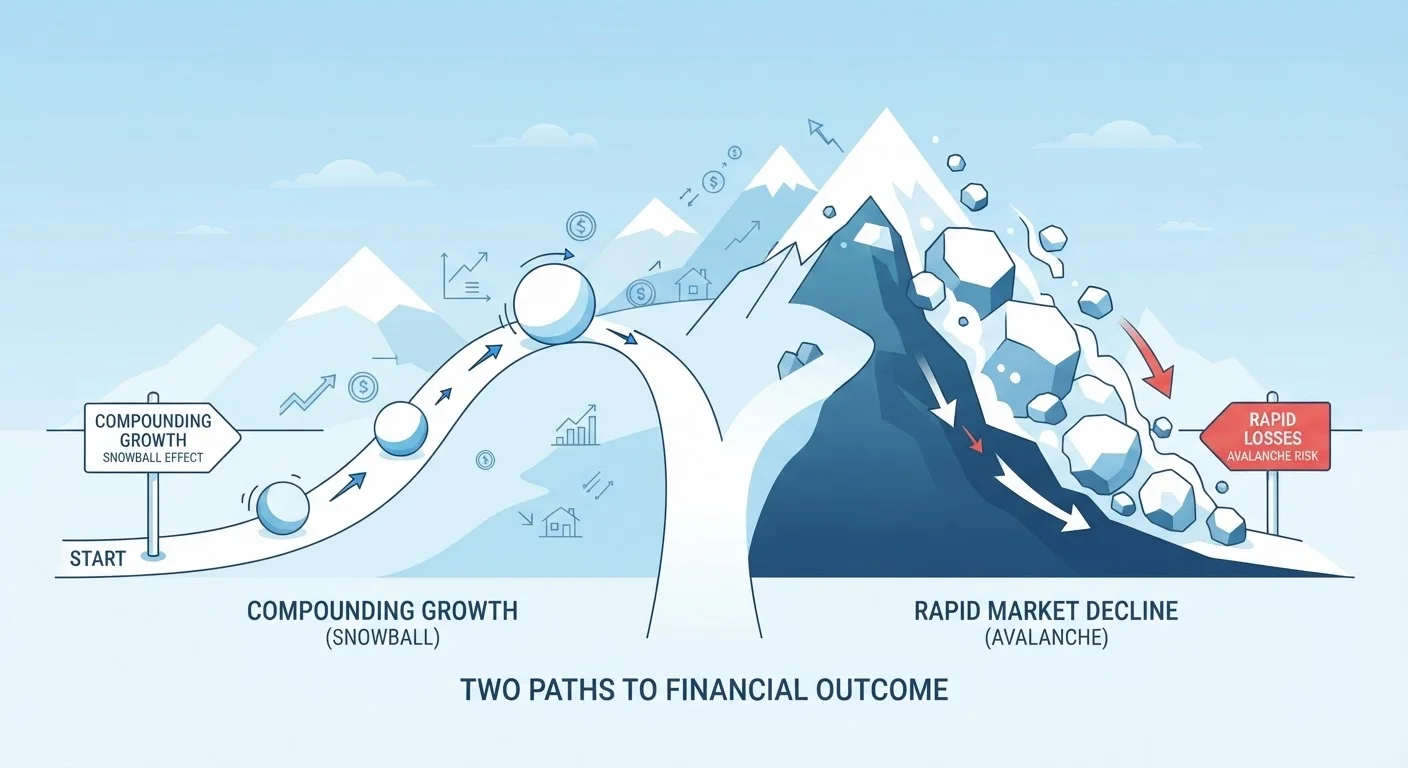
Key Takeaways
Option A
Debt Avalanche
The mathematically optimal, interest-minimizing approach.
Best for: Borrowers who are motivated by long-term savings and can stay disciplined without quick wins.
Option B
Debt Snowball
The psychologically rewarding, momentum-driven method.
Best for: Borrowers who need early wins and emotional motivation to stay on track with repayment.
If you want to pay the least amount of interest overall
Debt Avalanche
By attacking high-interest balances first, the avalanche method reduces the total cost of your debt - often by a meaningful margin compared to the snowball approach.
If you've struggled to stay motivated with debt repayment in the past
Debt Snowball
Eliminating small balances quickly delivers visible progress, which research suggests helps many people maintain momentum and avoid giving up.
If your debts have similar interest rates but vary widely in balance size
Debt Snowball
When interest rates are close, the cost difference between methods shrinks - and the psychological benefit of the snowball becomes more valuable.
If you have one or two very high-rate debts dragging your finances down
Debt Avalanche
A single high-APR account can compound rapidly. Targeting it first with the avalanche method prevents that debt from growing faster than you can repay it.
How Each Strategy Works
Both the avalanche and snowball methods follow the same basic structure: you make minimum payments on all your debts every month, then direct any extra money toward one target debt at a time. Where they differ is in which debt gets that extra payment.
With the Debt Avalanche, you rank your debts from highest to lowest interest rate (APR). Every extra dollar goes to the highest-rate balance first. Once that's paid off, you roll its payment into the next-highest-rate debt, and so on. Because you're tackling the most expensive debt first, you pay less in interest over the life of your repayment plan.
With the Debt Snowball, you rank debts from smallest to largest balance, regardless of interest rate. Extra payments go toward the smallest balance first. Once it's cleared, that freed-up payment rolls into the next-smallest. The logic is behavioral: crossing debts off your list quickly keeps you engaged and committed.
Both strategies require you to stop accumulating new debt while repaying existing balances - otherwise the math unravels. For a broader look at managing multiple debt types, see the complete roadmap to managing debt.
Head-to-Head: Cost, Speed, and Psychology
The core trade-off between these methods comes down to math versus motivation. Here's how they compare across the dimensions that matter most:
| Criterion | Debt Avalanche | Debt Snowball |
|---|---|---|
| Repayment order | Highest interest rate first | Smallest balance first |
| Total interest paid | Lower (mathematically optimal) | Higher (varies by debt mix) |
| Time to first payoff | Potentially longer | Faster (smallest balance cleared first) |
| Motivational structure | Reward comes later | Early, frequent wins |
| Best for | Disciplined, math-driven borrowers | Borrowers needing behavioral momentum |
| Complexity | Low - requires rate comparison | Low - requires balance ranking |
In practice, the avalanche method typically saves more money - sometimes hundreds or thousands of dollars depending on your balances and rates. But that savings only materializes if you stay the course. If a slower pace of visible progress causes you to abandon the plan, the avalanche's mathematical edge disappears entirely.
~$1,000+
Potential interest savings with avalanche vs. snowball
The gap varies widely based on balances and rates, but NerdWallet and similar calculators routinely show four-figure differences on typical consumer debt portfolios.
80%
Debt repayment plans abandoned due to lack of progress
Behavioral finance research consistently finds that perceived progress - not just financial logic - is a primary driver of whether people maintain debt repayment habits.
Which Strategy Is Right for You?
There's no universally correct answer - the right method is the one you'll actually follow through on. A few questions can help you decide:
- How do you respond to setbacks? If slow progress discourages you, the snowball's quick wins may keep you going longer.
- Do you have a high-APR debt eating into your budget? A credit card at 24% APR, for example, compounds fast. The avalanche targets it before it grows further.
- Are your balances close in size? When balances are similar, both methods behave almost identically - and motivation becomes the deciding factor.
Some people use a hybrid: they knock out one or two very small balances first for a psychological boost, then switch to avalanche order. This isn't a formally named strategy, but it reflects how real-world debt payoff often works - imperfectly and adaptively.
What Both Methods Require to Work
Neither the avalanche nor the snowball creates extra money - they simply redirect existing cash flow more strategically. Both methods assume you have at least a small amount above your minimum payments to allocate each month. If your budget is stretched thin across all minimums, consider whether there's any room to cut discretionary spending before choosing a strategy. Even an extra $25 to $50 per month accelerates payoff meaningfully over time.
It's also worth considering whether either method is the right fit for your overall financial picture. If your debt feels unmanageable at current income levels, structured options like a debt management plan may be worth exploring. Our comparison of debt management plans vs. debt settlement explains how those paths differ from DIY repayment strategies.
And if you're wondering how to balance debt payoff with building an emergency fund at the same time, the question isn't either/or - it's about sequencing. See when paying off debt and building savings happen at the same time for a practical framework.
This article is for general informational and educational purposes only and does not constitute personalized financial, tax, or legal advice. Consult a qualified financial professional for guidance specific to your situation.