

Key Takeaways
Why Portion Size Matters More Than Food Quality Alone
Many pet owners invest in premium food but still inadvertently overfeed their animals. According to the Association for Pet Obesity Prevention, a majority of dogs and cats in the United States are overweight or obese - a condition linked to arthritis, diabetes, heart disease, and a shortened lifespan. The culprit is rarely the food itself; it is the quantity.
Portion control works by matching the calories delivered at each meal to the animal's actual daily energy requirement. That requirement is not static. It shifts with age, neuter status, breed size, and how active the animal genuinely is. A two-year-old border collie running agility courses has vastly different needs than an eight-year-old neutered indoor cat. When those differences go unaccounted for, even small daily surpluses compound into significant weight gain over months.
For more on how body weight intersects with overall health, see how vets assess body condition - a metric that often tells a clearer story than the scale alone.
Reading Feeding Guidelines the Right Way
Every commercial pet food carries a feeding guide on its label, and most owners rely on it - but many misread it. The ranges given are formulated for an average animal of a given weight range, often assuming an intact, moderately active adult. Spayed or neutered pets typically need 20-30% fewer calories than these guidelines suggest, according to veterinary nutritionists.
The guide is also based on the food's caloric density, which varies significantly between formulas. Switching from one kibble to another without recalculating the amount is a common source of accidental overfeeding. If you feed wet food, dry food, or a combination, the math shifts again. Understanding how food format affects nutrition can help you calibrate mixed-feeding approaches more accurately.
Recalculate When You Change Foods
Caloric density varies widely between pet food formulas - even within the same brand. Whenever you switch products, look up the new food's kcal per cup or per can and recalculate your pet's portion from scratch. Do not simply carry over the same volume you were using before. A gradual transition over 7-10 days also helps prevent digestive upset.
Practical Measurement and Daily Routine
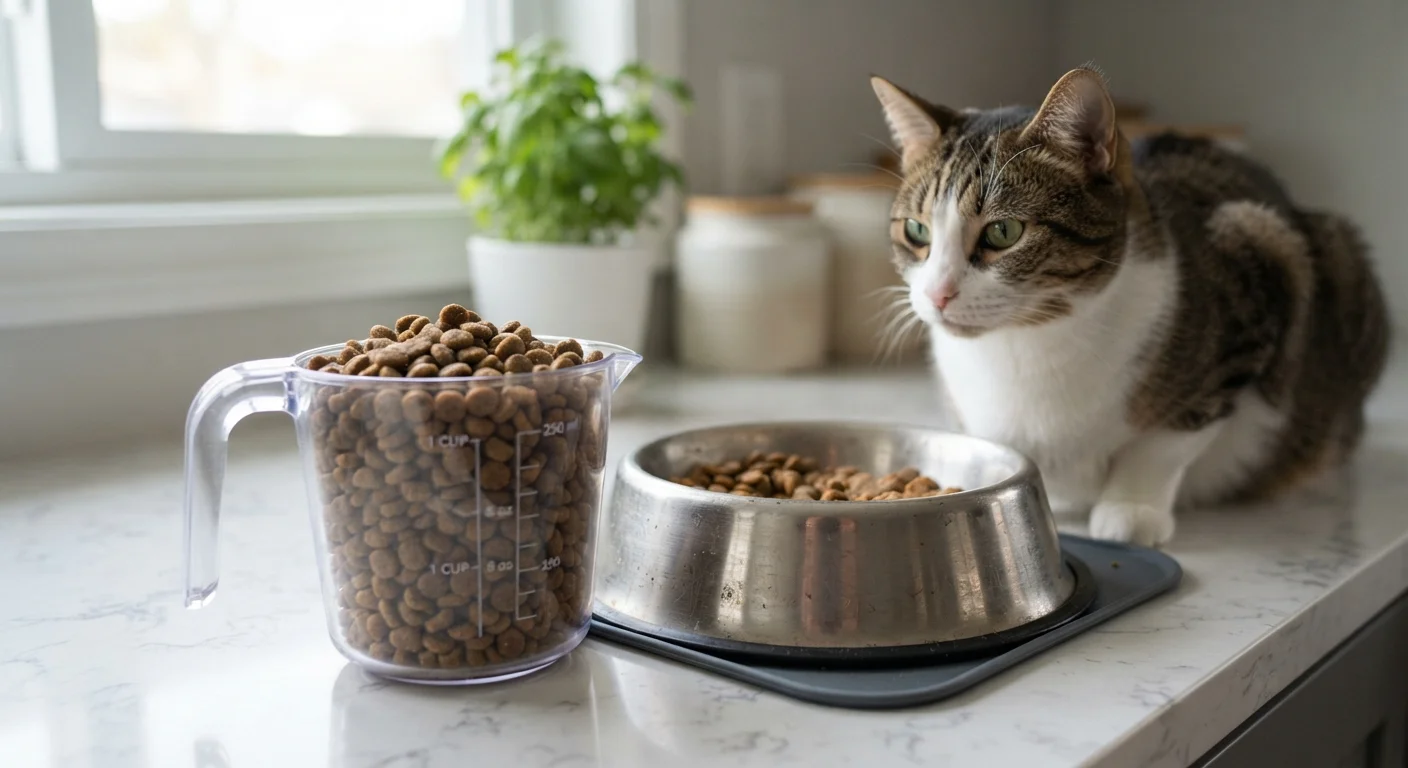
The most reliable habit is simple: measure every meal. A dry measuring cup is far better than a coffee mug or scooping by eye. A kitchen scale is better still, because kibble density varies - a heaping cup can contain noticeably more calories than a level one of the same brand.
Establish a consistent feeding schedule rather than free-feeding (leaving food out all day). Scheduled meals create natural checkpoints to observe appetite changes, which can be early indicators of health issues. They also make it far easier to track what your pet has actually consumed.
Treats deserve careful accounting. A single medium dog biscuit can represent 40-50 calories - the equivalent of a meaningful fraction of a small dog's daily allowance. A useful rule of thumb endorsed by many veterinarians is that treats should make up no more than 10% of daily caloric intake. Any training treats or food-based enrichment should be factored into - not added on top of - the daily total. For more context on training and food rewards, explore our pet training guidance.
Adjusting Over Time: Age, Health, and Life Stage
Portion needs change across a pet's life. Puppies and kittens require calorie-dense, growth-formulated food fed more frequently. Senior pets often become less active and may need fewer calories to maintain a healthy weight, though some seniors lose weight and need increased intake - especially cats, who are prone to muscle loss with age.
Health conditions such as hypothyroidism in dogs or hyperthyroidism in cats can dramatically alter how the body processes food. These conditions require veterinary diagnosis and ongoing monitoring; portion adjustments alone cannot substitute for medical management. Always consult your veterinarian before making significant changes to a pet with a diagnosed health condition.
A practical monitoring tool is the Body Condition Score (BCS), a 9-point scale used by veterinarians to assess fat coverage over ribs, spine, and hip bones. Owners can learn to apply a simplified version at home: you should be able to feel your pet's ribs without pressing hard, but not see them prominently. If you're uncertain how your pet scores, your vet can demonstrate the assessment at your next wellness visit.
For a broader look at nutritional foundations, common pet nutrition myths are worth reviewing - some widely held beliefs about feeding frequency and food types don't reflect current evidence.
This article provides general pet care information and is not a substitute for professional veterinary advice. Consult your veterinarian for guidance tailored to your individual pet's health, weight, and nutritional needs.