

Key Takeaways
Body Condition Score (BCS)
A Body Condition Score is a standardized assessment tool veterinarians use to evaluate whether a pet is underweight, at an ideal weight, or overweight — based on feel and visual observation rather than a number on a scale. It typically uses a 9-point scale, where 1 is severely emaciated and 9 is obese, with 4–5 considered ideal for most dogs and cats. The score accounts for fat deposits, muscle mass, and overall body shape in ways that raw weight cannot.
Veterinary nutritionists also use Muscle Condition Score (MCS) alongside BCS to assess lean tissue loss separately from fat accumulation — a distinction that matters significantly in older or ill animals.
Why the Number on the Scale Is Only Part of the Story
When owners bring their pets in for annual checkups, the scale is usually the first stop. It's familiar, objective, and easy to track. But veterinarians consistently point out that weight alone is a blunt instrument — it can't tell you whether what you're measuring is fat, muscle, water retention, or a large meal from an hour ago.
Consider two adult Labrador Retrievers, both weighing 75 pounds. One is lean, muscular, and physically active; the other carries a thick layer of fat over the ribs and has lost significant muscle tone. Same number, very different health profiles. This gap between scale weight and actual health status is why veterinary professionals rely on structured assessment tools rather than weight charts alone.
Understanding what those tools measure — and how to apply a basic version at home — gives pet owners far more useful information than a number ever could. It also opens the door to catching gradual changes before they become serious problems.
How Veterinarians Actually Assess Body Condition
The standard clinical tool is the Body Condition Score (BCS), a 9-point scale used across veterinary practice to grade a pet's fat coverage and overall body shape. Scores of 4–5 represent ideal condition for most dogs and cats. A score of 1–3 signals underweight or emaciated, while 6–9 indicates overweight to obese.
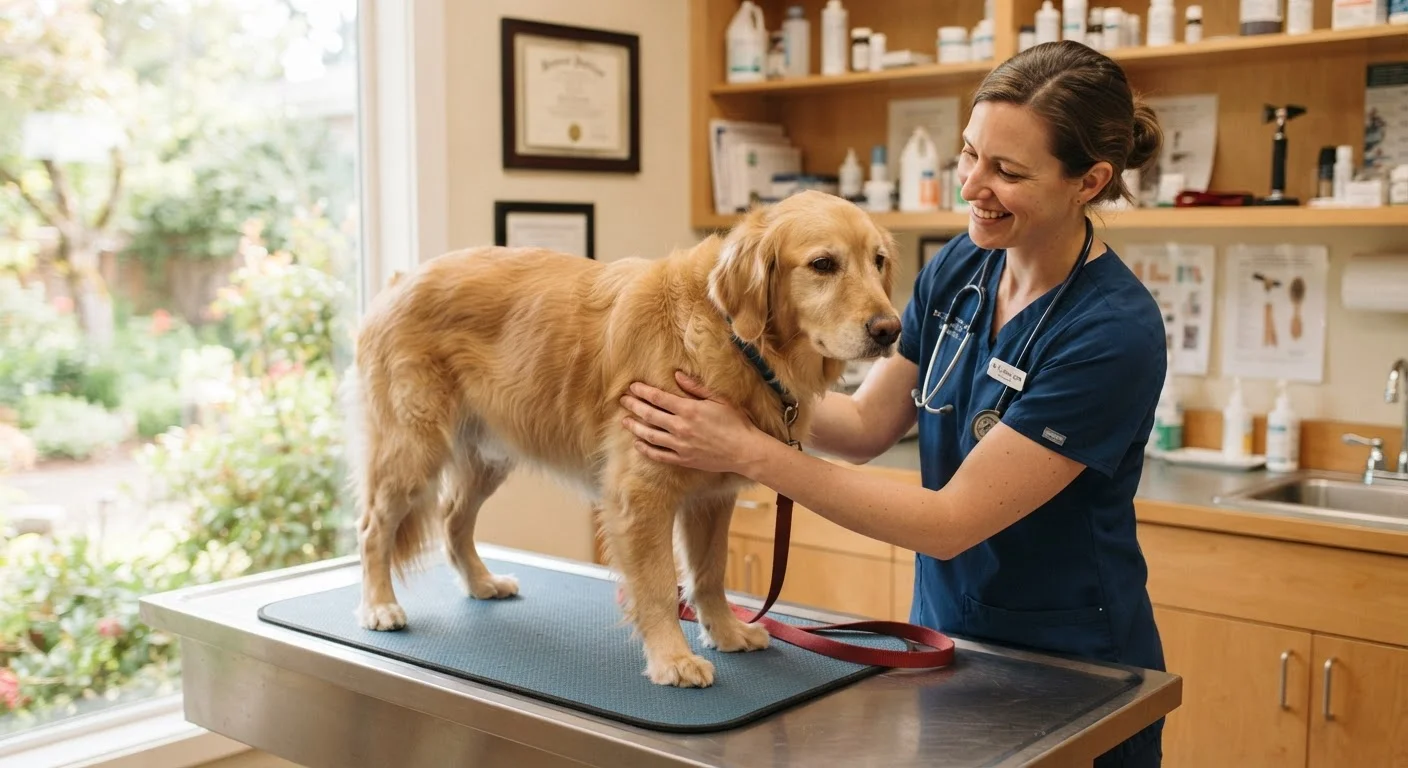
The assessment involves both visual observation and physical palpation — specifically feeling for fat coverage over the ribs, spine, and hip bones, and looking for a visible waist tuck when viewed from above. It's a practiced skill, but one that owners can learn a simplified version of with guidance from their vet.
In addition to BCS, veterinarians may use a Muscle Condition Score (MCS), which evaluates lean tissue separately. Muscle wasting is particularly common in senior pets and animals with chronic illness, and can occur even when a pet's BCS appears normal or elevated. An obese senior cat, for example, can simultaneously carry excess fat and have lost significant muscle — a condition sometimes called sarcopenic obesity.
~60%
U.S. dogs and cats classified overweight or obese
The Association for Pet Obesity Prevention has consistently reported that a majority of American pets are above ideal body condition in annual surveys.
Up to 2.5 years
Potential reduction in lifespan for obese dogs
Research published in veterinary journals has found that sustained obesity in dogs is associated with meaningfully shorter lifespans compared to lean counterparts.
9-point scale
Standard BCS range used in veterinary practice
Both the WSAVA and most U.S. veterinary schools endorse the 9-point Body Condition Score system as a reliable, repeatable assessment tool.
For owners who want to track trends between visits, keeping a pet health journal can help document subtle changes in appetite, activity, and physical appearance that support more productive vet conversations.
The Real Risks of Getting Body Condition Wrong
Excess body fat is one of the most significant preventable health risks in companion animals. According to the Association for Pet Obesity Prevention, a substantial percentage of dogs and cats in the United States are classified as overweight or obese during routine veterinary exams. The downstream effects are well documented: increased risk of type 2 diabetes, osteoarthritis, hypertension, certain cancers, and reduced life expectancy.
What's less widely discussed is the underweight end of the spectrum. Pets who are losing muscle or fat — whether due to illness, inadequate nutrition, or malabsorption — can appear deceptively normal to an untrained eye, particularly in long-coated breeds. Undetected weight loss over weeks or months is frequently the first sign of a serious underlying condition.
Schedule a BCS Check at Every Vet Visit
Ask your veterinarian to walk you through the Body Condition Score assessment during your pet's next appointment. Most vets are happy to demonstrate the rib-check technique so you can replicate it at home. Getting a baseline score makes it much easier to detect meaningful changes over time.
Diet quality plays a role here that scale weight simply can't capture. Understanding how to read pet food labels accurately can help owners ensure their pet's nutrition actually supports healthy body composition — not just caloric maintenance. And changes in coat quality can sometimes signal nutritional gaps before body weight shifts noticeably; see what your pet's coat may be signaling about their overall health.
Practical Steps for Monitoring Your Pet's Condition at Home
You don't need a veterinary degree to do a basic hands-on assessment. The rib check is the most accessible starting point: place both thumbs on your pet's spine and spread your fingers across the ribcage. In a pet at ideal condition, you should feel each rib distinctly without pressing hard — similar to how knuckles feel on a loosely closed fist. If ribs are invisible and require significant pressure to locate, excess fat coverage is likely. If ribs are sharp and immediately prominent with no overlying tissue, the pet may be underweight.
Pair this with a visual check from directly above: a healthy dog or cat should show a discernible waist between the ribcage and hips. From the side, a mild abdominal tuck is also a good indicator of appropriate body condition.
Monthly weigh-ins at consistent conditions (same scale, same time of day) add useful trend data — a gradual 5–10% change in body weight over a few months is clinically meaningful even if it doesn't look dramatic. If your pet is on a structured weight-loss plan, accurate portion control is one of the most effective levers owners have.
“Body weight is just a number. What we're really asking is: how much of that weight is fat, how much is muscle, and is the ratio appropriate for this individual animal? That's what body condition scoring helps us answer.”
— Veterinary Nutrition Specialist (paraphrased), Board-certified veterinary nutritionist, as commonly expressed in clinical practice guidance
This article is for general informational and educational purposes only and is not a substitute for professional veterinary advice. Always consult a licensed veterinarian for guidance specific to your pet's health.