

Key Takeaways
Our Verdict
Neither dry nor wet food is universally superior - each format has distinct nutritional and practical strengths. The right choice depends on your individual pet's health status, hydration needs, life stage, and your household routine. Mixed feeding is a legitimate middle path for many pets, provided portions are adjusted to avoid overfeeding.
| Best for | Recommended |
|---|---|
| Pets without specific health concerns and owners prioritizing convenience and cost | Dry Food |
| Cats with urinary tract issues, kidney disease, or poor water intake | Wet Food |
| Picky eaters or pets needing appetite stimulation | Wet Food |
| Owners wanting nutritional variety with portion flexibility | Mixed Feeding |
What Each Format Actually Delivers Nutritionally
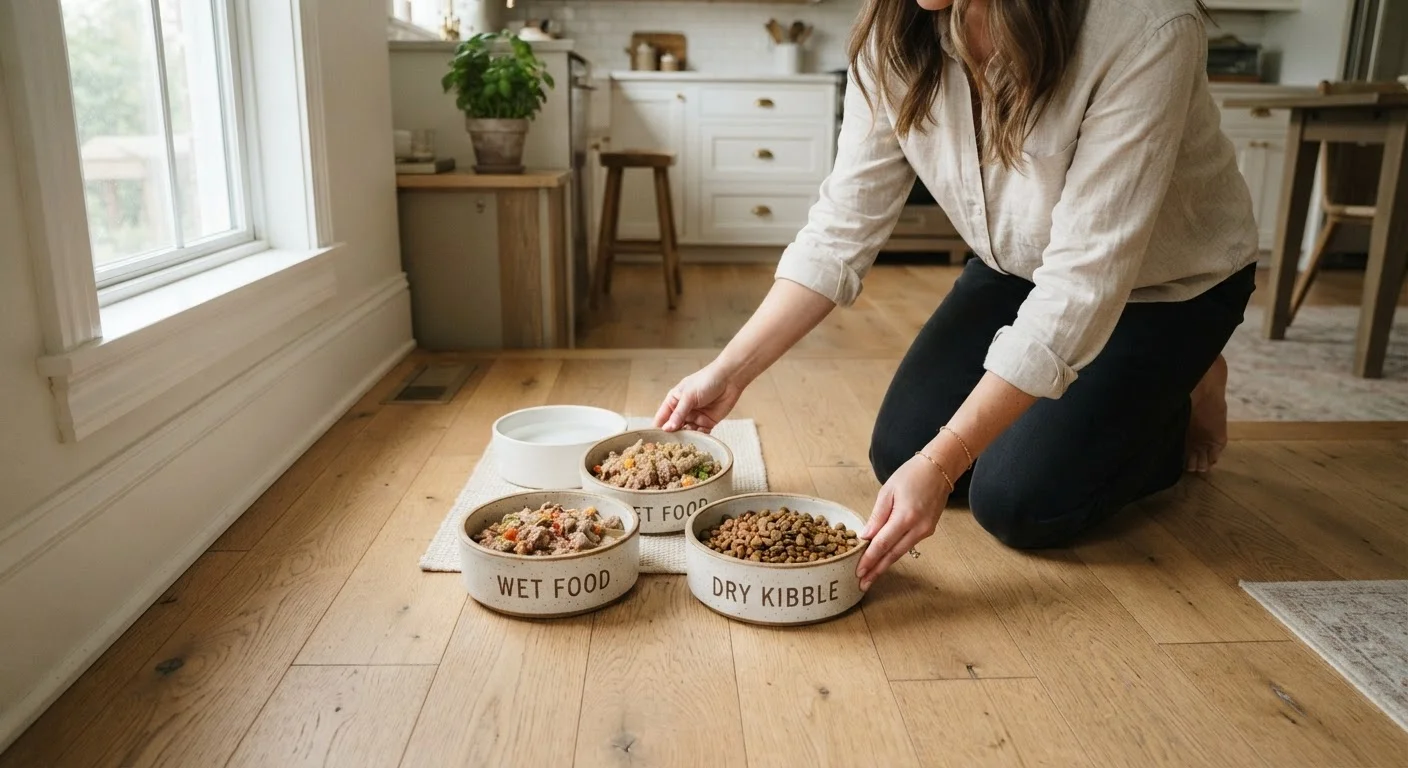
All three feeding formats - dry kibble, canned wet food, and a mix of both - can be formulated to meet complete nutritional standards as defined by the AAFCO. The core differences lie not in protein or fat content alone, but in moisture level, caloric density, and how those factors interact with your pet's physiology.
Dry food (kibble) typically contains 8-12% moisture and is highly calorie-dense per cup. Its low water content means pets eating exclusively kibble must compensate through drinking. For dogs, this is usually manageable; for cats - who evolved as desert animals with a naturally low thirst drive - it can be an ongoing hydration challenge.
Wet food (canned) contains 70-80% moisture, making it a meaningful source of dietary water. Calorie-for-calorie, wet food tends to have more protein and fat and fewer carbohydrates than dry alternatives, though formulations vary widely. See how to decode those formulations in our guide on reading a pet food label.
| Dry Food | Wet Food | Mixed Feeding | |
|---|---|---|---|
| Moisture content | 8-12% | 70-80% | Varies by ratio |
| Caloric density | High per cup | Lower per serving | Depends on balance |
| Cost per meal | Generally lower | Generally higher | Moderate |
| Convenience | High - stores well | Lower - spoils quickly | Moderate |
| Dental benefit | Moderate abrasion benefit | Minimal | Partial |
| Hydration support | Low | High | Moderate to high |
| Palatability | Moderate | High | High |
| Best suited for | Healthy adults, convenience-focused | Cats, urinary/kidney concerns | Picky eaters, mixed needs |
Dry Food: Strengths and Limitations
Kibble's most practical advantages are convenience and cost. It stores easily at room temperature, doesn't spoil quickly after serving, and is generally less expensive per calorie than canned food. For multi-pet households or owners with busy schedules, these factors are real considerations.
There is also evidence that the mechanical action of chewing larger kibble pieces may help reduce tartar buildup, though it should not replace dedicated dental care. The American Veterinary Medical Association notes that dental disease is among the most common health issues in companion animals, so any dietary feature that supports oral health has meaningful value.
The limitation most worth understanding is moisture deficit. Pets - particularly cats - who eat dry food exclusively may produce more concentrated urine, which over time can contribute to urinary crystal formation or chronic kidney stress. This doesn't mean dry food causes kidney disease, but hydration management becomes more important when kibble is the sole diet.
Support Hydration Alongside Dry Food
If your pet eats primarily kibble, providing multiple fresh water sources - including a pet water fountain - can encourage better drinking habits. For cats especially, moving water is often more appealing than a still bowl. Regular water intake helps offset the lower moisture content of dry diets.
Wet Food: Strengths and Limitations
For cats with a history of lower urinary tract disease or early-stage kidney disease, veterinary guidance frequently includes transitioning to wet food to increase moisture intake. The hydration benefit is direct and significant - a cat eating canned food may consume twice as much total water daily compared to a kibble-only cat drinking from a bowl.
Wet food is also often more palatable, which matters for older pets with reduced appetites, recovering animals, or picky eaters. The stronger aroma and softer texture can make it easier for pets with dental pain or tooth loss to eat comfortably.
The practical drawbacks are real: canned food costs more per meal, spoils within a few hours once opened, and cannot be left out for free-choice grazing. Owners who travel or have unpredictable schedules may find it harder to manage consistently. Careful portioning is also essential - the higher palatability of wet food can make it easy for pets to overeat if portions aren't measured. Our article on portion control for dogs and cats walks through how to do this accurately.
Mixed Feeding: Combining Both Formats
Many veterinarians consider mixed feeding - offering some wet food alongside a dry food base - a practical middle ground. It introduces additional moisture into the diet while keeping costs and logistics manageable. Some owners serve wet food as a meal topper or use it for one of two daily meals.
The key caution with mixed feeding is calorie arithmetic. Dry and wet foods have very different caloric densities, and combining them without adjusting total daily intake is one of the more common causes of gradual weight gain in pets. If you're monitoring your pet's body condition, mixed feeding requires careful tracking of total calories from both sources - not just eyeballing portions.
It's also worth reviewing common pet nutrition myths before making changes, since some popular beliefs about food formats - such as dry food being categorically better for teeth, or wet food always being more nutritious - are more nuanced than they first appear.
Watch for Calorie Creep With Mixed Feeding
Combining wet and dry food without adjusting total daily portions is a common cause of gradual weight gain in household pets. Wet food is often significantly more calorie-dense per ounce than it appears due to palatability. Use the caloric information on both food labels to calculate total daily intake and adjust serving sizes accordingly.
Matching Format to Your Pet's Specific Needs
Life stage, health status, and species matter significantly. Kittens and puppies have higher energy needs and often benefit from the palatability of wet food during weaning. Senior pets with reduced kidney function or dental issues may do better on wet diets. Large-breed dogs with no underlying health concerns often thrive on quality dry food throughout their lives.
Pets with specific diagnosed conditions - urinary disease, diabetes, inflammatory bowel disease - may have format recommendations built into their therapeutic diet plan. In these cases, the veterinarian's guidance takes priority over general principles.
If you're evaluating homemade or alternative formats alongside commercial options, homemade pet food carries its own trade-offs that are worth understanding before committing.
70-80%
Moisture content in canned pet food
Compared to 8-12% in dry kibble, this difference can significantly affect a cat's daily water intake and urinary health.
~70%
Cats affected by dental disease by age 3
The American Veterinary Medical Association identifies dental disease as one of the most prevalent health issues in companion animals.
This article provides general nutritional information for educational purposes and is not a substitute for personalized veterinary advice. Consult your veterinarian before making significant changes to your pet's diet, particularly if your pet has an existing health condition.