

Style & Beauty

Before You Try a New Skincare Product: A Patch-Test Checklist

Share
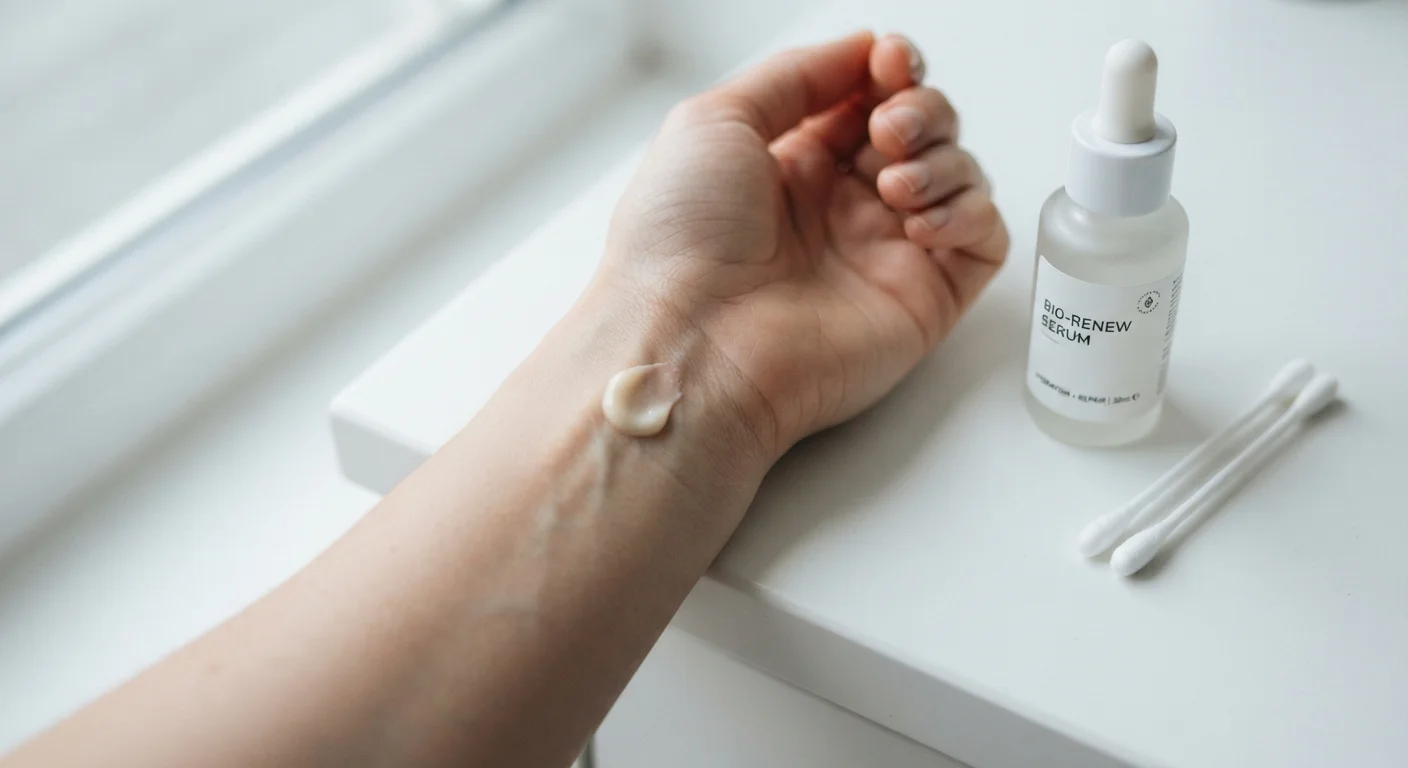
A small skincare patch test swatch applied to the inner wrist beside cotton swabs and a product bottle

Key Takeaways

Always patch test a new product on a small skin area before applying it to your face or body.
Wait at least 24–48 hours after applying the patch to assess your skin's reaction.
Redness, itching, swelling, or hives are signals to stop use and consult a dermatologist.
Some reactions appear days later — keep monitoring even if the immediate result looks fine.
People with sensitive skin, eczema, or known allergies should be especially methodical about testing.
20–40 min

Summary

18 items · 20–40 minutes (plus 24–48 hours of observation time)

Why Patch Testing Is Worth Your Time

Discovering a new skincare product is exciting — but applying it straight to your face without testing is a gamble your skin might not thank you for. Allergic reactions, contact dermatitis, and irritation can range from mildly annoying to genuinely disruptive, particularly for people with sensitive or reactive skin types.

A patch test is a low-effort, high-reward habit: you apply a small amount of product to a discreet area of skin and observe the result before committing to full use. It's not just for people with "problem" skin — anyone introducing an active ingredient, a new formula, or an unfamiliar brand can benefit from this precaution.

Before you dive in, it also helps to know what you're putting on your skin. Our guide on reading a skincare label without a chemistry degree walks you through how to decode ingredient lists so you can flag anything you've reacted to before.

Patch Testing Has Limits

A clear patch test result does not guarantee you won't react when using a product across a larger area, such as your full face. Concentration, skin barrier health, and cumulative exposure all play a role. Always introduce new products one at a time — this makes it far easier to pinpoint the cause if a reaction does occur later.

What You'll Need

Gathering a few simple items before you start makes the process cleaner and more consistent.

Required

Cotton swabs or cotton rounds

Used to apply the product to the test area without contaminating the rest of the formula.

Required

Gentle cleanser

To clean the skin patch area before applying the product, ensuring accurate results.

Optional

Notepad or phone notes app

To record the product name, test date, and any observations during the 48-hour window.

Optional

Camera or smartphone

To photograph the test area at 24 and 48 hours for a visual comparison of any changes.

The Patch-Test Checklist

Work through these steps in order. Skipping ahead or shortening the observation window reduces the reliability of your results.

Before You Apply

Read the full ingredient list and cross-reference any components you know you've reacted to in the past. Must
Ensure your skin is clean and free of other products in the test area before applying. Must
Choose a discreet test site — the inner wrist, inner elbow, or behind the ear are commonly used areas. Must
Apply a pea-sized amount of the product to your chosen area, using the same method (fingertip, cotton swab) you would normally use. Must
Note the date and time of application so you can track your observation window accurately. Should

During the Observation Window

Leave the product in place for the full observation period — do not wash it off unless you experience discomfort. Must
Check the test site at the 24-hour mark for any visible change: redness, raised skin, hives, or swelling. Must
Check again at 48 hours — some delayed reactions (Type IV hypersensitivity) only appear after a full two days. Must
Avoid applying other new products to the test area during the observation window, as this can confuse your results. Must
Take a photo of the test area at 24 and 48 hours to have a visual record for comparison. Nice to have

Interpreting Your Results

Stop use immediately if you notice itching, burning, stinging, redness, swelling, blistering, or hives at any point. Must
Recognize that mild redness that fades within one to two hours may indicate simple irritation rather than allergy — but still proceed with caution. Should
If no reaction occurs after 48 hours, proceed with a small test application on a larger area (such as your jaw or neck) before full facial use. Should
Keep a simple log of products you've tested, dates, and any reactions — this is especially useful for appointments with a dermatologist. Nice to have

Special Considerations

If you have a known allergy to a specific ingredient, do not patch test — avoid the product entirely and consult a dermatologist. Must
If you have eczema, psoriasis, rosacea, or another chronic skin condition, discuss patch testing with your dermatologist before trying potent actives. Must
Test products with high concentrations of active ingredients (retinoids, acids, vitamin C) separately, not simultaneously, so you can isolate any reaction. Should
If you are pregnant or nursing, consult a healthcare provider before introducing new active ingredients, as some are contraindicated during pregnancy. Must
If a product stings or burns noticeably upon initial application (not mild tingling from an acid), remove it immediately and do not retest. Must

When to Seek Medical Attention

If a reaction includes significant facial swelling, difficulty breathing, widespread hives, or any systemic symptom, stop product use and seek medical care promptly. These may be signs of a more serious allergic response. For recurring or persistent skin reactions, a board-certified dermatologist can perform formal allergy patch testing to identify specific triggers.

Once you've confirmed a product is well-tolerated, you're ready to work it into your routine. For guidance on where each product fits, see our everyday skincare routine, step by step and skincare layering guide for the logic behind product order.

This article is for general informational and educational purposes only and is not a substitute for professional medical or dermatological advice. If you experience a severe reaction — including significant swelling, difficulty breathing, or widespread hives — seek medical attention promptly.

Style & Beauty Editorial Team is the collective byline for our editorial team and contributor network. Articles published under this byline or an editorial pen name are researched, written, and reviewed according to our editorial standards for clarity, consistency, and independence before publication.

View all articles by Style & Beauty Editorial Team →
Disclaimer: The content on this site is for informational purposes only and is not a substitute for professional advice. Always consult a qualified professional for guidance specific to your situation.