

Key Takeaways
Our Verdict
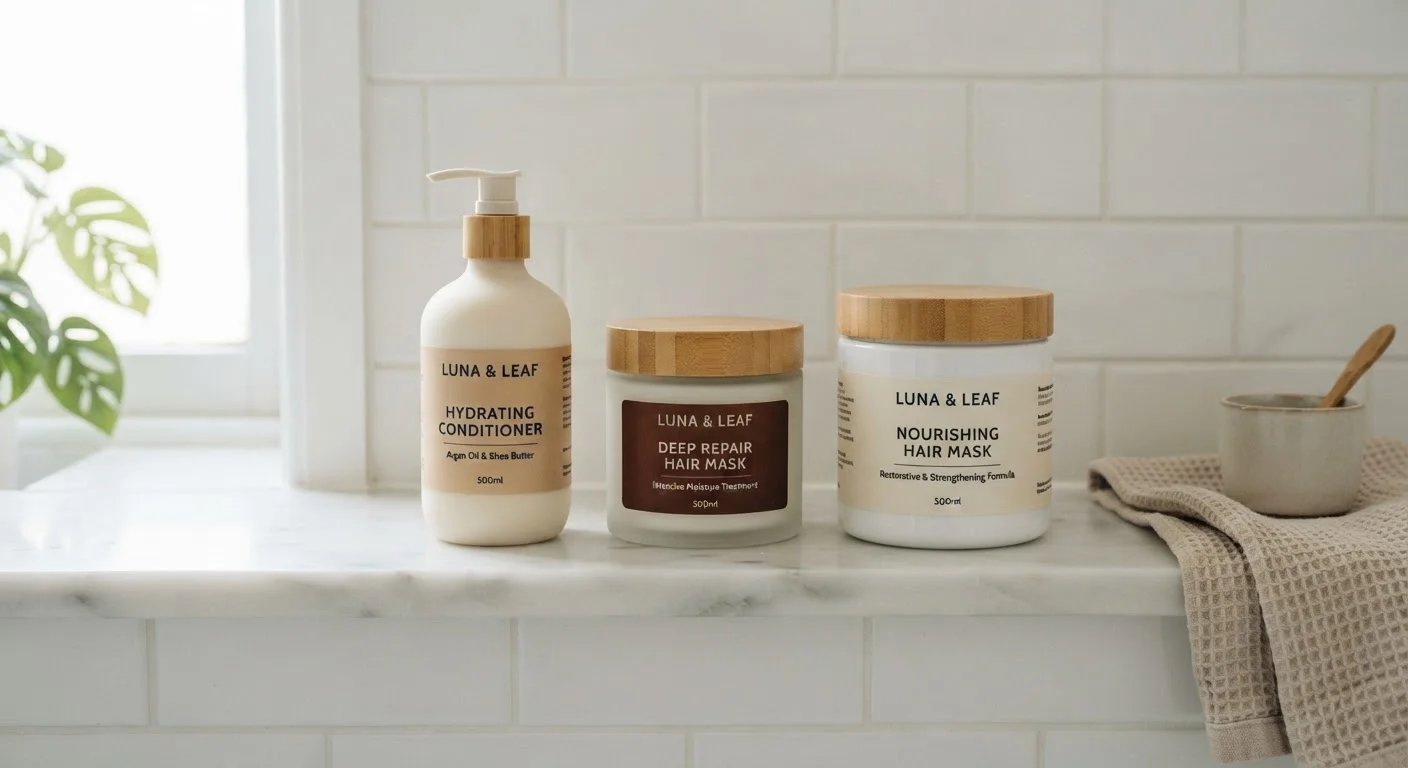
Conditioner, deep conditioner, and hair mask overlap in some ingredients but serve meaningfully different purposes. Regular conditioner belongs in almost every wash routine; deep conditioner is a reliable weekly or biweekly repair tool; and hair masks deliver targeted, intensive treatment when hair is especially stressed or damaged. Knowing the difference helps you spend less time guessing and get more from every wash day.
| Best for | Recommended |
|---|---|
| Those with healthy hair seeking everyday smoothness | Regular Conditioner |
| Those with dry, color-treated, or chemically processed hair | Deep Conditioner |
| Those dealing with breakage, severe dryness, or heat damage | Hair Mask |
| Those with high-porosity or coily/curly hair needing consistent moisture | Deep Conditioner or Hair Mask (rotated) |
Why These Three Products Get Confused
Walk down any hair care aisle and you'll find shelves stacked with products promising moisture, repair, and shine — often with packaging that looks nearly identical. Conditioner, deep conditioner, and hair mask all sound like variations of the same thing, and their labels don't always make the differences clear.
But these three products work at different depths of the hair strand, stay on your hair for different lengths of time, and address different concerns. Using one when you need another won't ruin your hair, but it does mean you're probably not getting the results you're after.
Understanding what each one does — and when to reach for it — is one of the most practical upgrades you can make to your wash-day routine. For a deeper dive into the terminology you'll find on product labels, the hair product ingredient guide is a useful companion reference.
How Each Product Works
Here's a plain-language breakdown of what distinguishes these three products:
Regular conditioner is designed to be applied after shampooing, left on for one to three minutes, and rinsed out. It works primarily on the surface of the hair shaft — coating and smoothing the outer cuticle layer to reduce friction, detangle, and add a light layer of moisture. It's not meant to penetrate deeply. Think of it as a daily maintenance step.
Deep conditioner contains higher concentrations of moisturizing agents (such as humectants and emollients) and sometimes hydrolyzed proteins, and it's formulated to move past the cuticle and into the cortex — the inner structure of the hair strand. It stays on for 5 to 30 minutes (sometimes longer with heat) and is typically used once a week or every other week. It's especially helpful for dry, curly, coily, color-treated, or chemically processed hair.
Hair mask is the most intensive of the three. Masks are thicker, richer formulas that target specific damage or deficiencies — whether that's extreme dryness, breakage, protein loss, or heat damage. Leave-on times range from 20 minutes to overnight depending on the formula and your hair's needs. Some masks are moisture-focused; others are protein-focused. Picking the right kind matters, since too much protein can make hair stiff and brittle, while too much moisture without protein can cause limpness.
| Regular Conditioner | Deep Conditioner | Hair Mask | |
|---|---|---|---|
| Primary function | Smooth cuticle, detangle | Restore moisture and protein balance | Target specific damage or deficiency |
| Where it works | Surface of hair shaft | Cuticle and cortex | Deep cortex and structural gaps |
| Typical leave-on time | 1–3 minutes | 5–30 minutes | 20 minutes to overnight |
| Recommended frequency | Every wash day | Weekly or biweekly | Monthly or as needed |
| Best for | All hair types, maintenance | Dry, curly, color-treated hair | Damaged, brittle, or stressed hair |
| Formula richness | Lightweight | Moderately rich | Thick and concentrated |
If you're also thinking about whether to handle these treatments at home or book a salon appointment, the at-home vs. salon treatments comparison lays out the trade-offs honestly.
Matching the Right Product to Your Hair
How to Tell If Hair Needs Moisture or Protein
Stretch a single wet strand gently between your fingers. If it stretches easily but doesn't spring back and feels mushy, it may need more protein. If it snaps quickly with little stretch, it likely needs moisture. Alternating between moisture-focused and protein-focused products — rather than relying on one type exclusively — tends to produce the best long-term results for most hair types.
Hair porosity — how easily your strands absorb and retain moisture — is one of the most useful factors to consider when choosing between these products. Low-porosity hair (tightly closed cuticles) can benefit from lightweight deep conditioners applied with gentle heat to encourage absorption. High-porosity hair (open or damaged cuticles) often responds well to protein-containing masks that help fill structural gaps.
Here's a general guide by hair concern:
- Fine or low-porosity hair: Use regular conditioner consistently; deep condition monthly or bimonthly to avoid buildup or weight.
- Dry, curly, or coily hair: Weekly deep conditioning is widely recommended by stylists who specialize in textured hair. Masks can be layered in when hair feels particularly brittle or thirsty.
- Color-treated or chemically processed hair: These processes lift and alter the cuticle, making deep conditioning a high-priority regular step, not an occasional one.
- Heat-styled hair: Regular thermal exposure degrades the hair's moisture-protein balance over time. A protein-boosting mask used periodically alongside deep conditioning helps maintain elasticity and reduce breakage. See our guide to heat styling and damage prevention for more context.
Building a Routine That Uses All Three
Most people don't need to choose one product over the others — they need to use each one at the right frequency. A practical framework looks something like this:
- Every wash day: Regular conditioner after every shampoo session.
- Weekly or biweekly: Swap regular conditioner for a deep conditioner, leaving it on for the directed time before rinsing.
- Monthly or as needed: Use a targeted hair mask when hair is showing signs of significant stress — excess shedding, dryness that deep conditioning isn't resolving, or snapping during detangling.
Your shampoo routine sets the foundation for how well any conditioning product performs. If you're rethinking that step too, the sulfate-free vs. traditional shampoo comparison is worth a read before your next wash day.
This article is for informational and educational purposes only and is not a substitute for personalized advice from a licensed cosmetologist or dermatologist. Hair care needs vary by individual. Consult a professional if you have persistent scalp concerns or significant hair loss.