

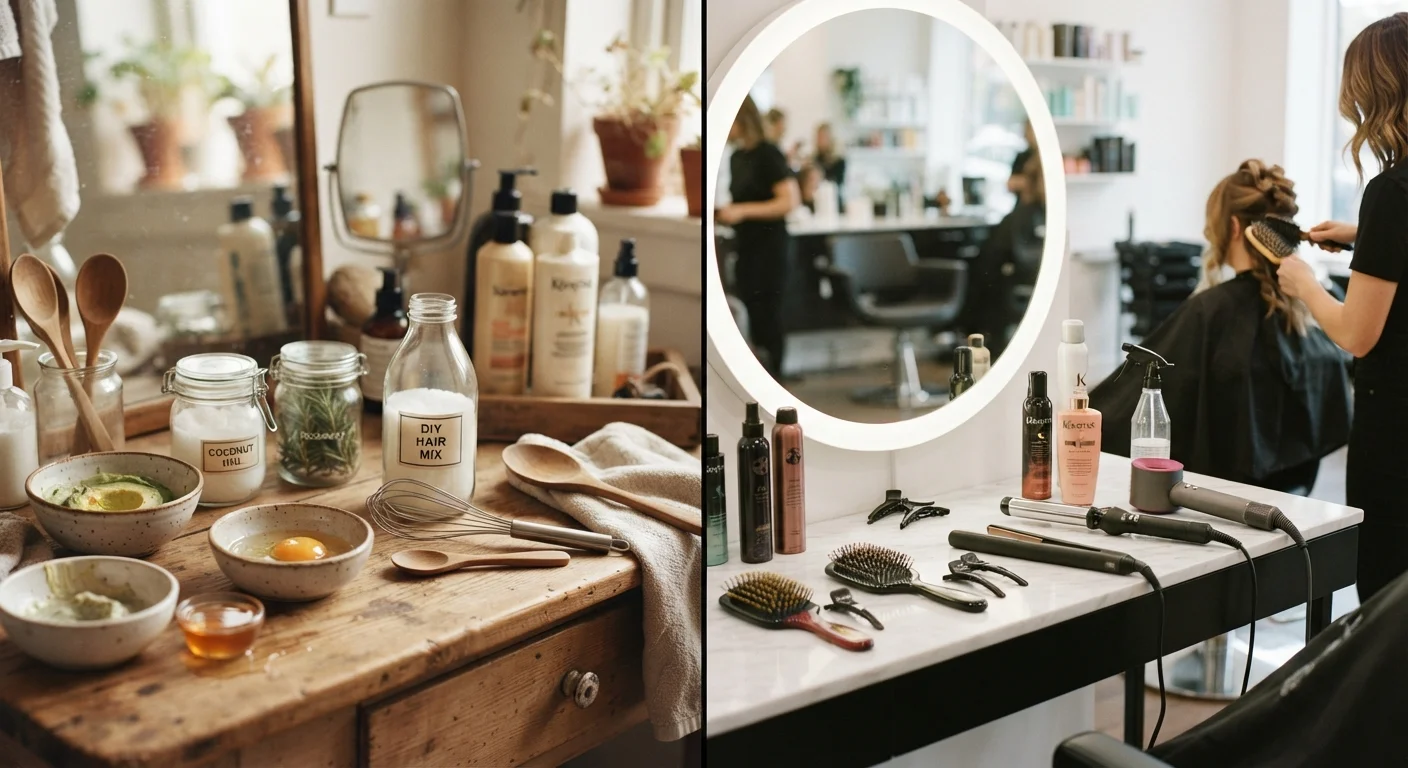
Key Takeaways
Significantly lower cost per treatment
Retail hair treatment products typically cost a fraction of professional services. Over time, this adds up to real savings, particularly for regular conditioning or scalp care.
Flexible timing and convenience
At-home treatments can fit around your schedule without booking appointments or commuting. This makes consistency easier, which matters for long-term hair health.
Wide product variety for diverse hair types
The consumer market now includes a broad range of formulas designed for coily, curly, fine, and color-treated hair, giving shoppers meaningful options without a salon visit.
Full control over ingredients and application
You choose what goes on your hair, which is useful for people with sensitivities, allergies, or strong preferences about specific ingredients or formulas.
Weaker formulas than professional-grade products
Over-the-counter treatments are formulated for safe consumer use, meaning active ingredients are often at lower concentrations than what professionals use. Results for complex treatments may be less dramatic.
No professional assessment of hair condition
Without a trained eye evaluating your hair's porosity, elasticity, or damage level, it's easy to choose the wrong product or technique — potentially worsening the condition you're trying to fix.
High risk for chemical or structural services
Bleaching, relaxing, and perming at home carries meaningful risk of breakage, scalp irritation, or uneven results, especially on previously processed or fragile hair.
Harder to correct mistakes without professional help
A botched at-home color or chemical treatment often requires a professional to fix — sometimes at greater cost than if the original service had been done professionally to begin with.
Our Verdict
Neither at-home nor salon treatments are universally superior — the smarter call depends on what you're trying to accomplish and the current state of your hair. Routine conditioning and low-risk treatments are generally well-suited to a DIY approach, while chemical processes that alter the hair's structure are best left to licensed professionals. Understanding the differences helps you invest your time and money where it matters most.
Best for anyone weighing cost versus results and trying to build a realistic, sustainable hair care routine without overcomplicating it.
What We Mean by 'Hair Treatments'
The term "hair treatment" covers a wide range of services and products — from a weekly deep conditioning mask to a chemical relaxer or a keratin smoothing treatment. That range matters, because the at-home vs. salon question doesn't have a single answer. It really depends on what the treatment involves.
Low-intervention treatments like deep conditioners and hair masks are generally safe and effective when used correctly at home. Chemical services — bleaching, perming, relaxing, or professional-grade keratin treatments — are a different story entirely. The stakes for error are much higher, and the formulas used in salons are often stronger than what's sold over the counter.
Before deciding, it helps to ask: Am I maintaining healthy hair, or am I trying to change its structure or color? That distinction shapes everything.
The Case for At-Home Treatments
Significantly lower cost per treatment
Retail hair treatment products typically cost a fraction of professional services. Over time, this adds up to real savings, particularly for regular conditioning or scalp care.
Flexible timing and convenience
At-home treatments can fit around your schedule without booking appointments or commuting. This makes consistency easier, which matters for long-term hair health.
Wide product variety for diverse hair types
The consumer market now includes a broad range of formulas designed for coily, curly, fine, and color-treated hair, giving shoppers meaningful options without a salon visit.
Full control over ingredients and application
You choose what goes on your hair, which is useful for people with sensitivities, allergies, or strong preferences about specific ingredients or formulas.
At-home treatments have earned a real place in smart hair care routines — and not just for budget reasons. Many over-the-counter products have genuinely improved over the past decade, particularly in the moisturizing and scalp-care categories. For naturals, coily, and curly hair communities especially, the DIY hair care space has expanded with options tailored to a wider range of textures and needs.
Convenience is a legitimate advantage too. Applying a deep conditioner while streaming your favorite show on a Sunday evening fits into life in a way that scheduling a salon appointment simply doesn't. For maintenance between professional visits, a consistent at-home routine often makes a meaningful difference in hair health over time. Check out what the science actually says about common hair care beliefs to separate useful habits from the ones that don't hold up.
The Case for Professional Treatments
Weaker formulas than professional-grade products
Over-the-counter treatments are formulated for safe consumer use, meaning active ingredients are often at lower concentrations than what professionals use. Results for complex treatments may be less dramatic.
No professional assessment of hair condition
Without a trained eye evaluating your hair's porosity, elasticity, or damage level, it's easy to choose the wrong product or technique — potentially worsening the condition you're trying to fix.
High risk for chemical or structural services
Bleaching, relaxing, and perming at home carries meaningful risk of breakage, scalp irritation, or uneven results, especially on previously processed or fragile hair.
Harder to correct mistakes without professional help
A botched at-home color or chemical treatment often requires a professional to fix — sometimes at greater cost than if the original service had been done professionally to begin with.
Salon professionals bring more than just technique — they bring assessment skills. A licensed stylist can evaluate your hair's porosity, elasticity, and existing damage before recommending a service. That kind of individualized read is hard to replicate at home, especially with more complex treatments.
Professional-grade formulas are also regulated differently from retail products. Salon relaxers, bleaches, and bonding treatments often contain higher concentrations of active ingredients, which is precisely why they're dispensed by trained hands. Misapplication — wrong timing, wrong formula for your hair type, overlapping on previously processed hair — can cause breakage, scalp burns, or permanent damage. If you're considering any chemical service, understanding how chemicals affect hair structure is essential reading before you begin.
A Note on Scalp Health and Chemical Services
The scalp is skin, and chemical treatments — including some relaxers and bleaching agents — can cause burns, allergic reactions, or follicle damage when misapplied. Anyone with a sensitive scalp, existing skin conditions, or a history of reactions should be especially cautious with at-home chemical services and may benefit from a patch test or professional consultation before proceeding.
Where the Real Risk Lives
The most important factor in this decision isn't cost — it's the potential for harm. At-home deep conditioning or a scalp oil treatment carries minimal risk for most people. At-home bleaching, relaxing, or heat straightening on fragile or previously processed hair is where things can go seriously wrong.
Heat tools are a middle ground. The tools themselves are consumer-grade, but technique and temperature selection still matter. How heat affects different hair types is worth understanding whether you're styling at home or in a salon chair.
~40%
Adults who do most hair care at home
Industry research consistently shows a large share of U.S. consumers rely primarily on at-home products for routine hair maintenance rather than regular salon visits.
3–5×
Typical cost difference: salon vs. DIY treatment
Professional hair treatments generally cost several times more than comparable at-home alternatives, though the gap narrows for complex or corrective services where DIY risk is higher.
A good rule of thumb: if the instructions on a product include phrases like "strand test required" or "do not overlap on previously processed hair," treat that as a signal to at least consult a professional before proceeding on your own.
Building a Routine That Uses Both Wisely
The most practical approach for most people isn't an either/or choice — it's a tiered routine. Handle low-risk maintenance at home: moisturizing masks, scalp treatments, choosing the right shampoo formula, and leave-in conditioners. Reserve professional appointments for services that involve structural or chemical change.
If you're working with a limited budget, spacing out salon visits while maintaining your hair well at home is a reasonable strategy. A professional treatment done every few months, paired with a consistent at-home routine in between, often delivers better long-term results than frequent DIY chemical attempts or salon visits without any follow-up care at home.
Whatever approach you take, know your hair's history. Previous chemical services, heat damage, or underlying scalp conditions all affect how your hair will respond. When in doubt, a single consultation with a licensed stylist — even if you plan to do most of your care at home — can help you avoid costly mistakes.