

Key Takeaways
How Heat Actually Damages Hair
Heat tools work by temporarily breaking the hydrogen bonds inside each hair strand, allowing it to be reshaped. The problem starts when temperatures climb high enough to degrade the proteins — primarily keratin — that give hair its structure. Once that protein is damaged, the hair shaft becomes porous, brittle, and prone to breakage.
The outer layer of every strand, called the cuticle, acts like overlapping shingles. Repeated heat exposure lifts and chips those cuticles, leaving the interior of the strand exposed to further moisture loss and mechanical stress. You'll often notice this first as dullness or increased frizz — the cuticle is no longer lying flat enough to reflect light evenly.
Understanding this mechanism matters because it changes the conversation from "heat is bad" to "heat above a certain threshold, applied without preparation, causes damage." That's a distinction worth making. For a broader look at common hair misconceptions, check out hair myths the science doesn't support.
Matching Temperature to Hair Type
One of the most actionable steps you can take is simply using the right temperature range for your hair's specific needs. Most heat tool guides default to vague categories, so here's a more practical breakdown:
- Fine or color-treated hair: 250–300°F (120–150°C). These strands have a thinner cuticle layer and less structural resilience. Color processing — especially bleaching — already raises porosity, so lower heat reduces the risk of compounding that damage. See how color changes your care routine for more context.
- Medium-textured or wavy hair: 300–375°F (150–190°C). This range is effective for most people without pushing into the higher-risk zone.
- Thick, coarse, or tightly coiled hair: 375–450°F (190–230°C). These hair types have a denser cuticle structure, but that doesn't mean higher heat is automatically safe — it means it may take more heat to achieve the same result. Frequency and prep become especially important here.
If your tool doesn't have a precise temperature display, that's a meaningful limitation worth knowing about. Variable-temperature tools allow better control than single-setting options.
Test Your Tool's Actual Temperature
Many affordable heat tools display a temperature setting that doesn't match what the plates actually reach. If precision matters for your hair type — particularly if it's fine, color-treated, or chemically processed — a basic infrared thermometer (available at hardware stores) can help you verify your tool's real output. This one-time check can inform every styling session going forward.
Why Heat Protectants Are Worth the Extra Step
Heat protectants work by forming a thin coating on the hair shaft that slows the transfer of heat to the cuticle and cortex. They also often contain humectants or conditioning agents that help maintain moisture during styling. The key phrase is slows the transfer — a protectant won't make 450°F safe, but it does raise the effective threshold before damage begins.
Application method matters. Protectants should be distributed evenly through the hair, whether applied to damp hair before blow-drying or to dry hair before flat ironing. Uneven application leaves sections exposed. A fine-tooth comb or wide paddle brush used after application helps distribute the product more consistently than finger application alone.
Chemically Treated Hair Needs Extra Caution
Hair that has been relaxed, permed, or lightened has already undergone structural changes that reduce its natural resilience. These processes raise porosity and can weaken the protein bonds heat styling depends on. If your hair has been chemically treated, consider working with a stylist to determine safe heat thresholds — and expect that those thresholds will be lower than for untreated hair of the same texture.
For coily or very dry hair types, layering a heat protectant over a leave-in conditioner can offer additional moisture retention. Understanding how each conditioning product functions will help you build that routine effectively — see how conditioners, deep conditioners, and masks differ.
Frequency and Recovery: The Part Most People Skip
Temperature gets most of the attention, but frequency is equally important. Hair doesn't regenerate — what's on your head today grew from your scalp months or years ago. Daily heat styling, even at moderate temperatures, creates cumulative damage that compounds with each session. A strand that survived 300°F on Monday is a slightly more porous strand on Tuesday.
Building in intentional rest days — or swapping to heatless styles a few times per week — gives your hair a chance to retain moisture and reduces overall stress on the shaft. Protective hairstyles offer an effective framework for reducing heat dependence without sacrificing style.
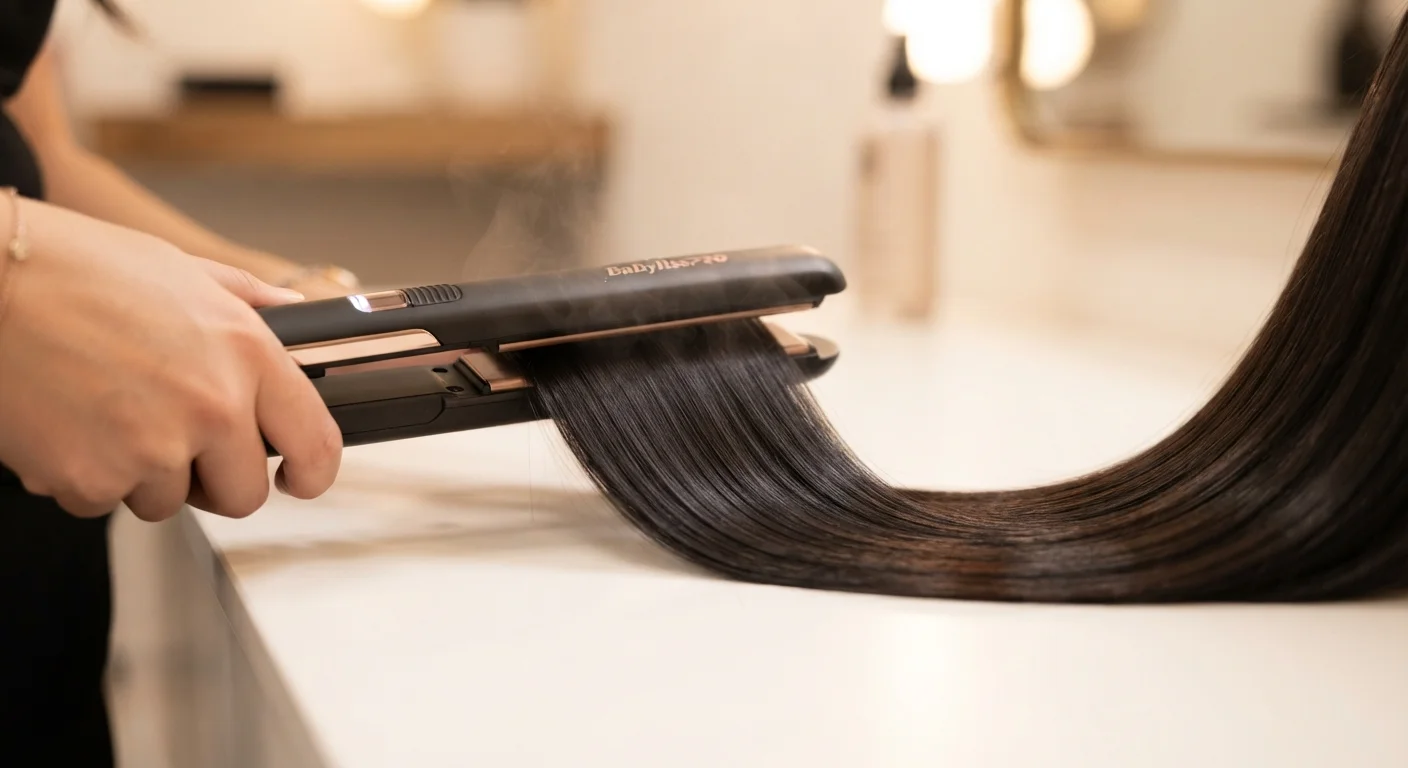
Always start with completely dry hair before using a flat iron or straightening tool.
Applying a flat iron to damp hair causes any remaining water inside the shaft to instantly vaporize. This steam effect can rupture the cuticle from the inside, causing severe breakage that is far more damaging than high heat alone.
Use the lowest effective temperature for your hair type, not the highest available setting.
Many people default to maximum heat under the assumption it works faster or better. In practice, the right temperature is the one that achieves your desired result with the fewest passes — higher settings often just mean more rapid damage without meaningfully better results.
Apply heat protectant consistently and evenly before every heat styling session.
Skipping this step even occasionally leaves sections of hair unprotected during styling. Consistent use builds a reliable habit and ensures even coverage, which is more effective than thorough application only some of the time.
Limit flat iron or curling iron use to two or three times per week for most hair types.
Even well-prepared hair accumulates structural stress with each heat session. Reducing frequency gives the hair shaft time to retain moisture and reduces the cumulative cuticle degradation that leads to chronic dryness and breakage.
Move the tool continuously through each section rather than hovering or clamping in one spot.
Holding a flat iron stationary concentrates heat on a single segment of the strand for longer than needed, increasing the likelihood of localized protein damage. Smooth, consistent motion distributes heat more evenly.
Seasonal humidity levels also affect how your hair responds to heat tools — higher ambient moisture can change how quickly styles set and how much heat is actually needed. Seasonal hair care adjustments covers that in more detail.
Start Here: Quick Wins for Safer Heat Styling
You don't need to overhaul your entire routine to meaningfully reduce heat damage. A few targeted changes have an outsized impact on long-term hair health.
If you're weighing whether to invest in professional treatments versus managing heat styling at home, the trade-offs between at-home and salon treatments are worth understanding before making that call.