

Key Takeaways
Our Verdict
Neither built-ins nor freestanding storage is universally superior - the right choice turns on how long you plan to stay, whether you rent or own, and how much visual cohesion matters to you. Built-ins reward long-term homeowners who want a polished, integrated look, while freestanding units serve renters and movers with flexibility and lower financial risk.
| Best for | Recommended |
|---|---|
| Long-term homeowners seeking a custom, high-value finish | Built-In Storage |
| Renters or those who move frequently | Freestanding Storage |
| Those working within strict time or cost constraints | Freestanding Storage |
| Homeowners with awkward or underused wall space to maximize | Built-In Storage |
What Sets These Two Approaches Apart
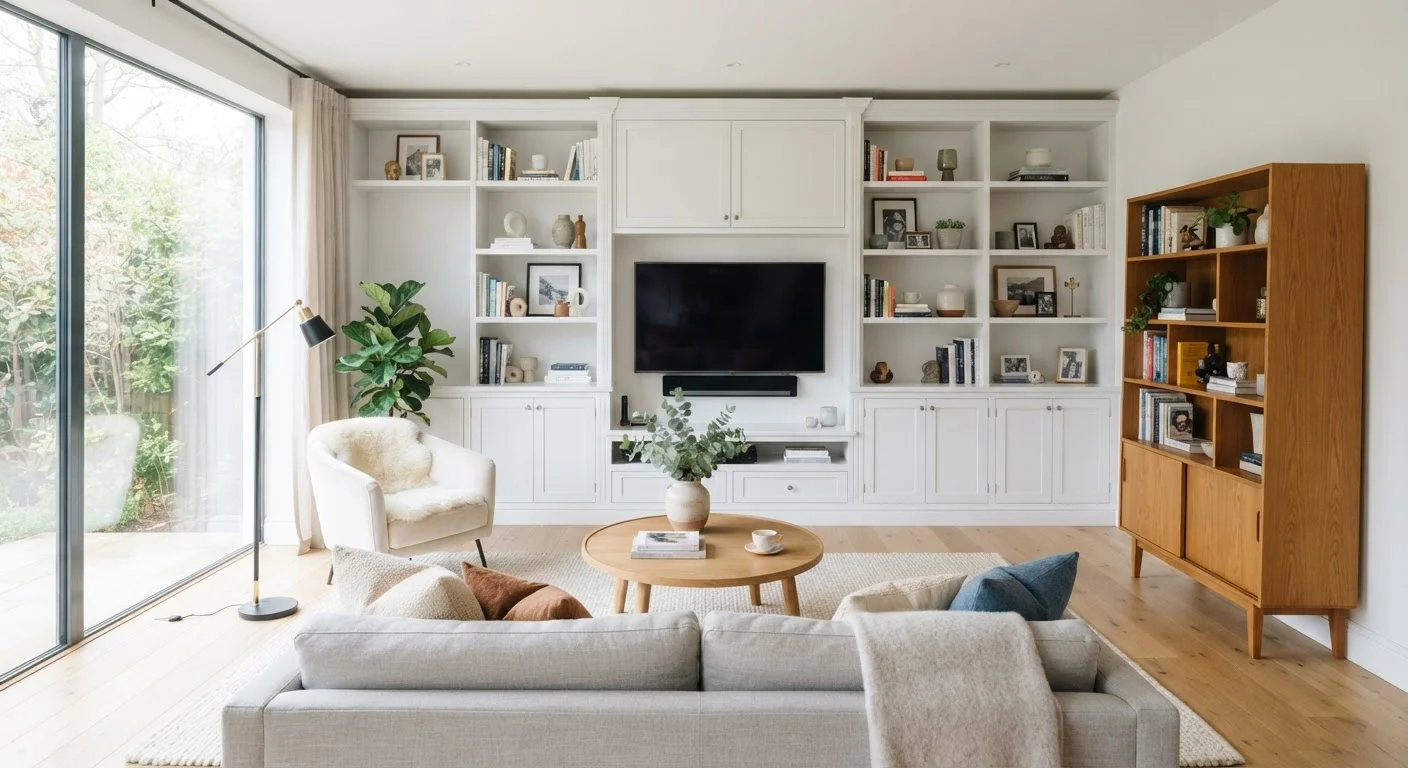
Built-in storage - think floor-to-ceiling bookshelves, window-seat cubbies, or custom cabinetry flanking a fireplace - is fixed to the structure of your home. It uses wall cavities, follows the room's exact dimensions, and typically requires carpentry work to install or remove. Freestanding storage, by contrast, is furniture: bookcases, wardrobes, sideboards, cube organizers, and similar pieces that stand independently and move with you.
The distinction matters because it shapes every downstream decision: who installs it, how much it costs, what happens when you move, and how the room looks in the end. Understanding that trade-off clearly is the first step toward a storage plan that works for your actual life - not just the idealized version of it. For broader home organization thinking, the Household Management hub offers practical strategies that complement either approach.
Cost and Installation: The Real Numbers
Built-ins carry a higher upfront cost for two reasons: materials and labor. Custom cabinetry or built-in shelving typically involves a carpenter or cabinetmaker measuring, fabricating, and fitting the unit to your specific walls - a process that can run from a few hundred dollars for simple open shelving to several thousand for floor-to-ceiling cabinetry with doors and trim work. Semi-custom options (pre-made cabinet boxes assembled and installed on-site) can reduce that figure, but installation labor still applies.
Freestanding units eliminate that labor cost almost entirely. Flat-pack and ready-to-assemble furniture requires only basic tools and an afternoon, and even solid wood freestanding pieces are delivered finished. The trade-off is that off-the-shelf sizes may not fill your space optimally, leaving gaps or requiring multiple pieces where one built-in would do the job cleanly.
| Built-In Storage | Freestanding Storage | |
|---|---|---|
| Upfront Cost | Higher - materials plus labor | Lower - furniture purchase only |
| Installation | Carpentry or cabinetry work required | DIY assembly, typically same day |
| Portability | Stays with the home | Moves with you |
| Renter-Friendly | Rarely permitted | Standard choice for renters |
| Resale Value Impact | Generally positive when well-designed | None - leaves with owner |
| Fit to Unusual Spaces | Excellent - made to measure | Limited by standard sizes |
| Visual Cohesion | Seamless, architectural look | Varies by selection and styling |
It's also worth noting that built-ins can affect your tax and insurance picture if they're classified as permanent fixtures - worth a conversation with a licensed professional before a large project.
Flexibility, Portability, and Renter Considerations
If you rent, built-ins are essentially off the table in most cases - most leases prohibit structural alterations, and any work you do typically reverts to the landlord at move-out. Freestanding storage is the practical default, and with thoughtful selection it can look every bit as intentional as built-ins. Tall bookcases anchored to the wall with anti-tip hardware, modular cube systems, and wardrobe units with a consistent finish can create a cohesive, designed feel without touching the walls permanently.
Even homeowners who move every five to seven years should weigh portability. A quality freestanding wardrobe travels with you; a built-in wardrobe stays behind and may not match the style or layout of your next home at all. If you're thinking about wardrobe organization specifically, see our guide to building a functional wardrobe on a budget for storage-conscious strategies that work with either approach.
Anchor Freestanding Units for Safety
Tall freestanding shelving and wardrobes should always be anchored to wall studs with anti-tip straps, especially in homes with children or in earthquake-prone regions. Most units ship with the necessary hardware, and installation takes only a few minutes. This simple step prevents tip-over accidents without making the piece permanent.
Aesthetics, Cohesion, and Home Value
Built-ins have an undeniable visual advantage in finished spaces: they align with ceiling heights, eliminate the visual gap between furniture and wall, and can be painted to match trim for a seamless look. They also allow for integrated lighting, concealed wiring, and speaker placement - details that freestanding units rarely accommodate as cleanly. If you're drawn to the look of a proper library wall or a media unit that appears to grow from the room itself, built-ins are the direct path there.
From a resale standpoint, built-ins are generally viewed as an amenity by buyers, particularly in living rooms, home offices, and primary bedrooms. Freestanding furniture leaves with you and adds nothing to the home's appraised value. That said, poorly executed or overly taste-specific built-ins can actually work against a sale, so design restraint matters.
For anyone thinking about how storage interacts with room layout more broadly, our article on furniture arrangement fundamentals covers how to position pieces - built or freestanding - so rooms feel balanced and functional. And if you're specifically weighing open versus closed storage in the kitchen, open shelving trade-offs is a useful companion read.
Making the Decision for Your Situation
A few key questions can clarify which direction makes sense:
- Do you own or rent? Renters should default to freestanding unless explicit landlord permission is granted in writing.
- How long do you plan to stay? A five-plus-year horizon generally makes built-ins more financially defensible.
- Is the space unusual in size or shape? Awkward alcoves, sloped ceilings, and under-stair areas are where built-ins genuinely shine - freestanding units rarely fit those spaces well.
- What is your budget timeline? If you need storage now and plan to renovate later, freestanding units serve as a practical bridge.
One practical middle path: use freestanding furniture in most rooms and invest in built-ins only in the one or two spots where the fit problem is hardest to solve with off-the-shelf pieces. This hybrid approach keeps costs manageable while still delivering the integrated look where it matters most. Whatever you store, thoughtful organization matters just as much as the storage vessel - see our article on stocking a home properly for guidance on keeping storage from becoming clutter.